Found in Greenville, SC
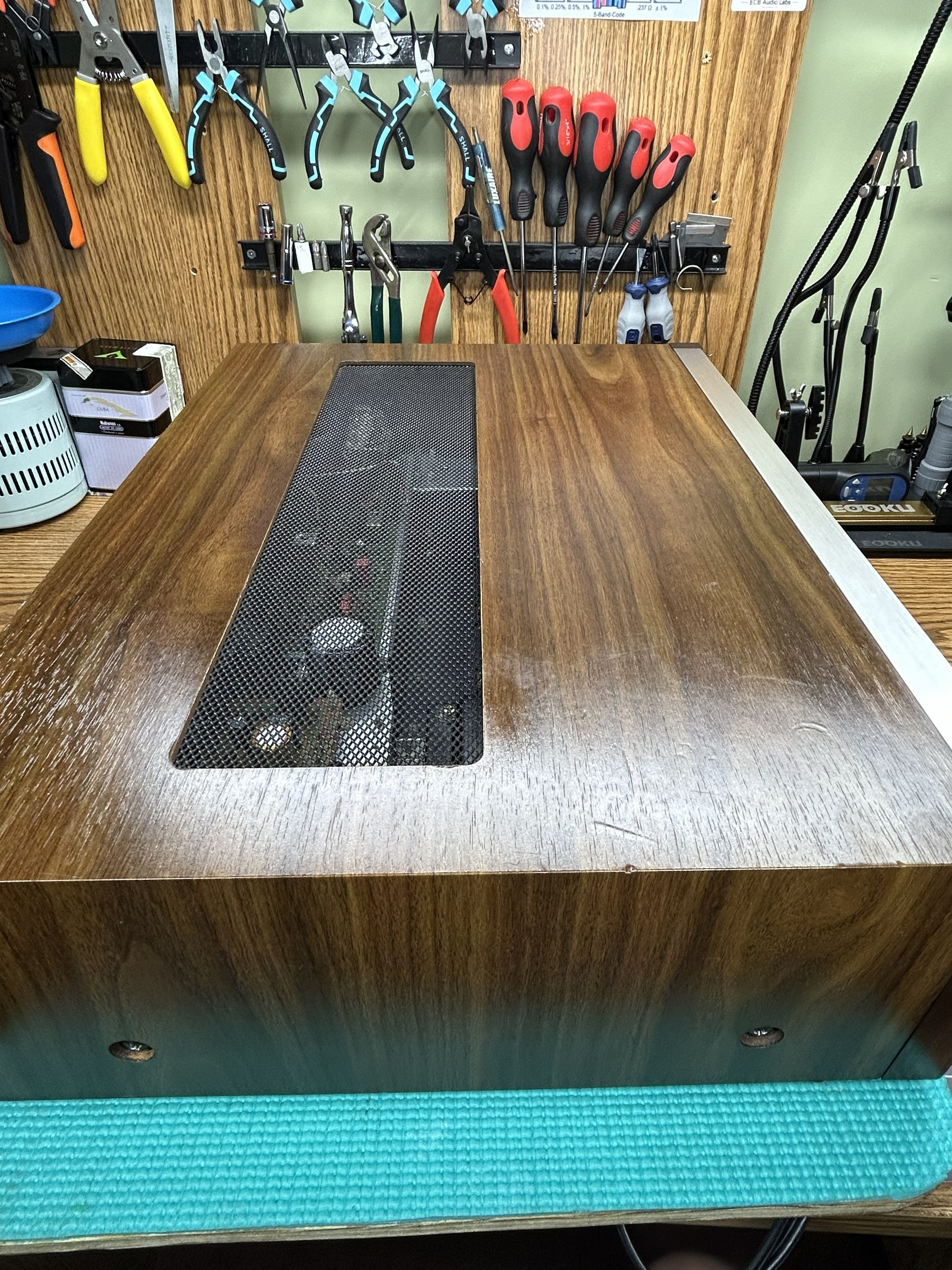
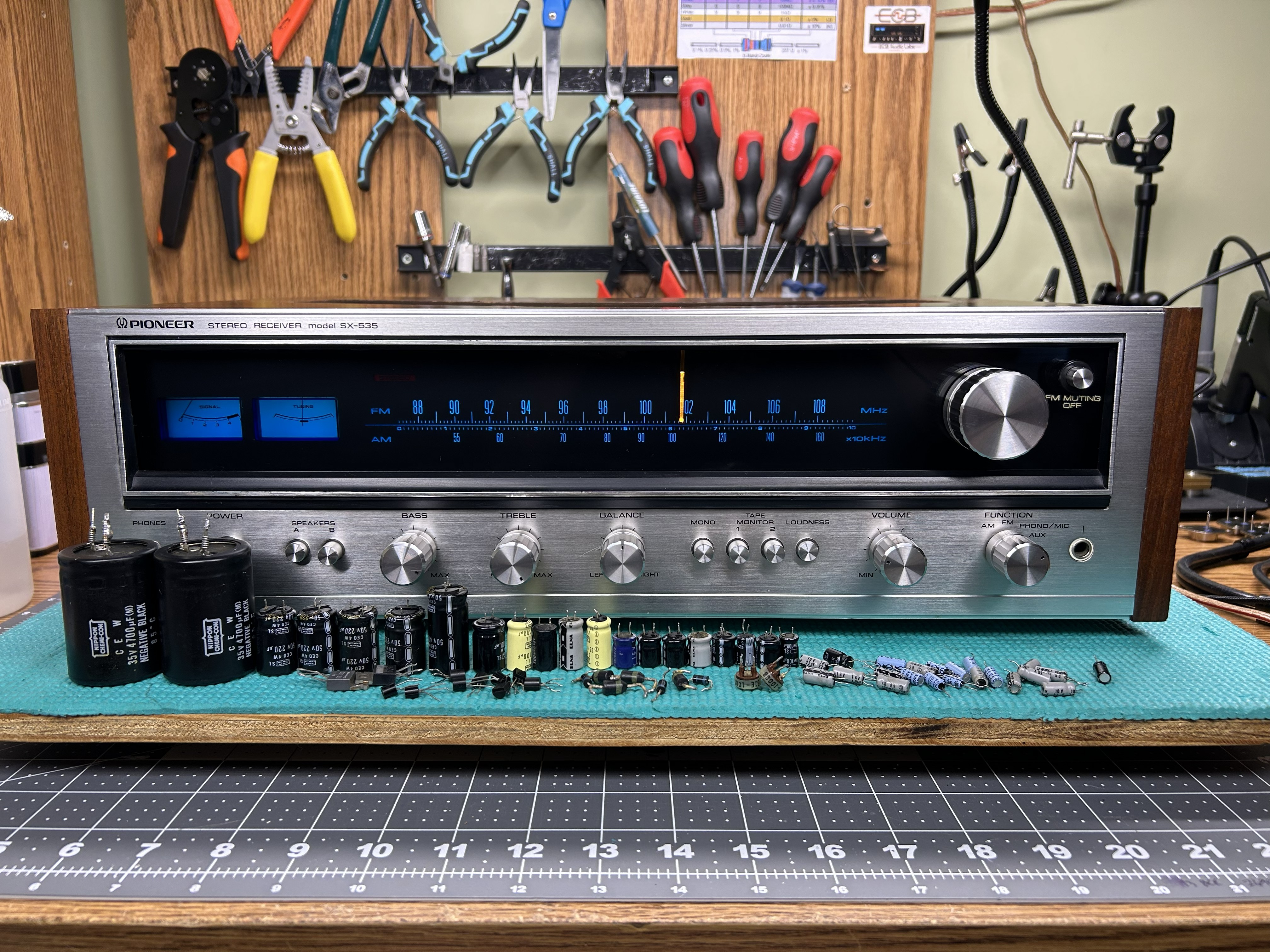
This Pioneer SX-535 came to ECB Audio Labs from Greenville, South Carolina, in February 2025. Like many receivers approaching fifty years old, it still had plenty of life left in it—but it also carried the effects of decades of use and aging components.
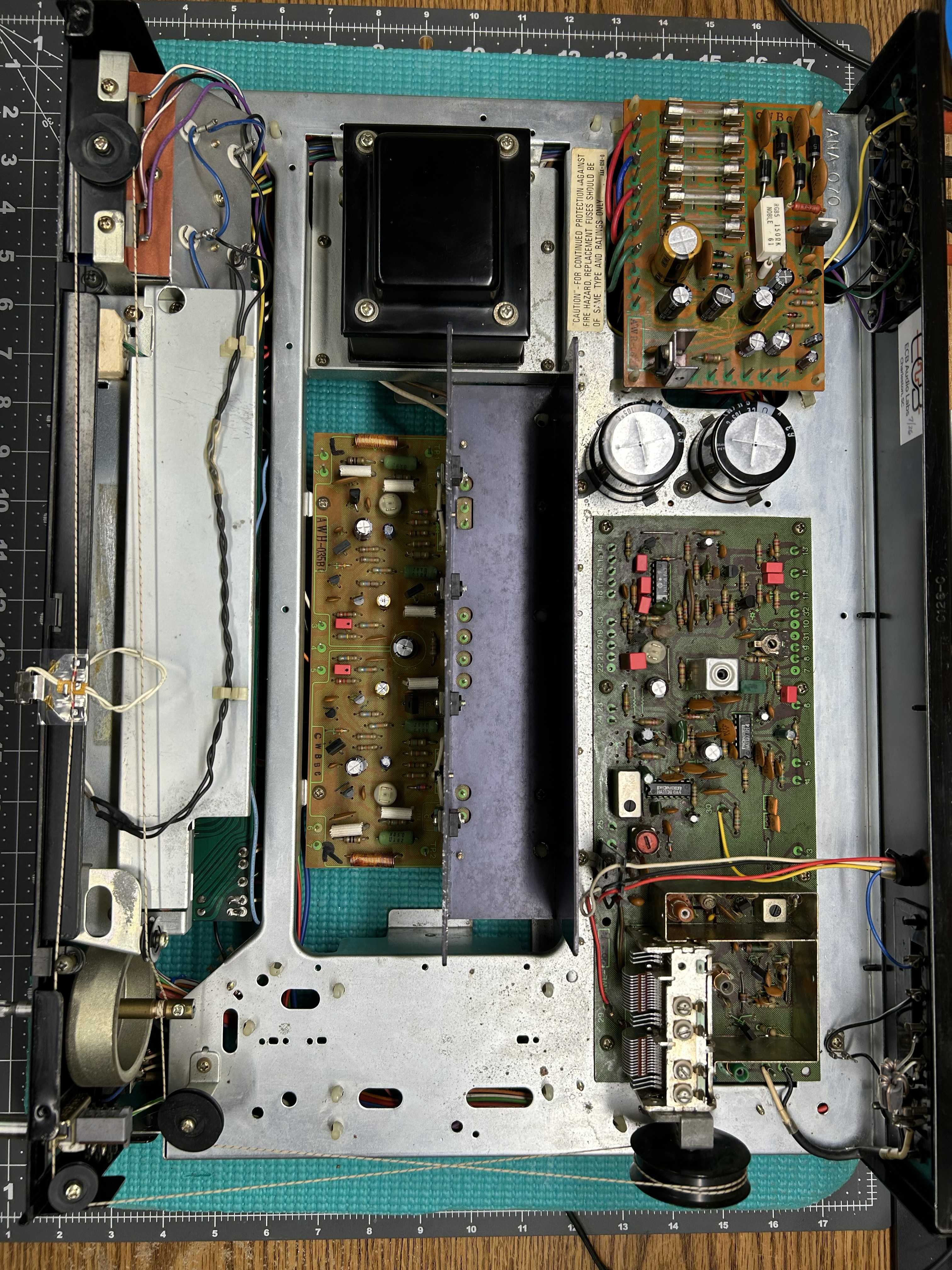
What followed became far more than a cosmetic cleanup. The receiver was disassembled and systematically restored, with each circuit evaluated rather than simply replacing parts for the sake of replacing them.
Preserve it. Don't reinvent it.
The objective was never to redesign the SX-535 or change what Pioneer built. It was to preserve it.
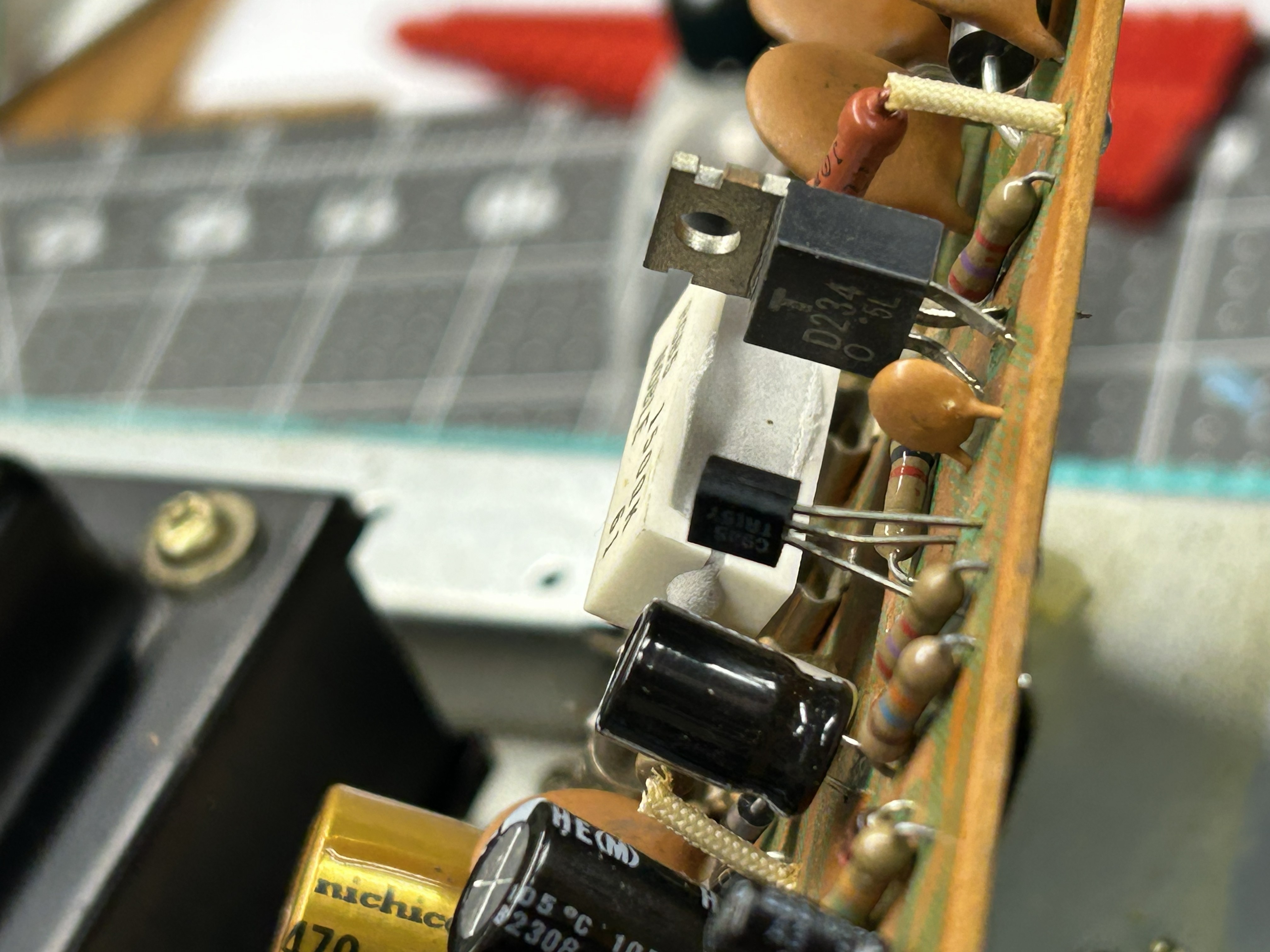
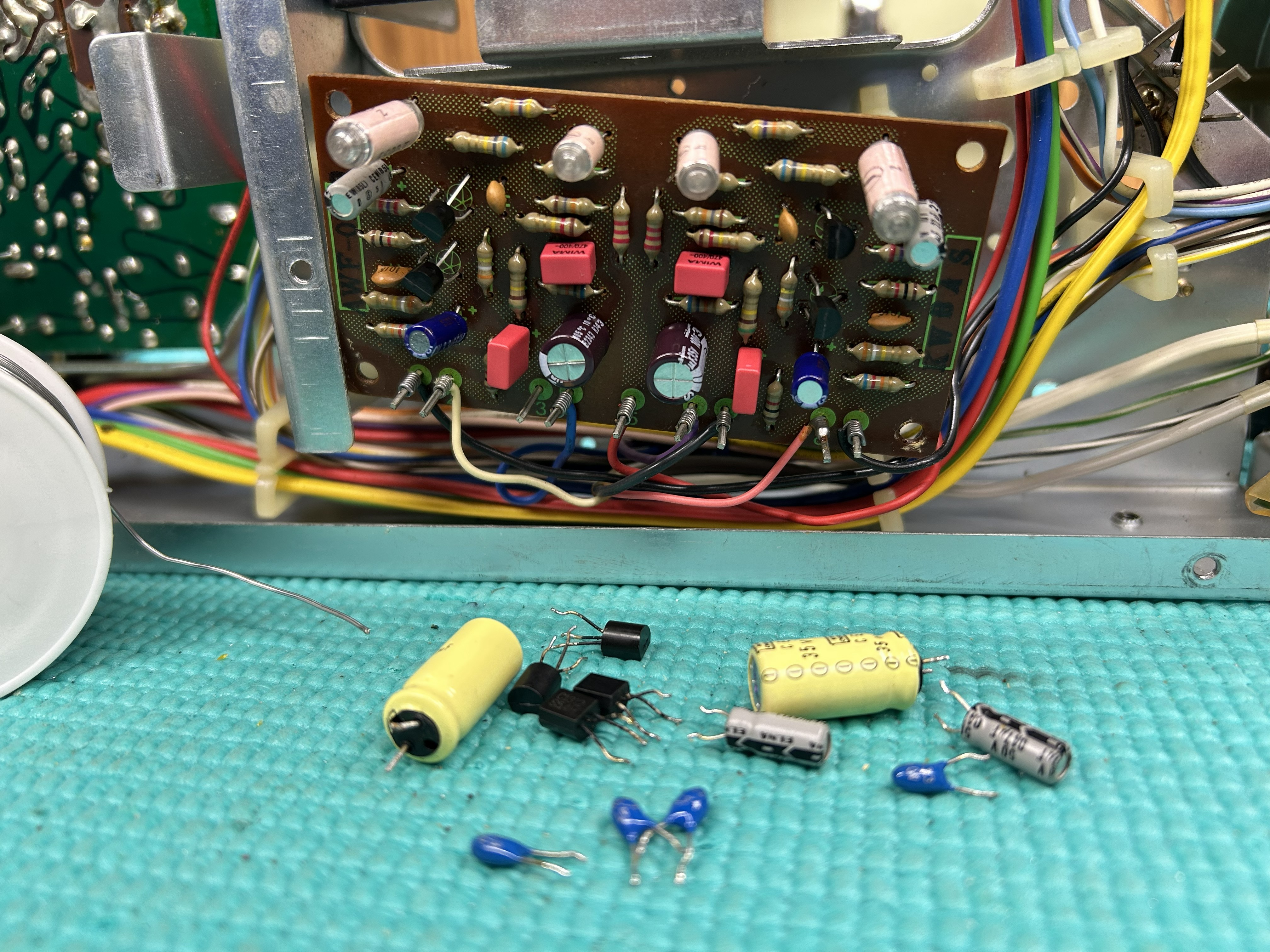
Original circuit topology and character were retained while age-related weaknesses were addressed with carefully selected modern components. Electrolytic capacitors were renewed, known failure-prone semiconductors were addressed, differential pairs were matched, the output stage was serviced, aging diodes were replaced, and new precision bias trimmers were installed.
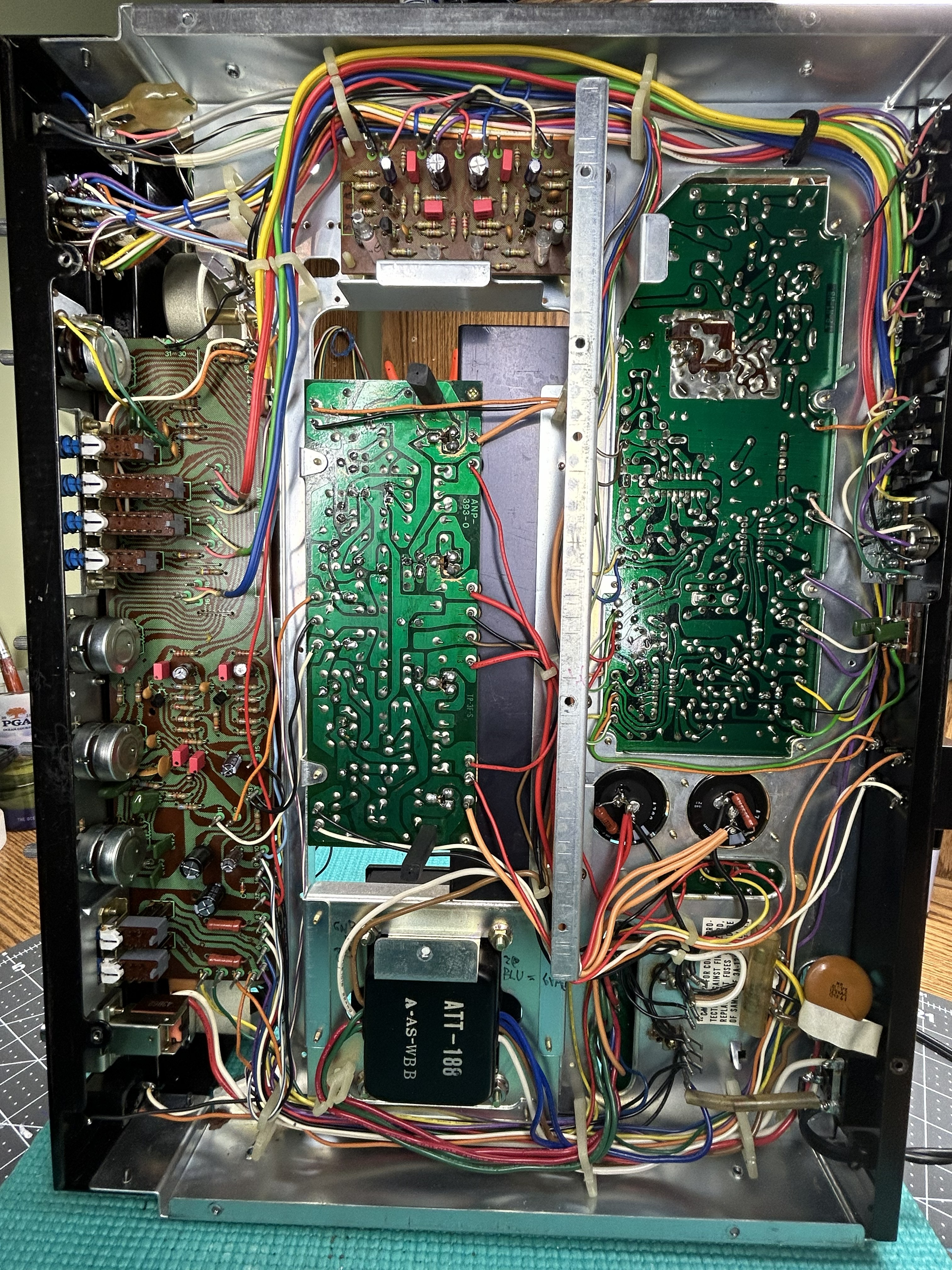
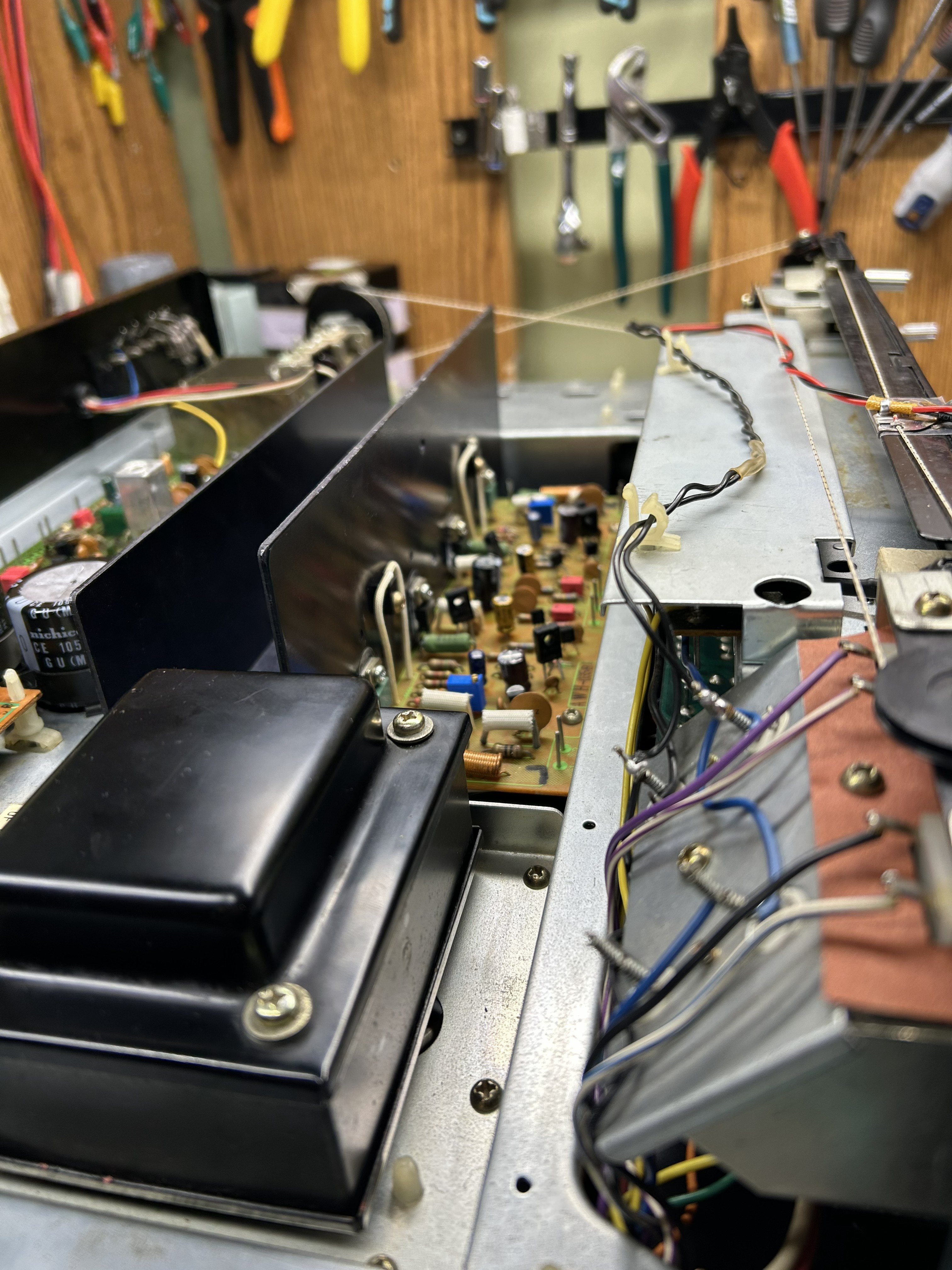
Inside the SX-535
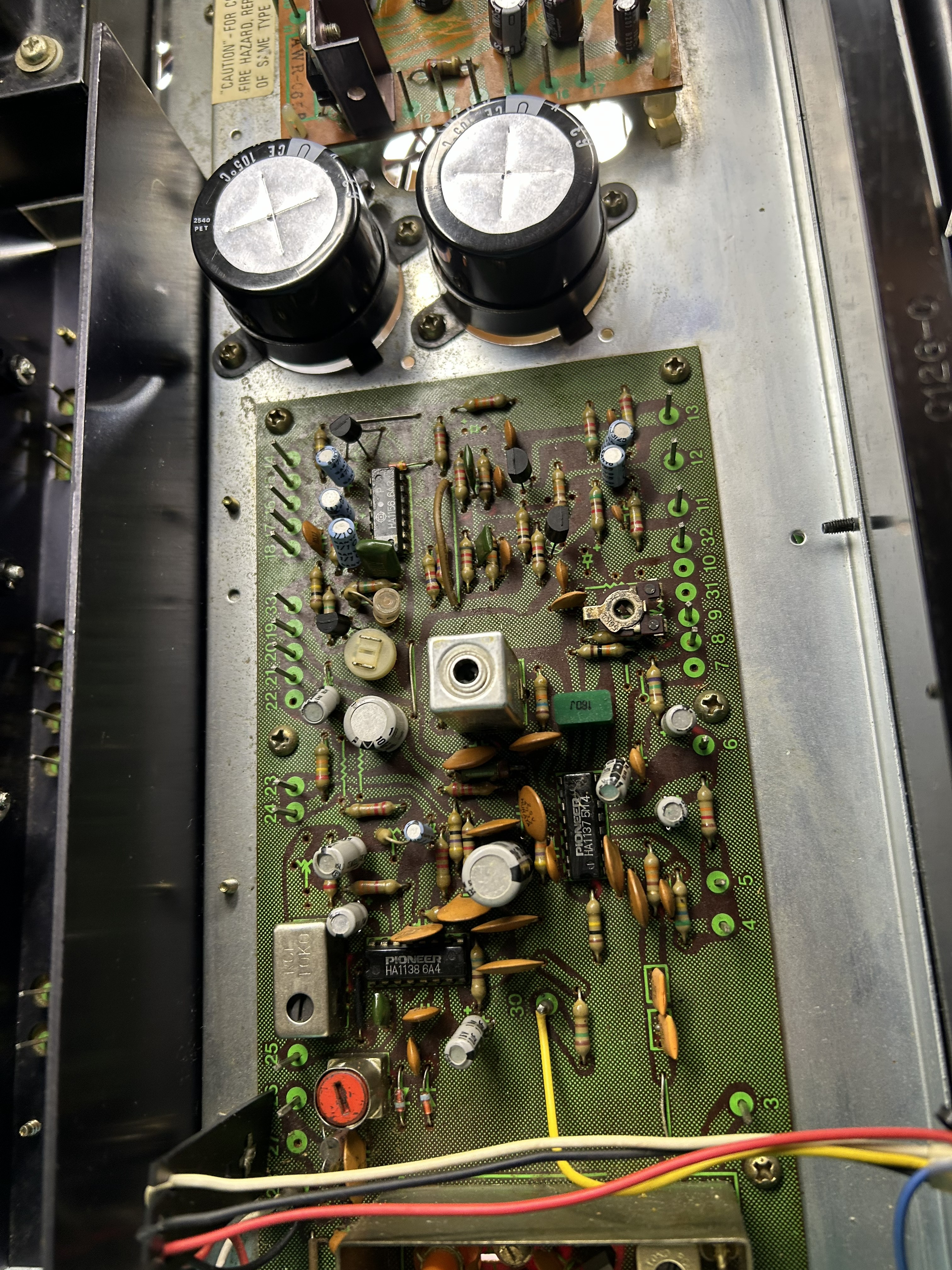
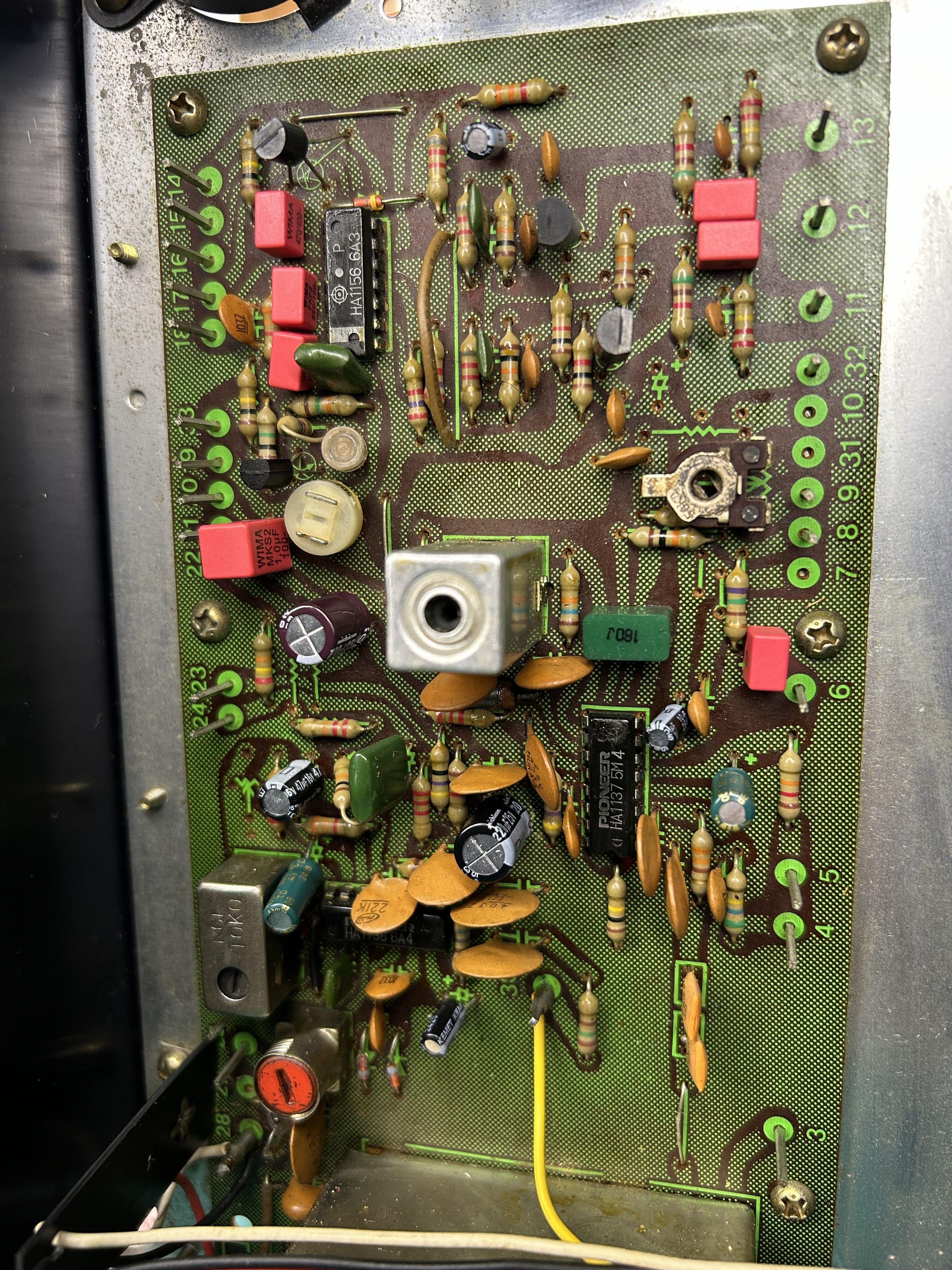
The electrical overhaul went well beyond a recap. The receiver was worked through circuit by circuit, with age-related components and known trouble areas addressed before final calibration and bench verification.
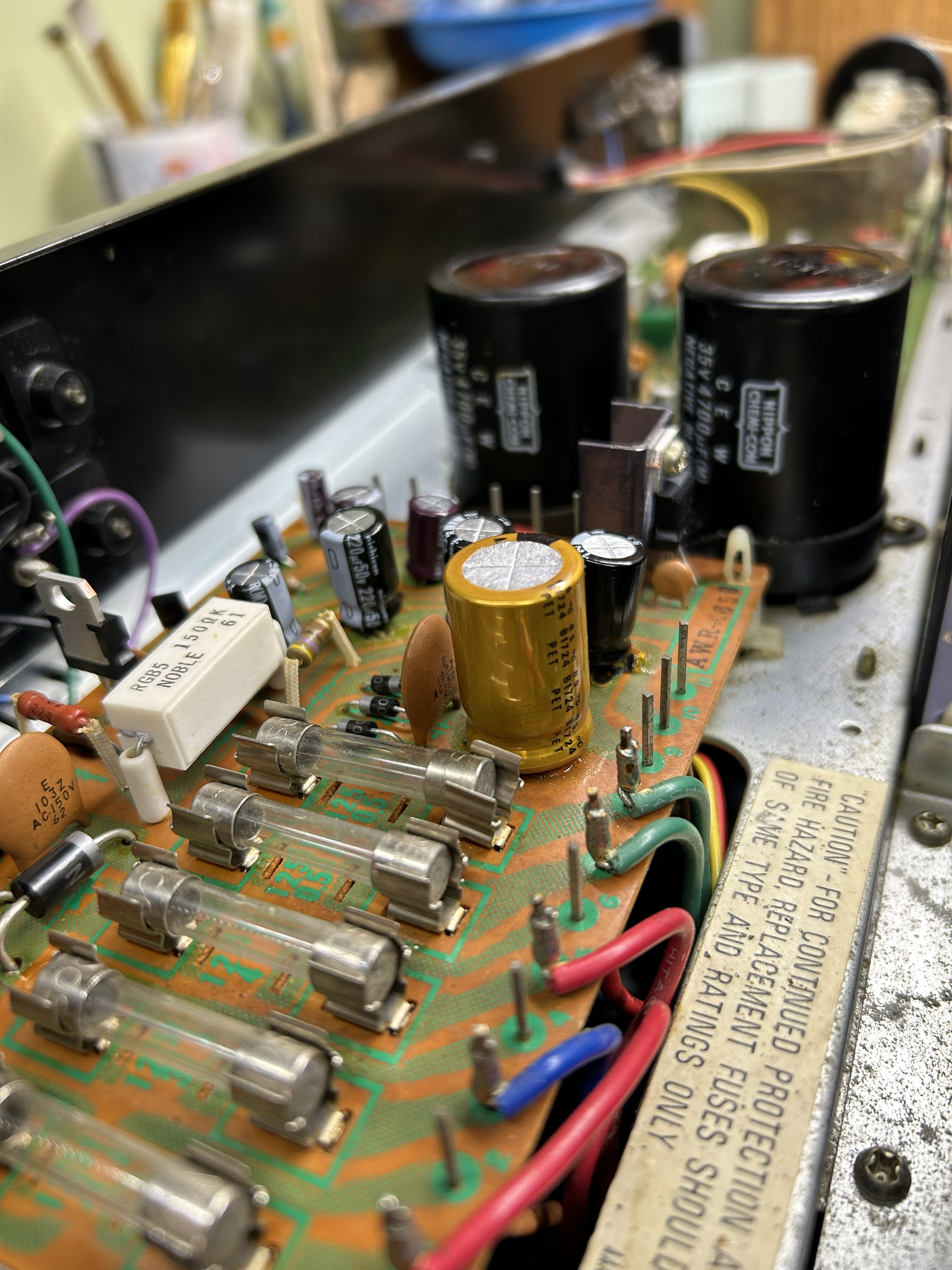
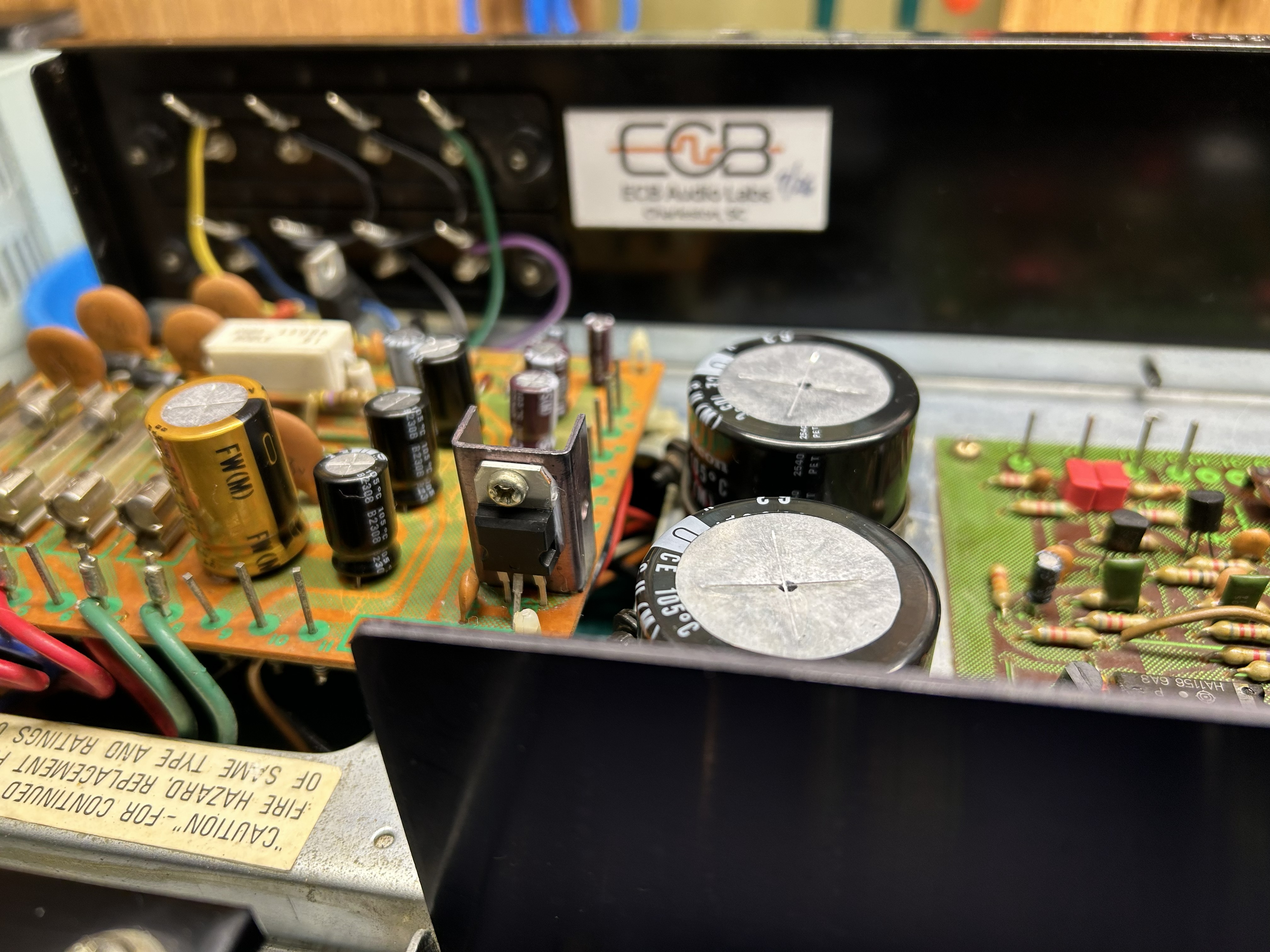
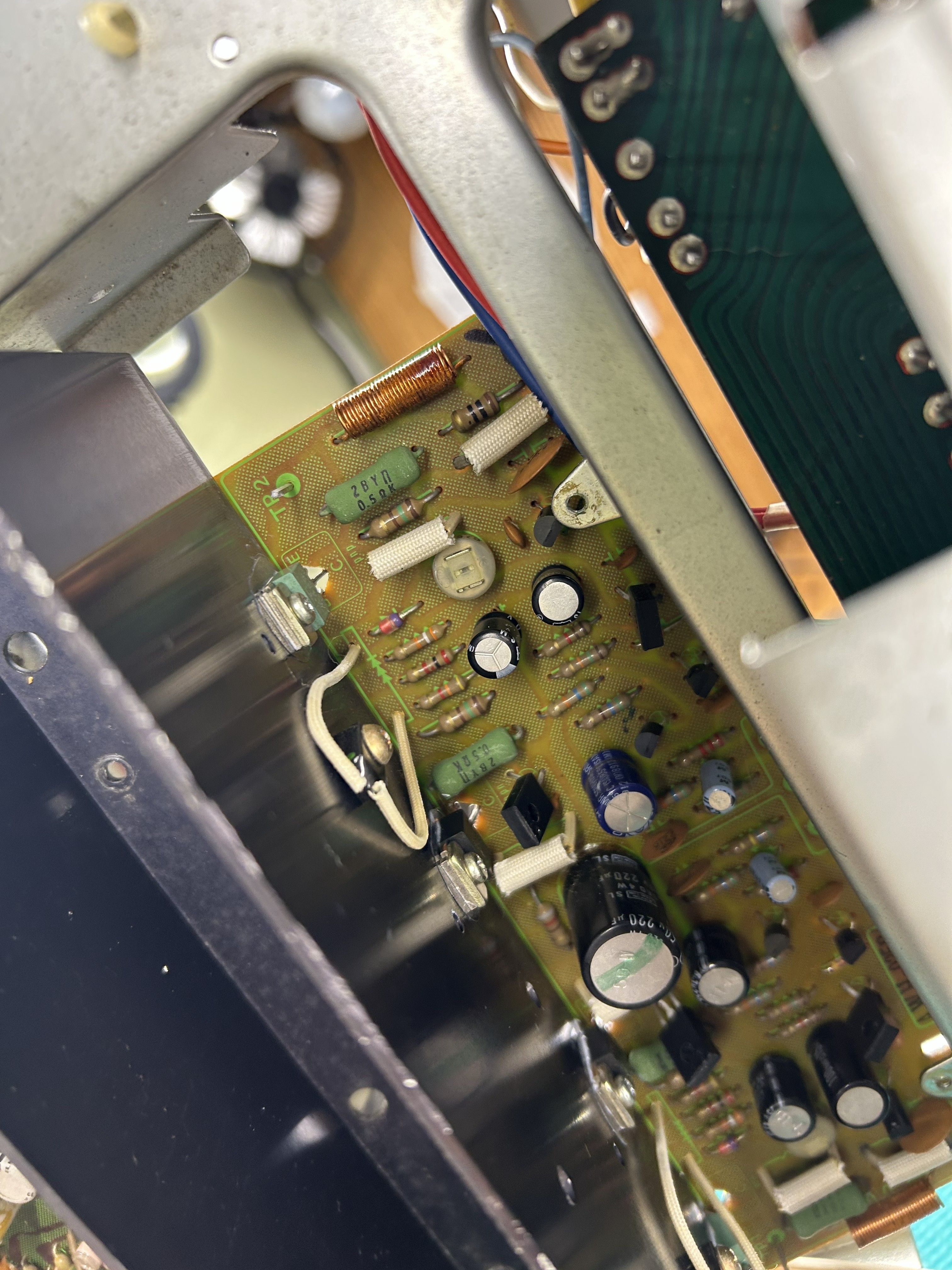
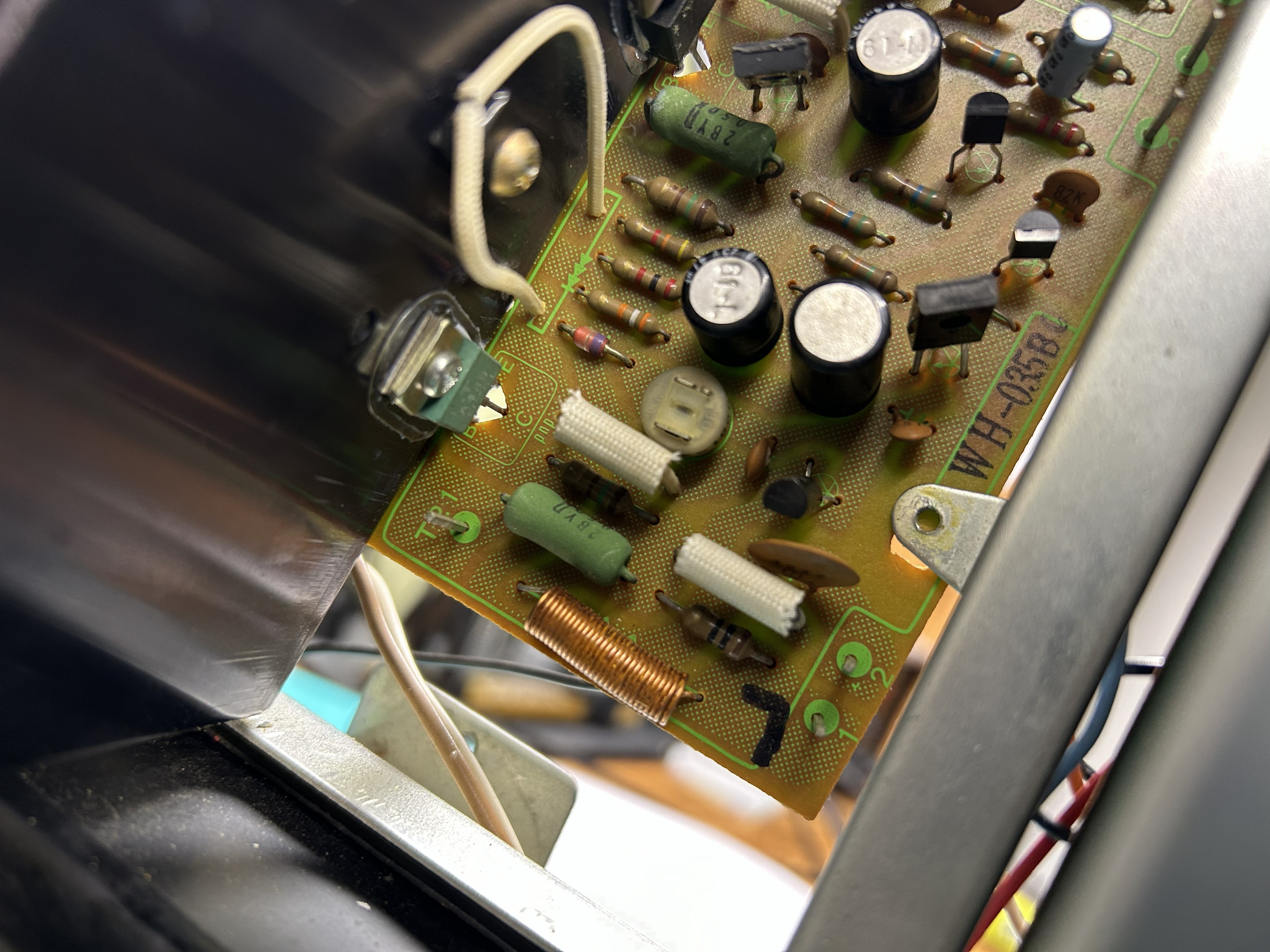
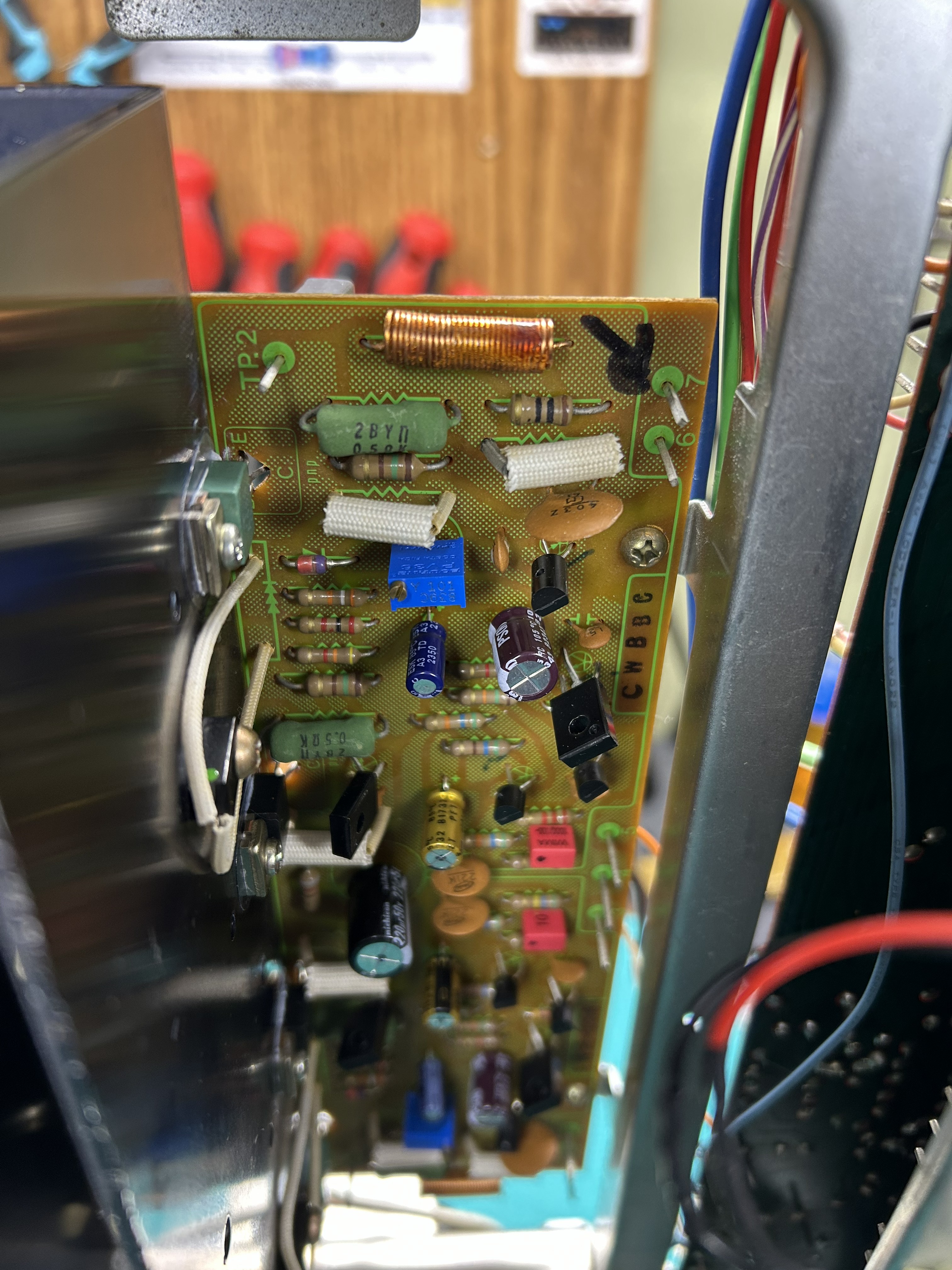
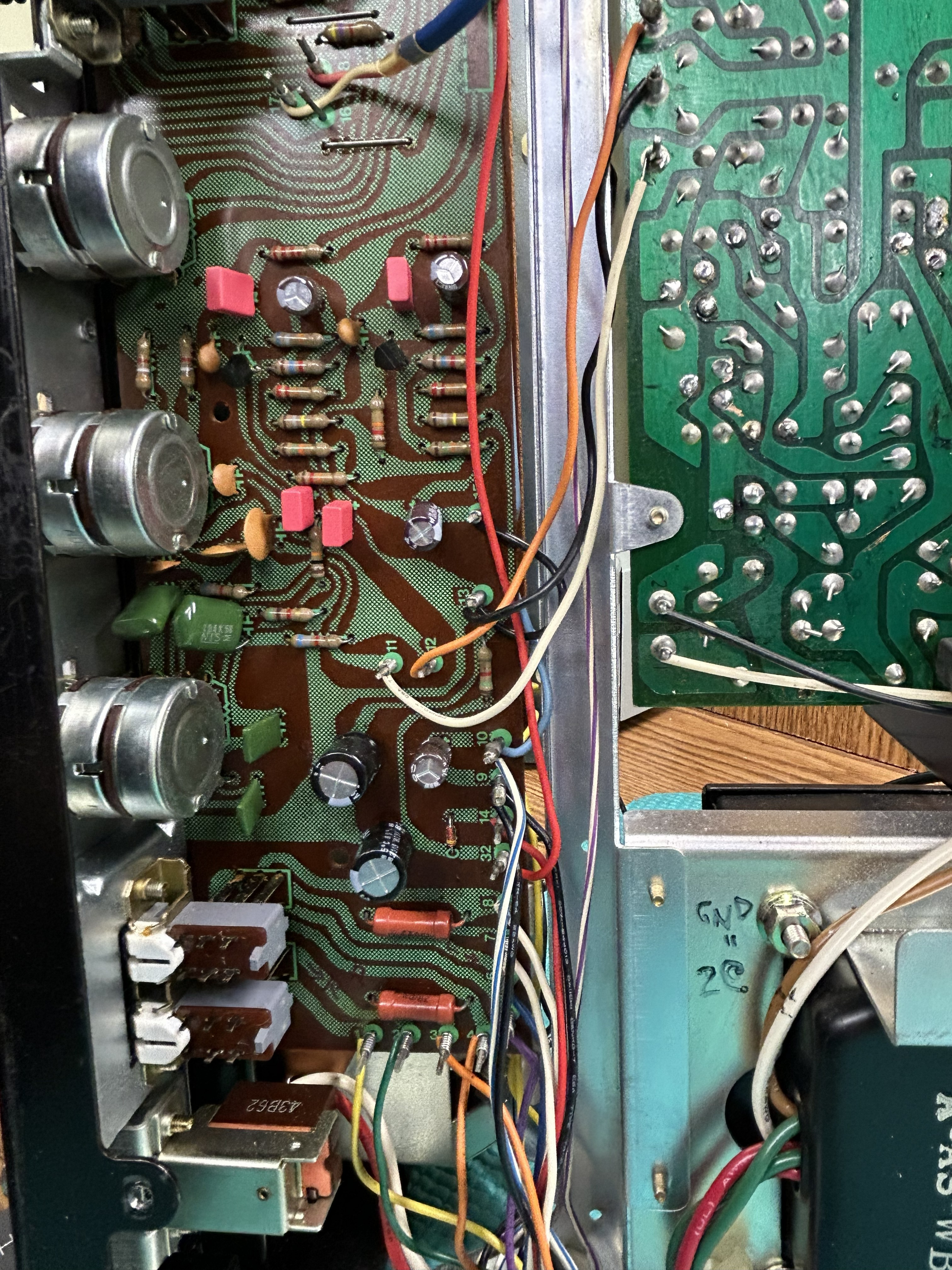
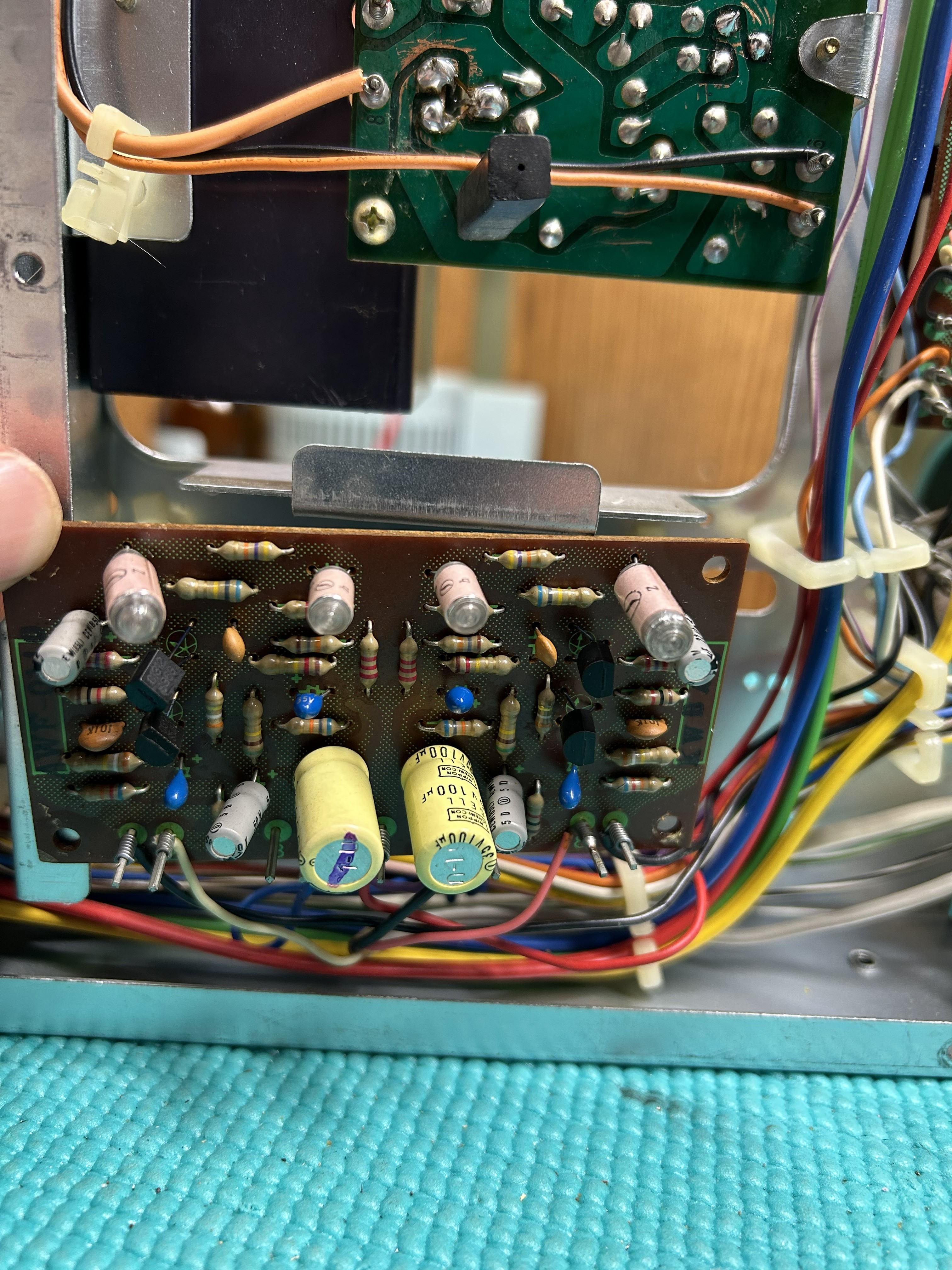
The restoration included 51 electrolytic capacitors plus both main filter capacitors. Nineteen transistors and eight diodes were replaced, differential pairs were matched, and the four output transistors were removed and serviced with new mica insulators and fresh thermal compound.
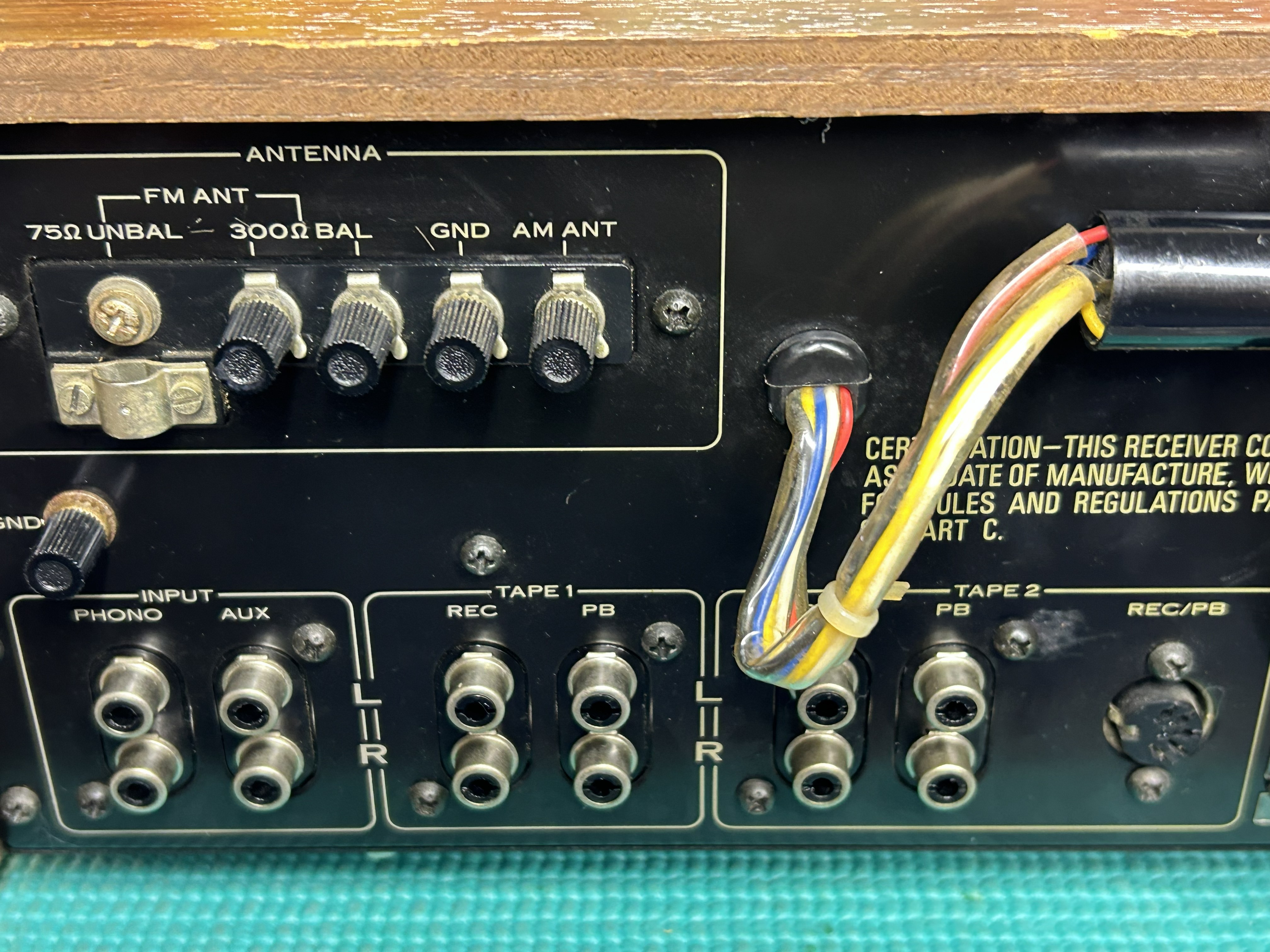
Two new Bourns multi-turn bias trimmers replaced the original adjustment components. Controls and switches were thoroughly cleaned and lubricated, grounding and mechanical connections were inspected, and the receiver was prepared for final calibration.
Board-by-Board Restoration
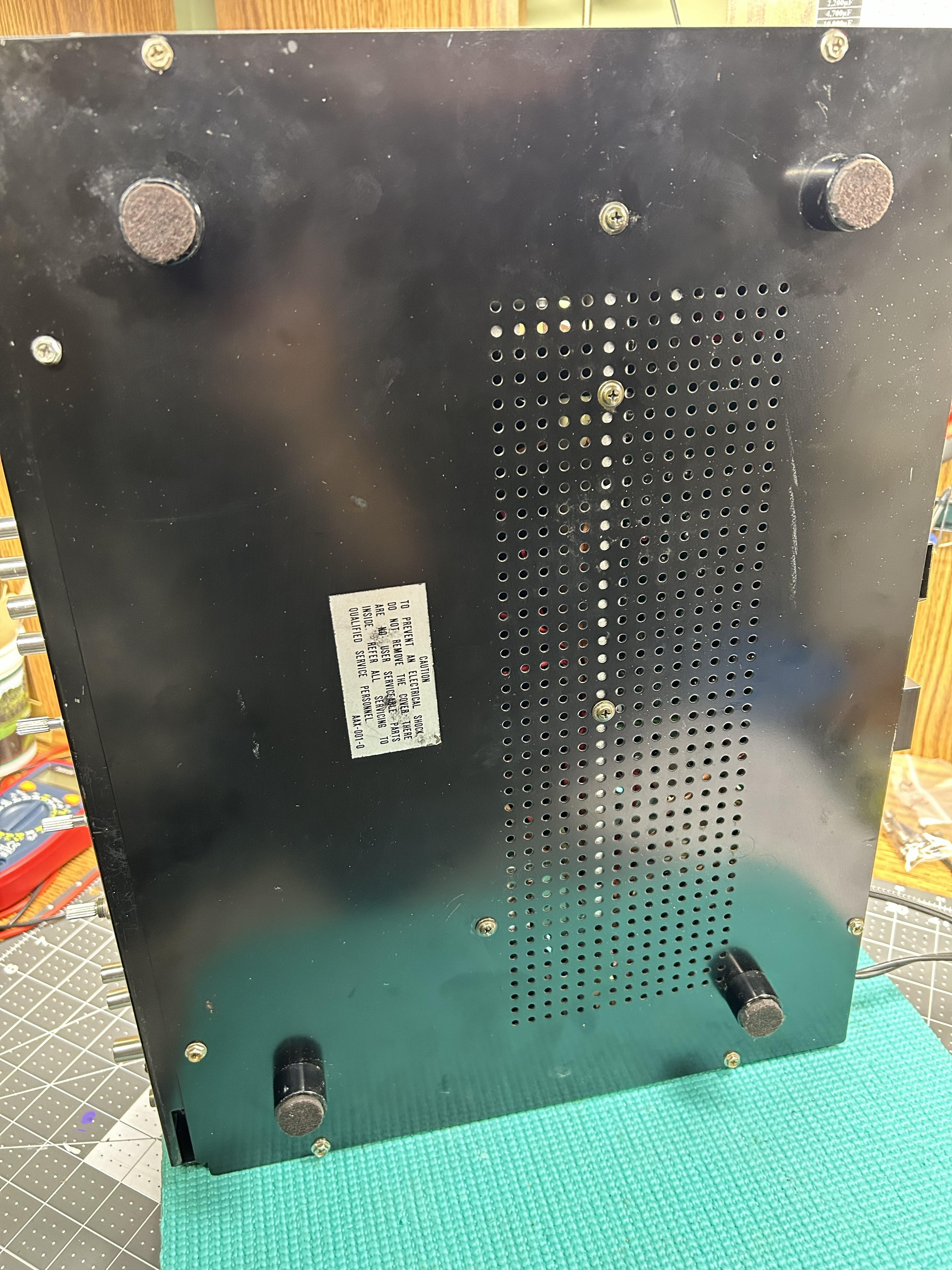
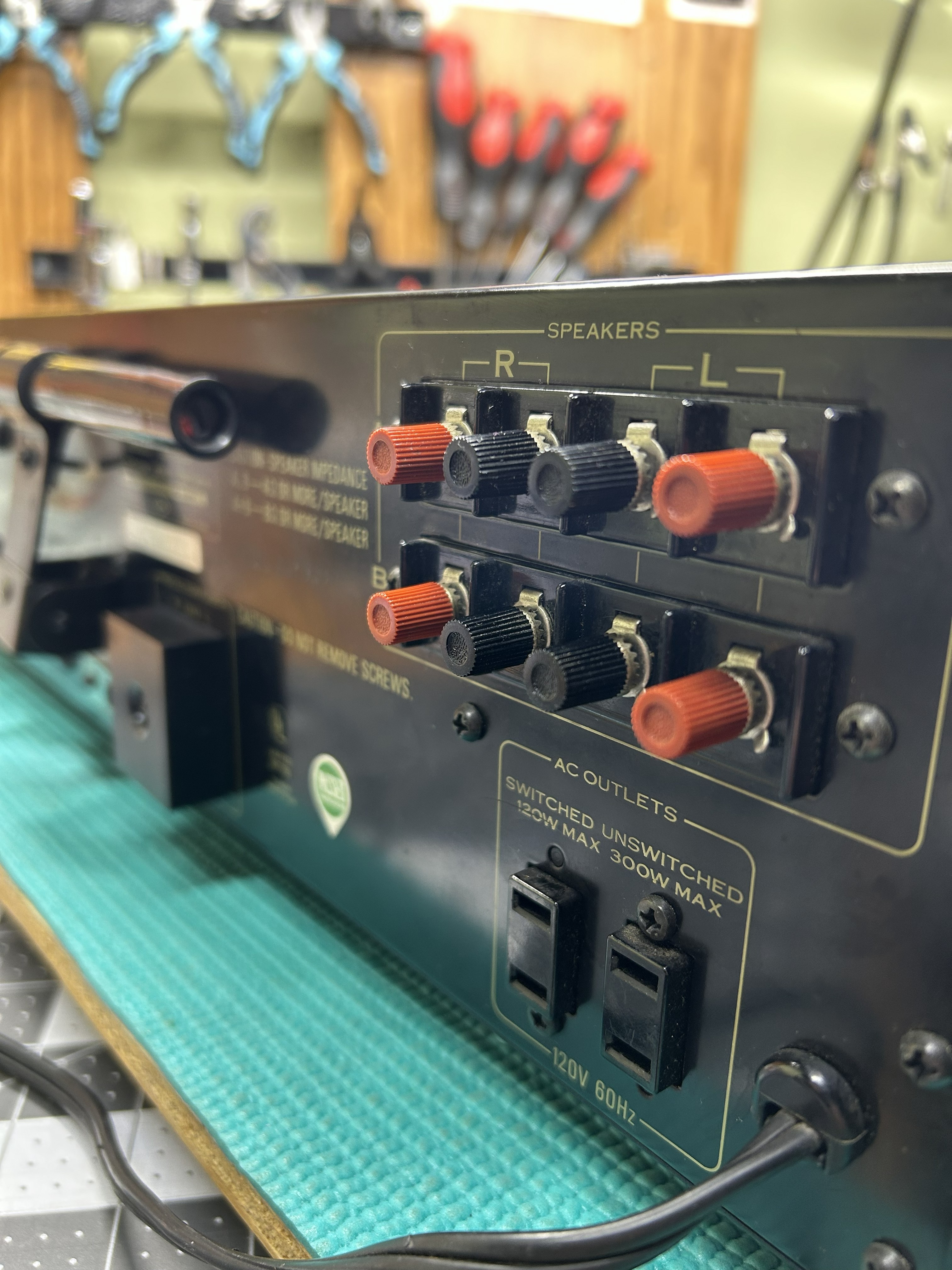
Mechanical Details
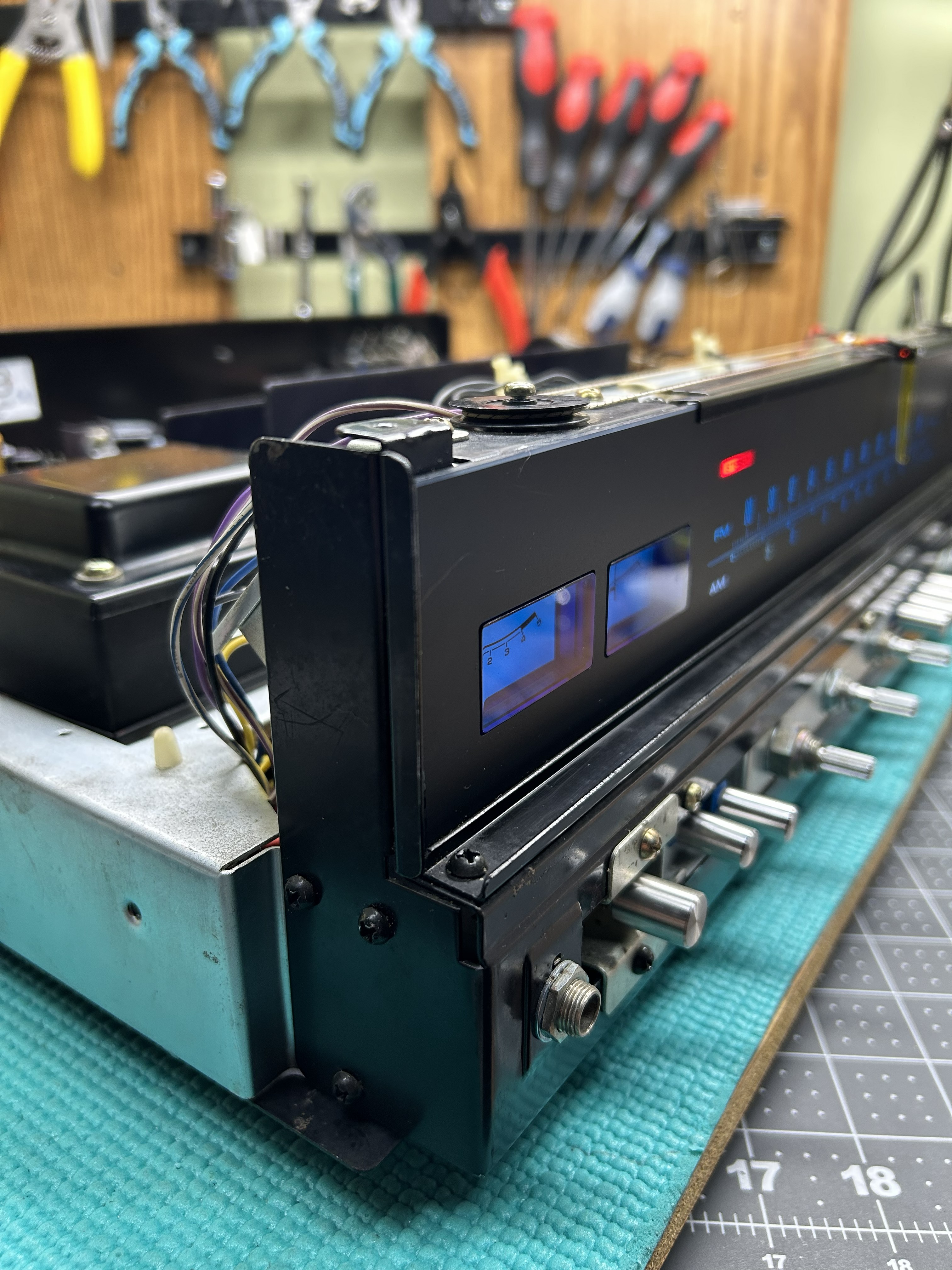
Tested, not assumed.
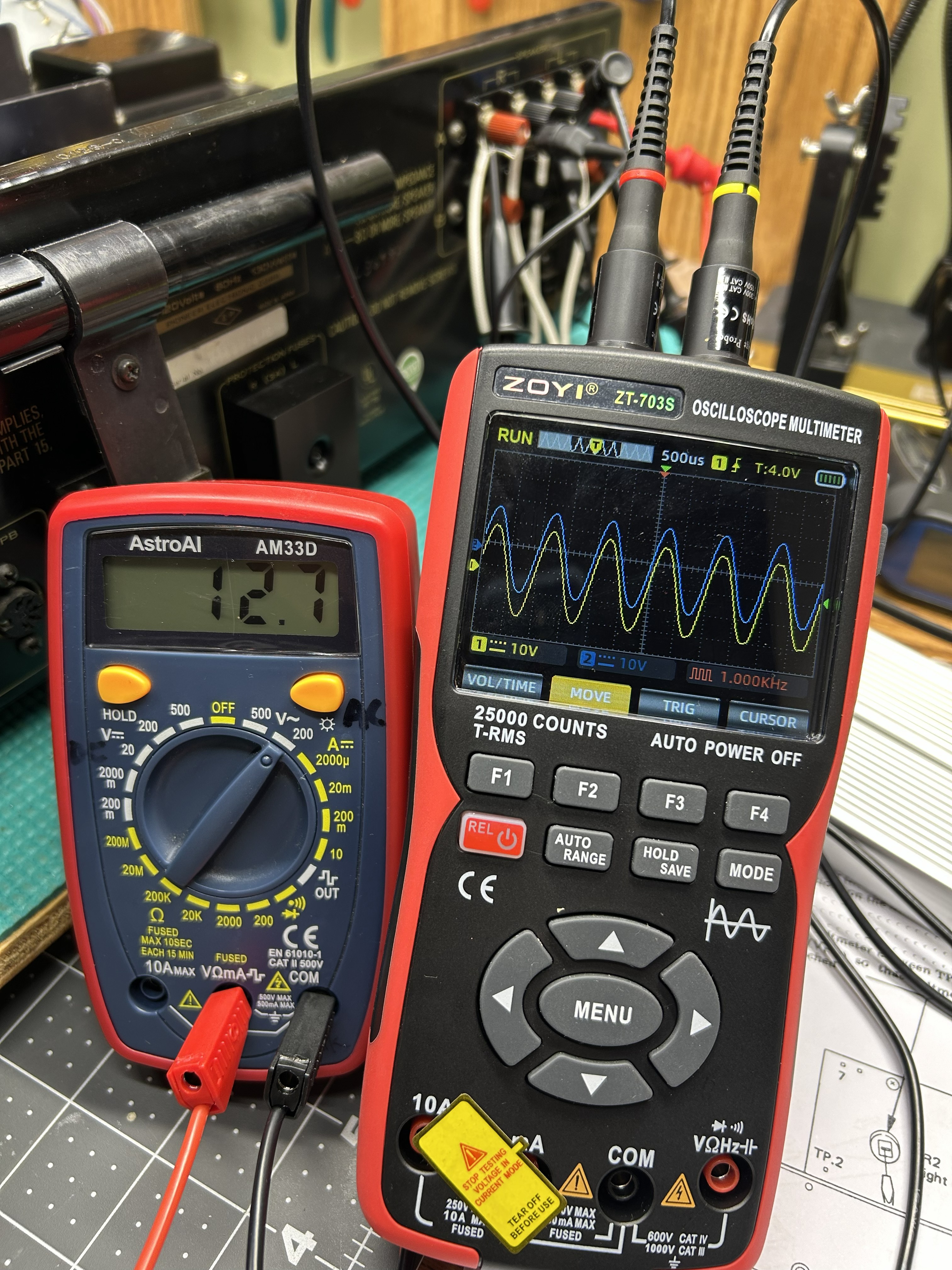
Once restoration was complete, the SX-535 returned to the bench for calibration and verification. Oscilloscope testing included sine-wave and square-wave evaluation, clipping symmetry and stability testing, followed by an eight-hour thermal burn-in under load.
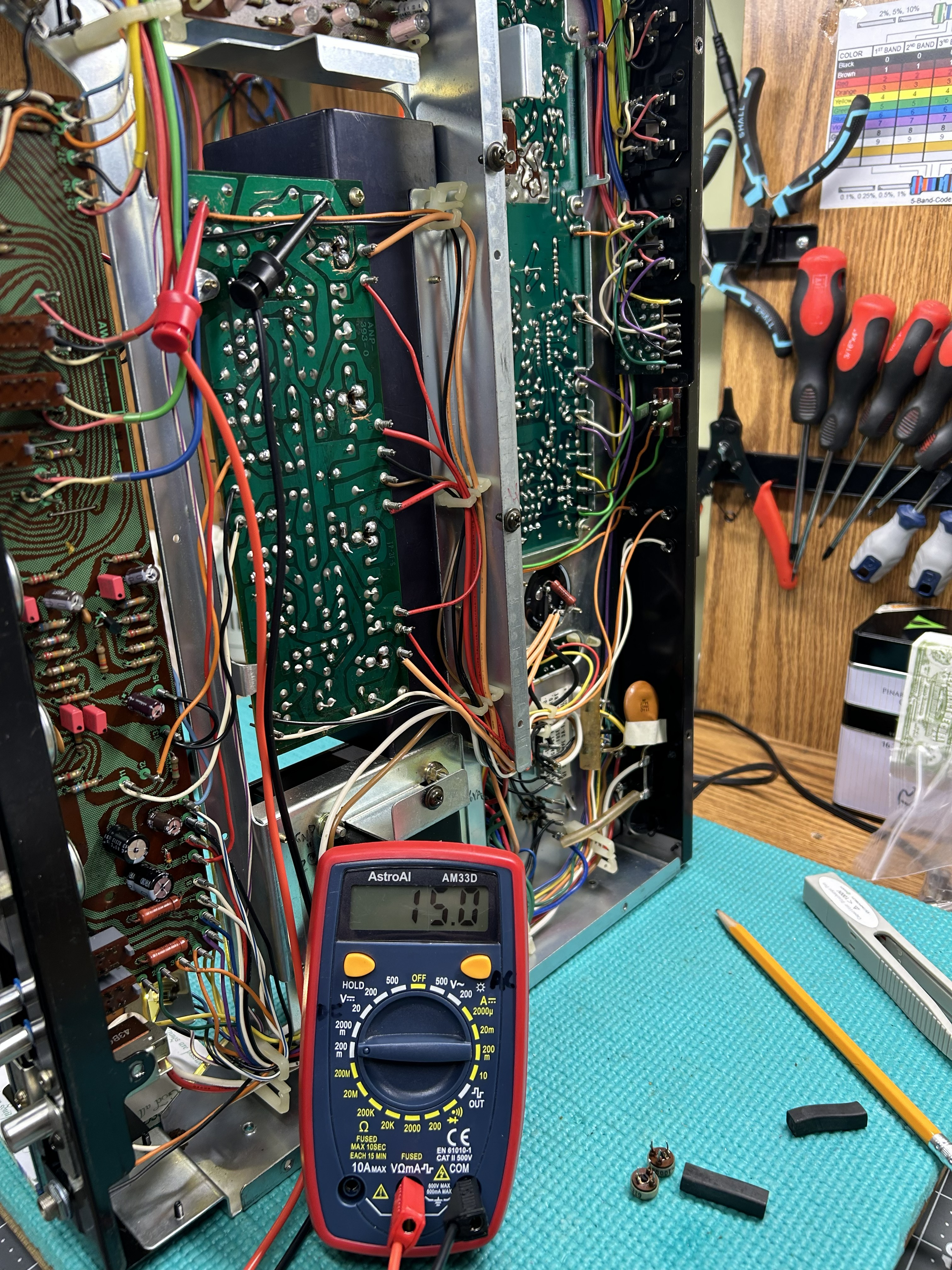
DC offset measured just 1 mV left and 4 mV right. Bias was set to the factory specification of 15 mV per channel, and both channels produced the receiver's rated 20 watts into 8 ohms.
Cosmetic Restoration
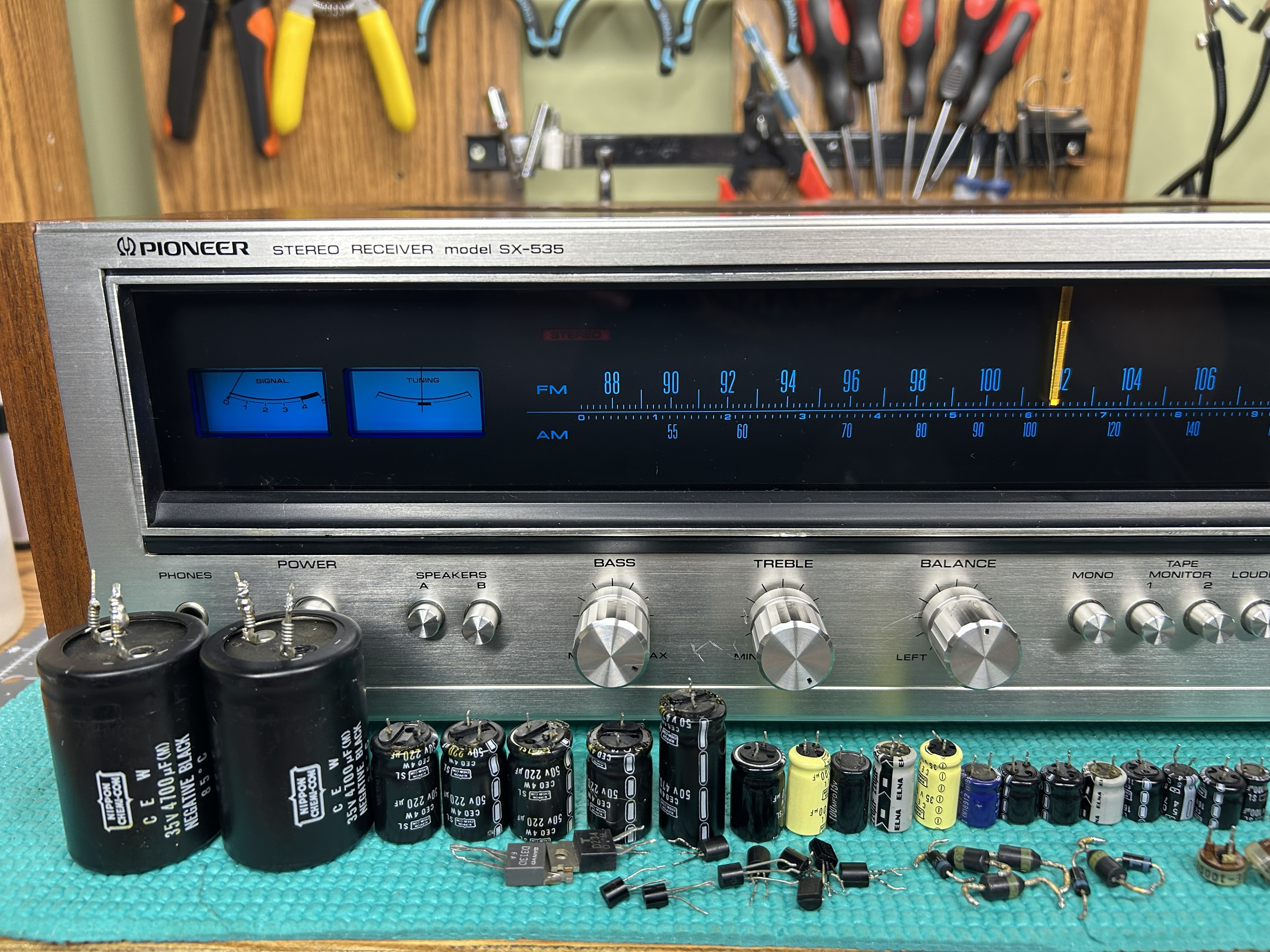
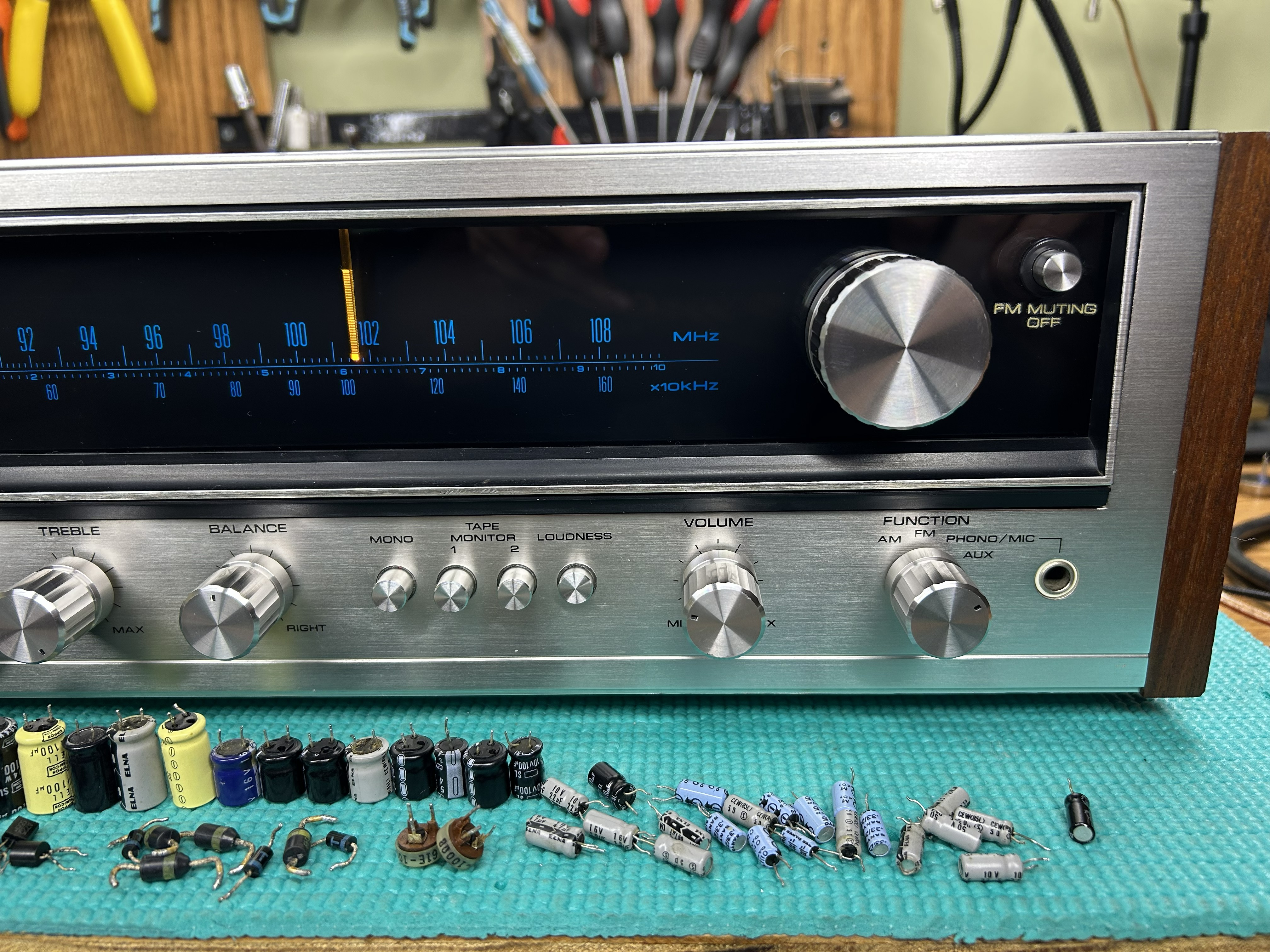
The faceplate and controls were carefully cleaned and detailed. A replacement faceplate and new tinted dial glass were installed, followed by wet sanding, polishing and finishing work to return the receiver to a clean, period-correct presentation.
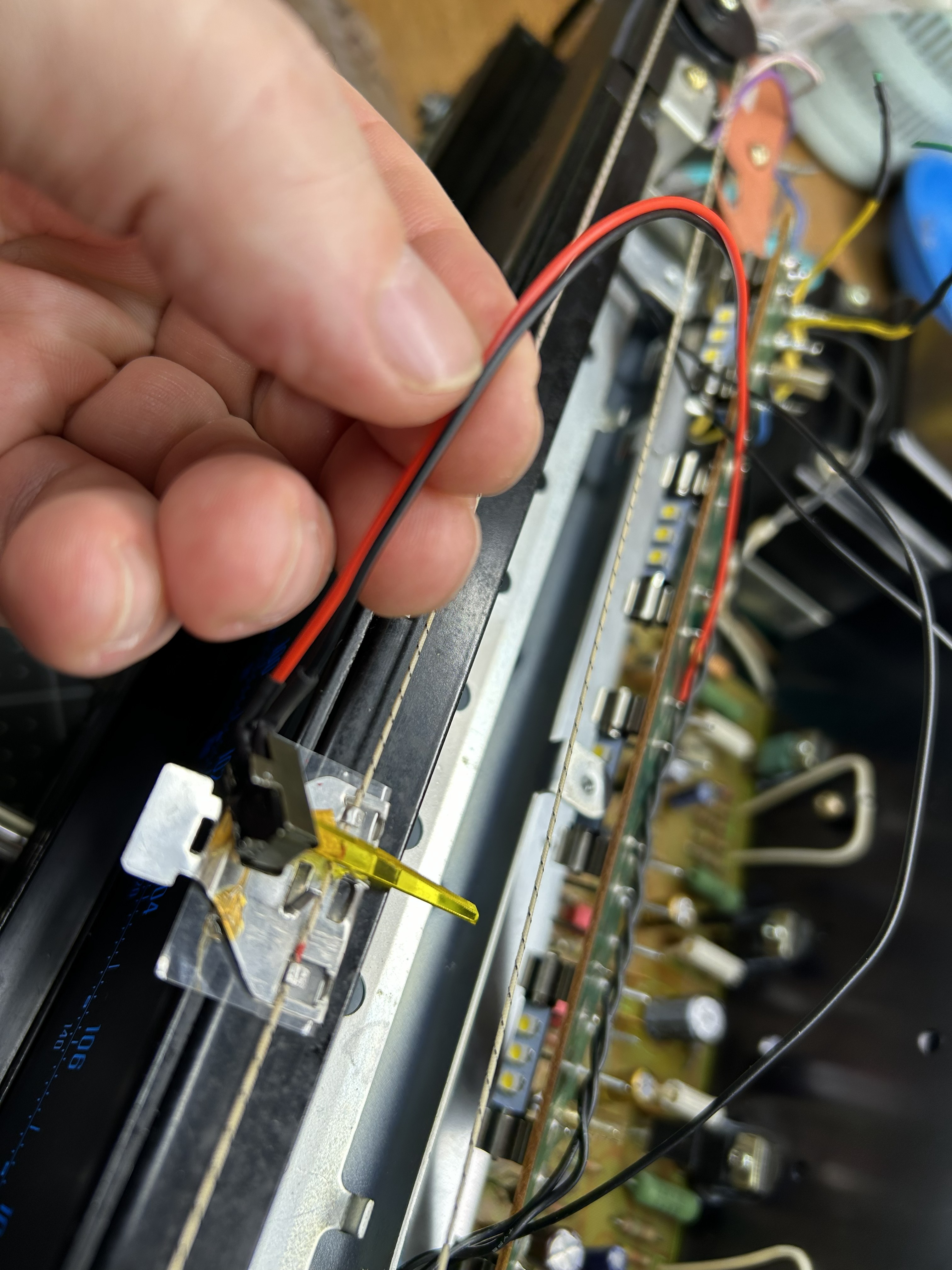
The dial and meter illumination was converted to warm-white LED lighting while retaining the original dial indicator lamp. The cabinet and covers were cleaned and detailed so the exterior received the same attention as the electronics inside.
What came out stays with the story.
The original replaced components remain with the receiver as its “Bag of Bones,” accompanied by the Certificate of Restoration. Together they document the work performed and preserve a tangible piece of the receiver's history.
View the Certificate →Ready to start over.
Nearly fifty years after Pioneer built it, this SX-535 isn't finished. It's ready to start over.