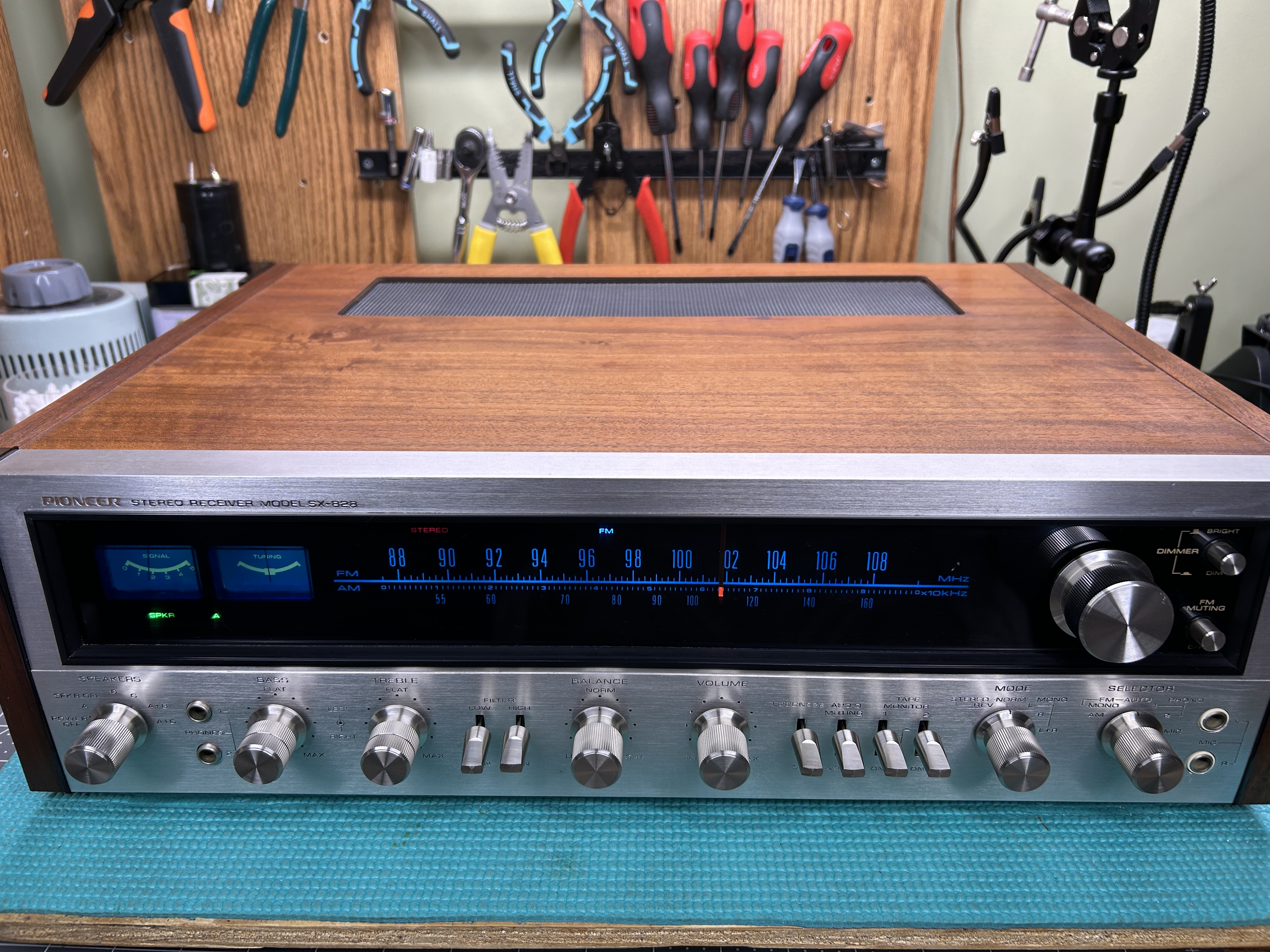
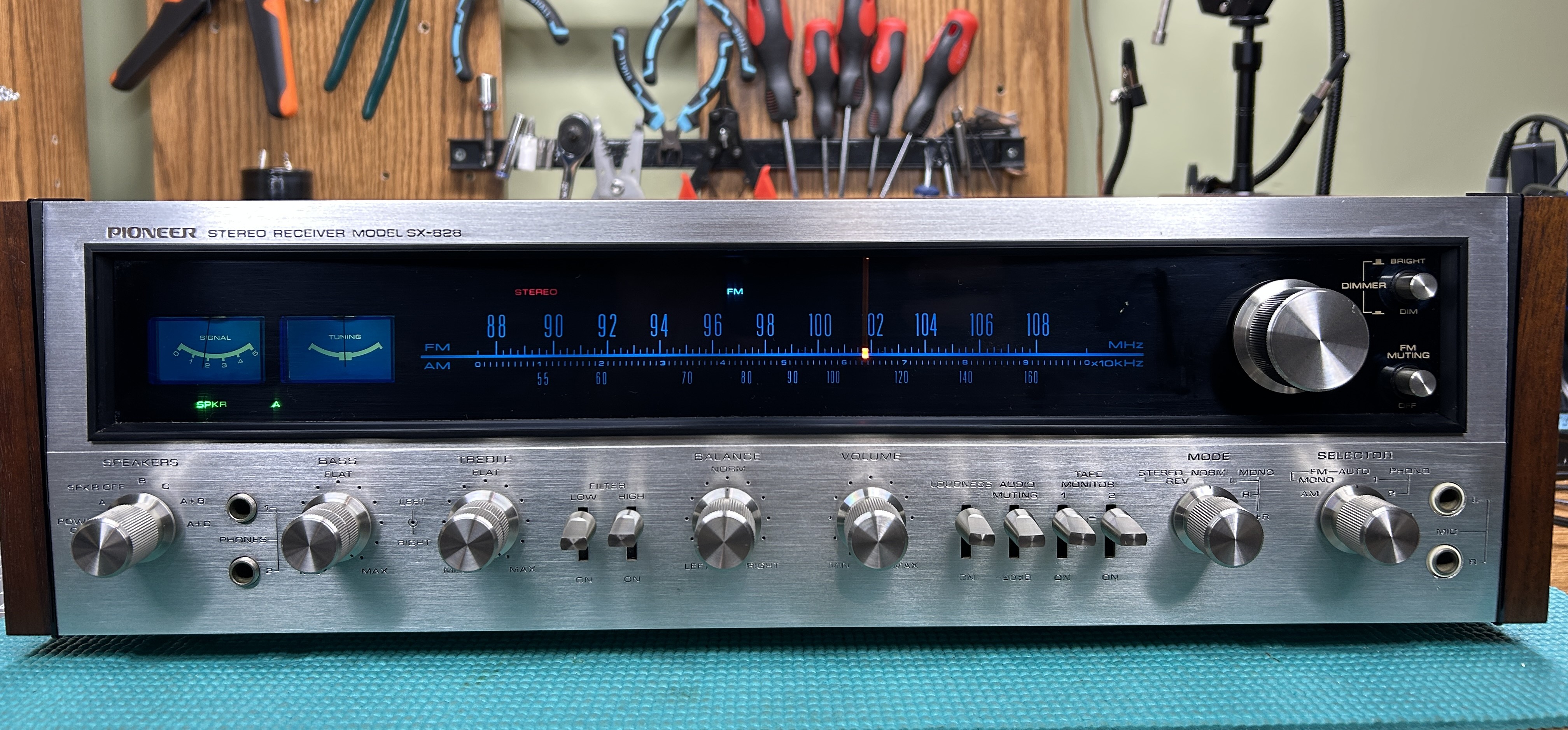
More than fifty years of history.
This Pioneer SX-828, serial number SL1602382, was manufactured in December 1972 on production line 16. ECB Audio Labs acquired the receiver from The Audio Exchange in Richmond, Virginia, in June 2026. It arrived with a failed right-channel output transistor, intermittent stereo lamp operation, age-stressed power-supply components, deteriorated electrolytics and evidence of earlier service. All receiver functions restored prior to restoration.
It also arrived with something increasingly uncommon: its original Pioneer carton, factory foam and internal cardboard packaging, cloth shroud and decades of surviving provenance. The restoration therefore had two goals from the beginning — rebuild the electronics for reliable daily use while preserving the physical history that makes this particular SX-828 unique.
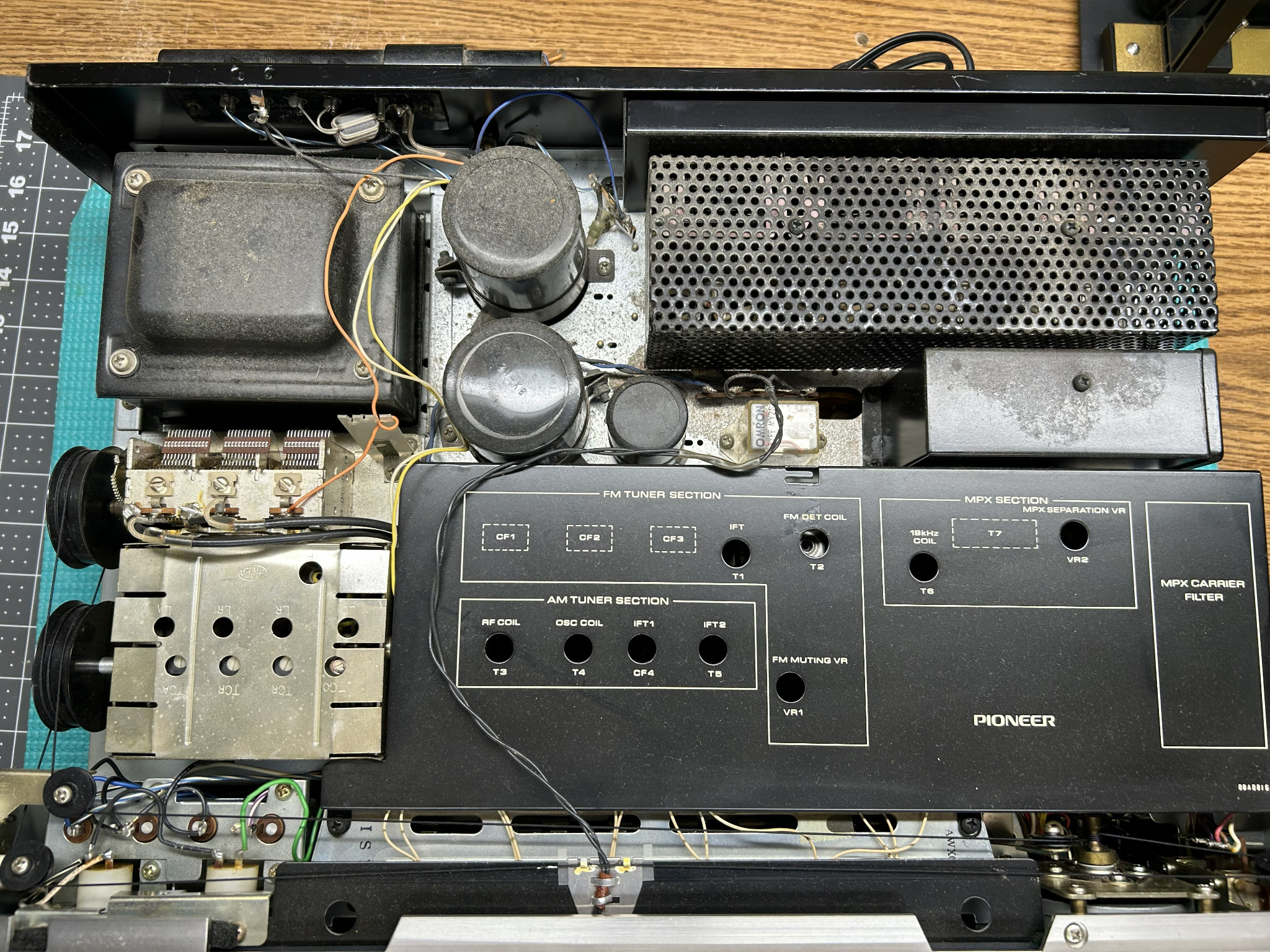
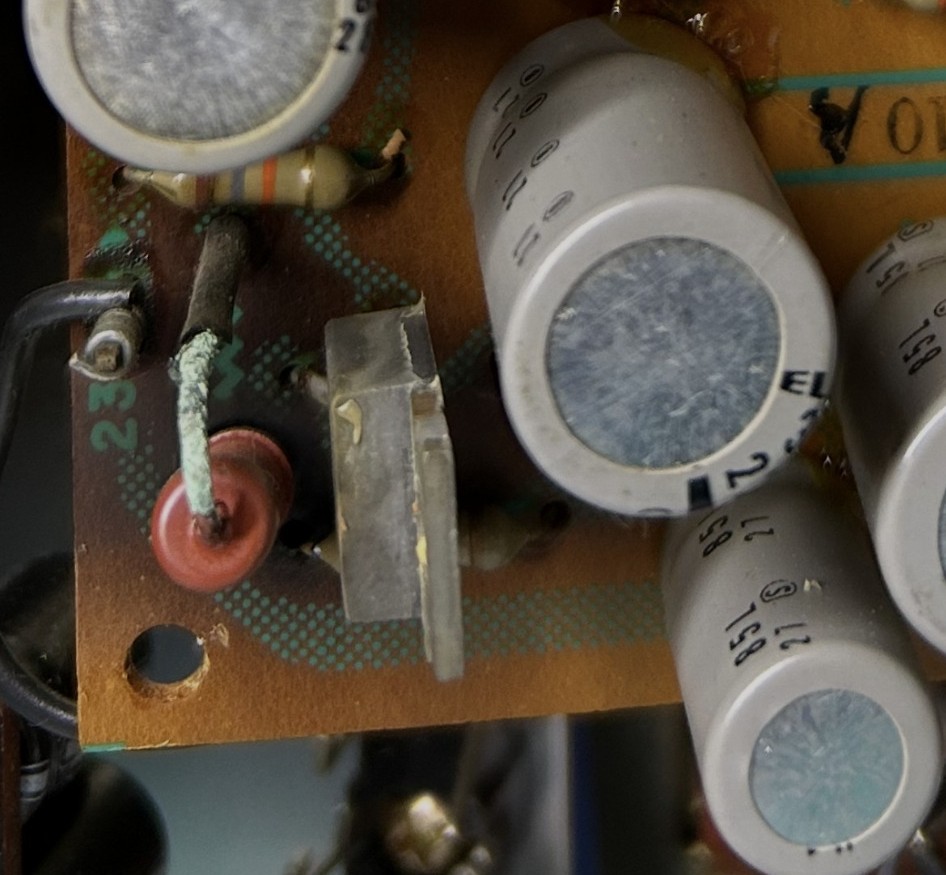
Preserve the receiver. Restore the machine.
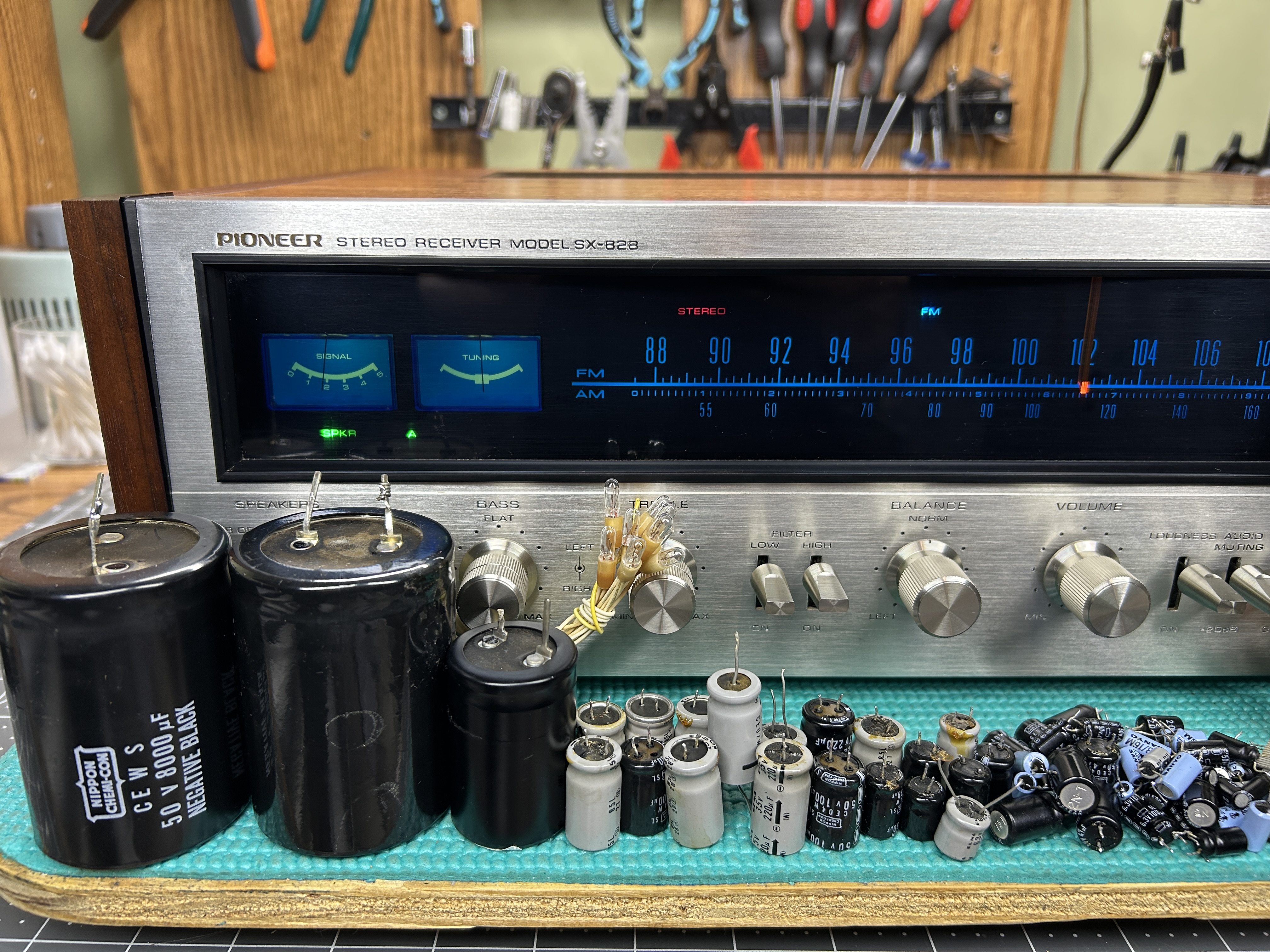
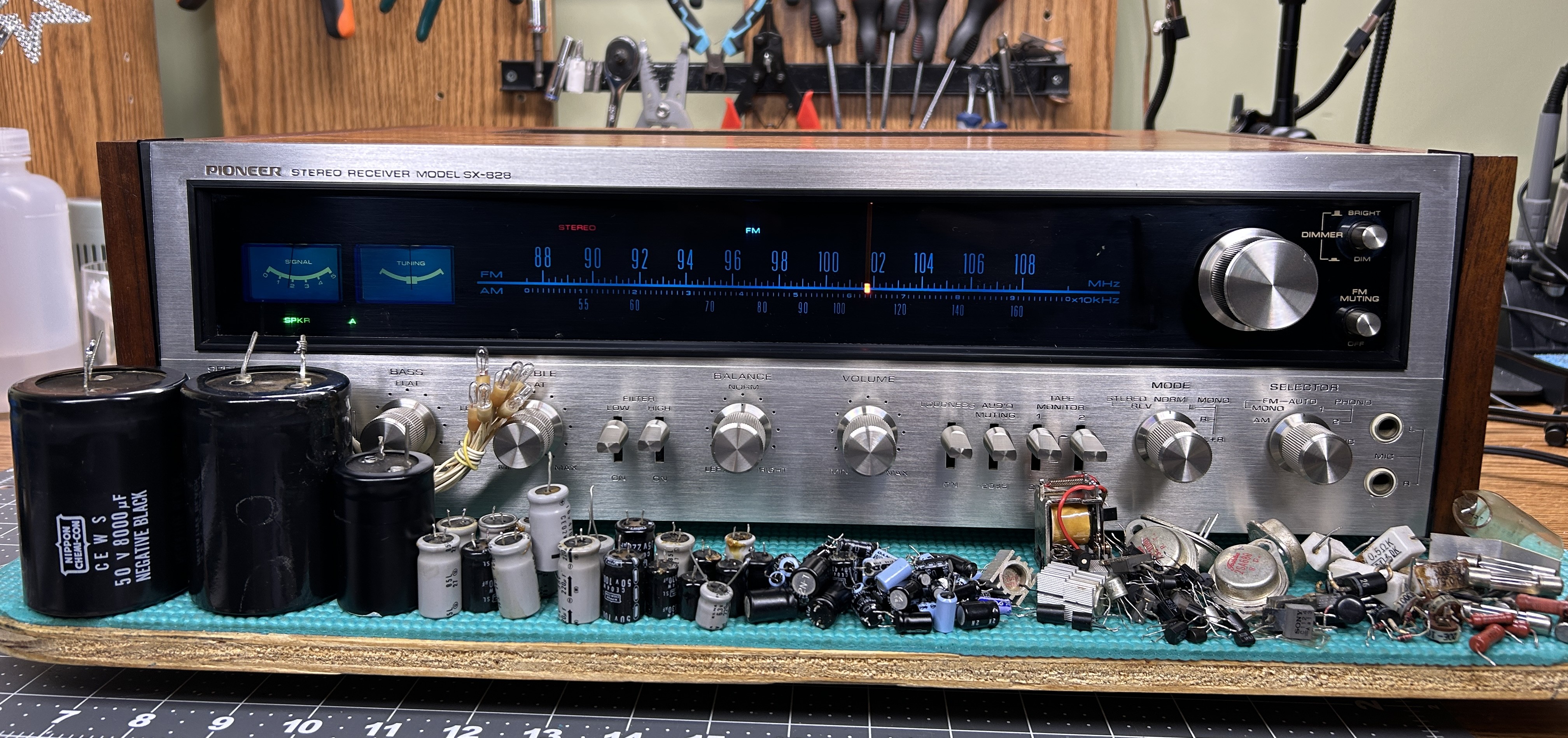
The SX-828 received a complete electrolytic overhaul, including both main filter capacitors. The original 8,000 µF filters were replaced with Cornell Dubilier 12,000 µF units, increasing operating headroom while maintaining the receiver's original layout.
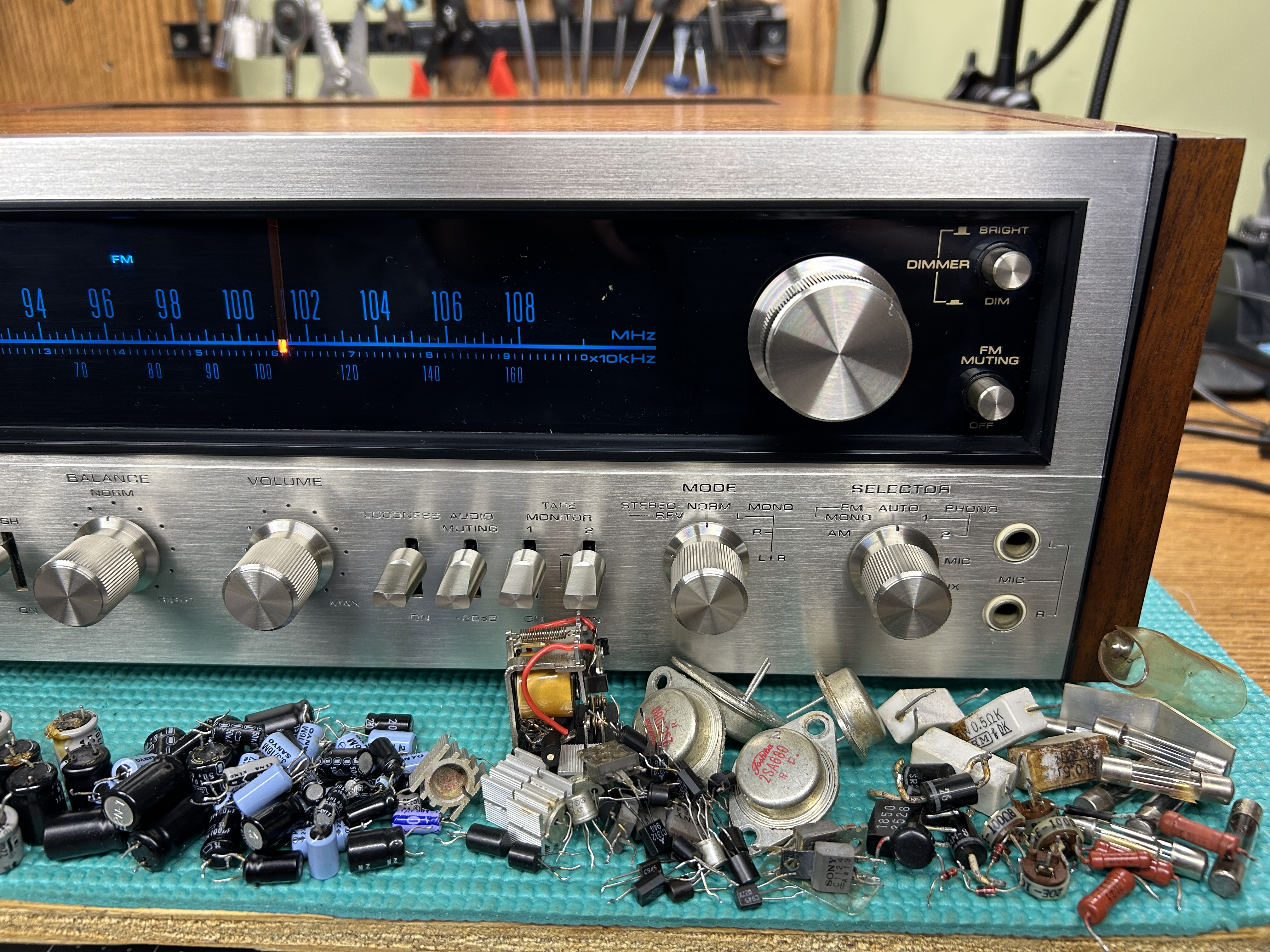
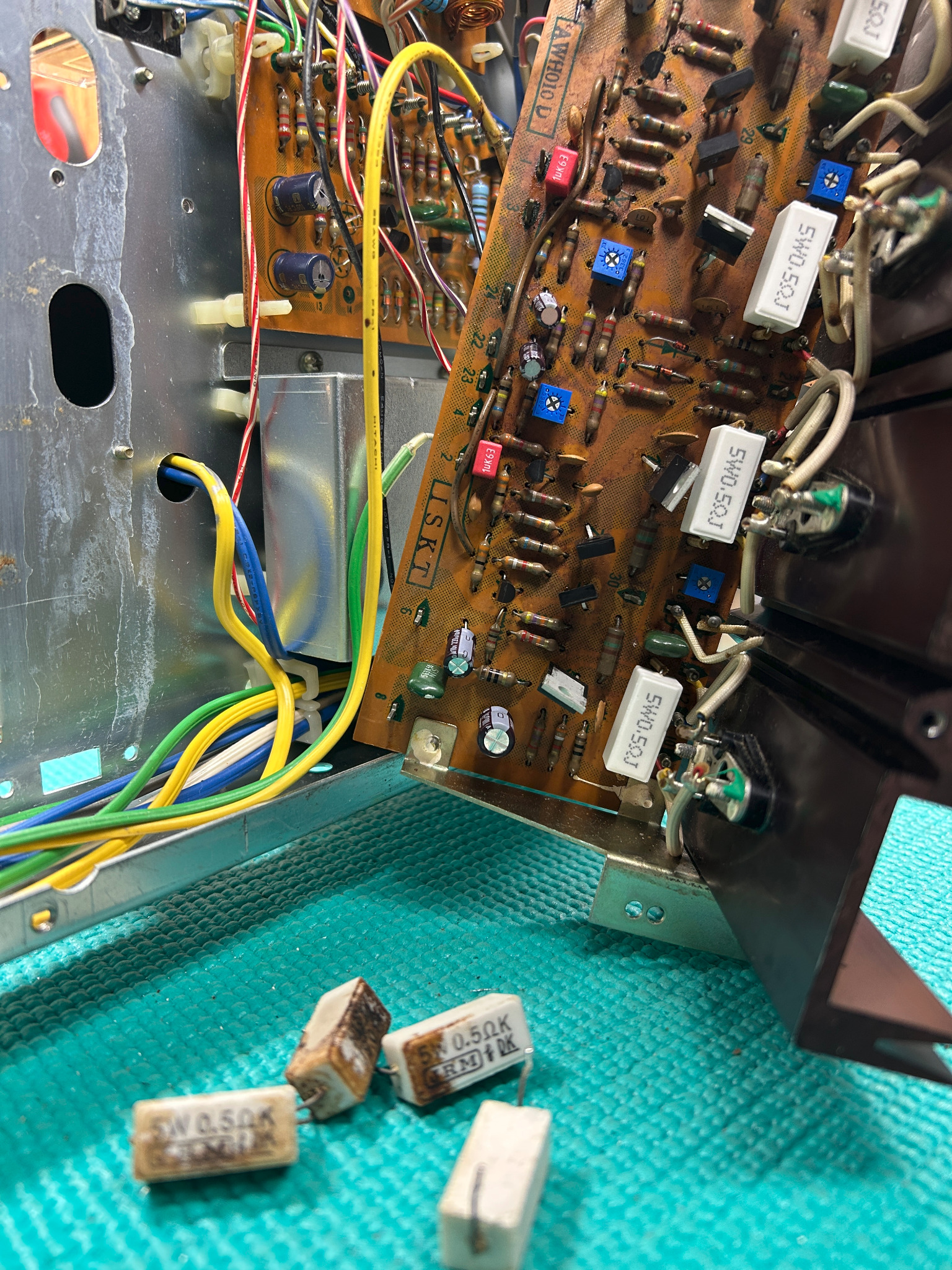
The failed output stage was rebuilt with gain-matched OnSemi MJ21195G/MJ21196G transistors, new mica insulators and fresh thermal compound. All four 0.5-ohm emitter resistors were renewed, known noisy or failure-prone small-signal and driver transistors were replaced, and the differential pairs were hand-matched for gain.
The power supply, protection circuit, relay, trim controls, diodes, grounding, lighting and signal path were all addressed before final alignment, calibration and controlled-load testing.
Inside the SX-828
This was a component-level restoration of the receiver as a complete system — not simply a capacitor replacement.
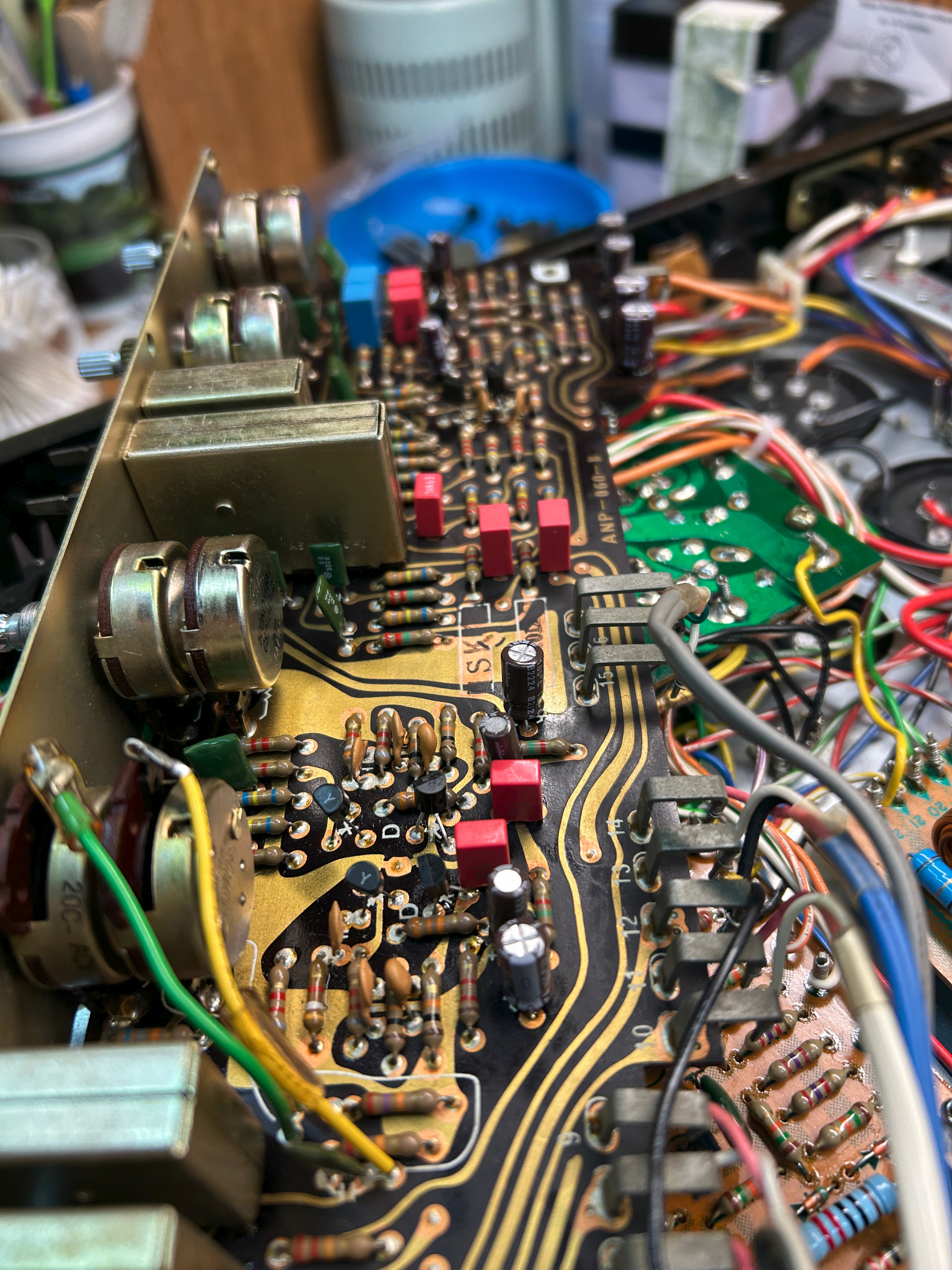
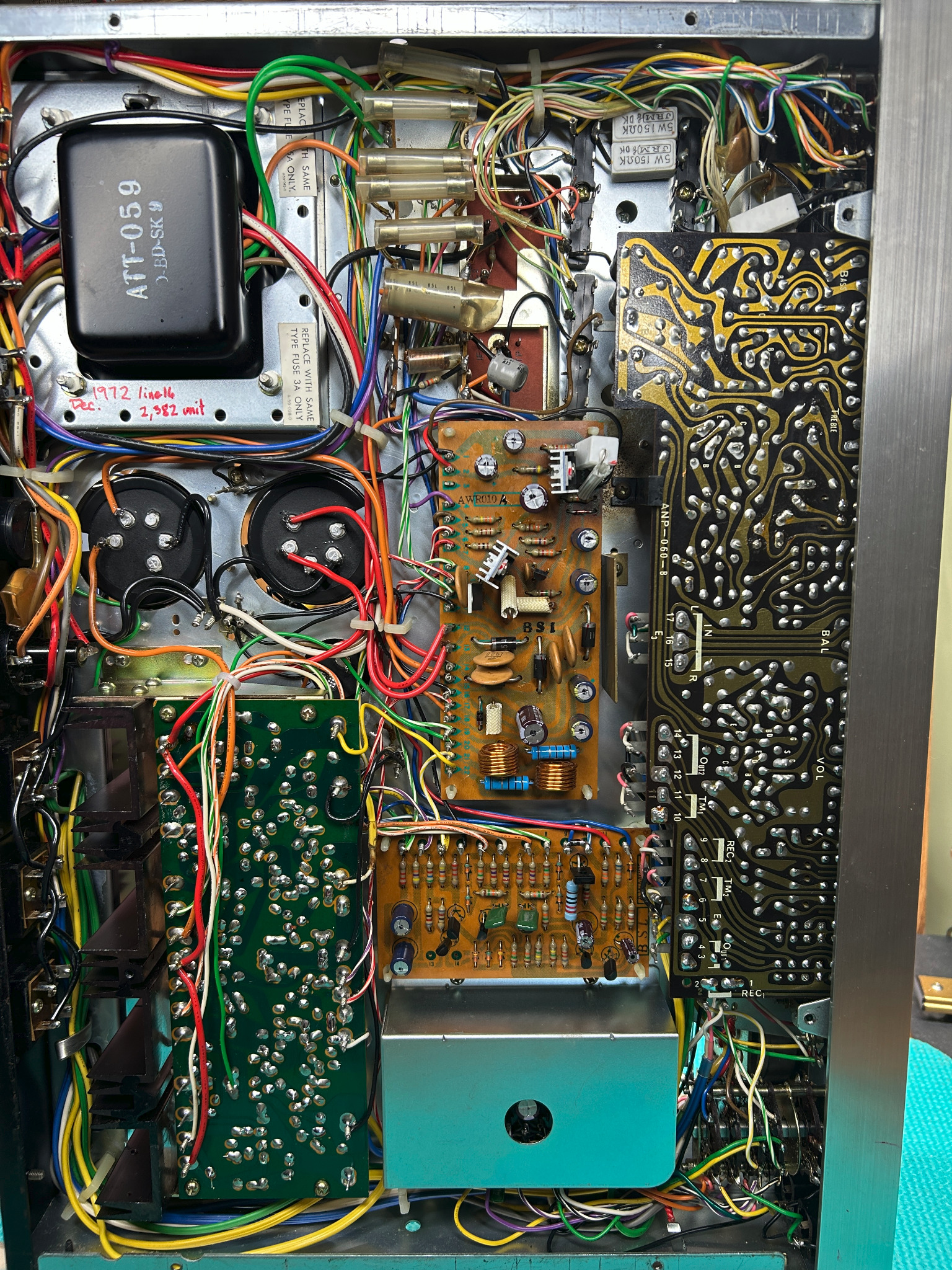
Sixty-nine electrolytic and small-value capacitors were replaced throughout the receiver, with WIMA film capacitors used at 3.3 µF and below where appropriate. Two additional main filter capacitors were replaced with modern Cornell Dubilier 12,000 µF units. Voltage ratings were increased where appropriate for additional operating margin.
Thirty-four small-signal, driver and output transistors were renewed. Four Bourns multi-turn trimmers replaced the original adjustment controls, nine aging or failure-prone diodes were replaced, and four power-supply resistors operating near their original wattage limits were upgraded with higher-wattage flameproof metal-film parts.
Power Supply & Signal Path
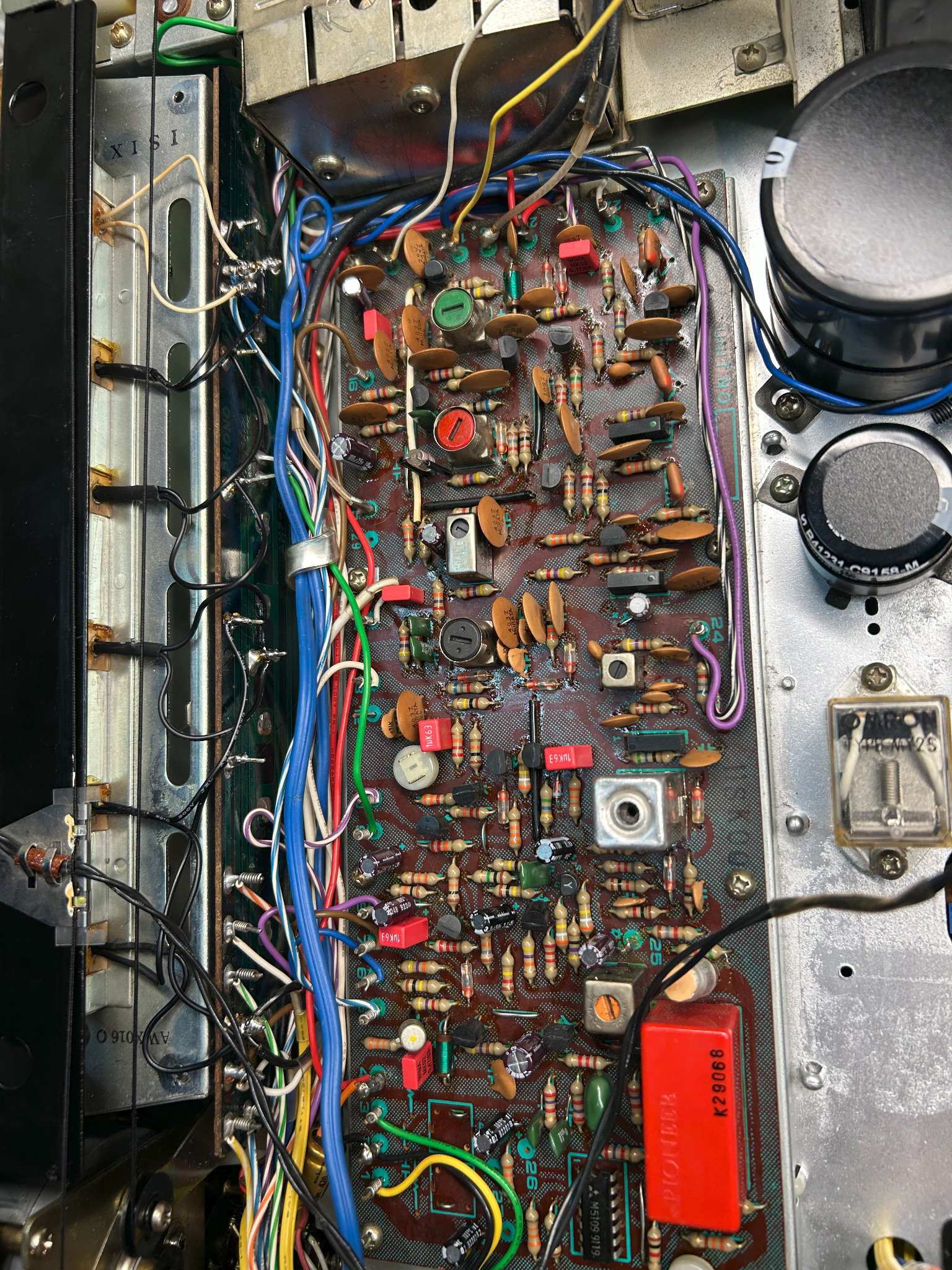
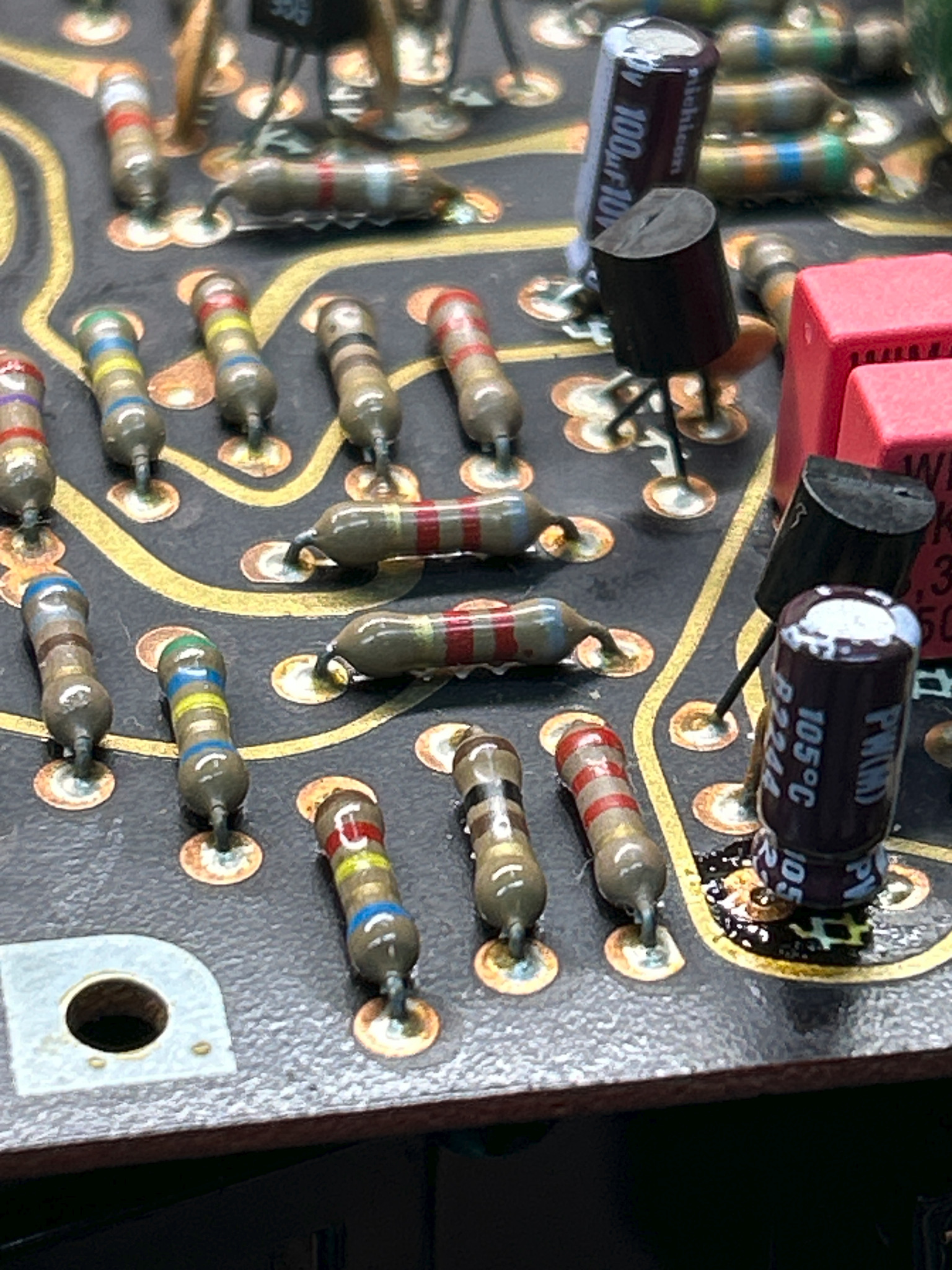
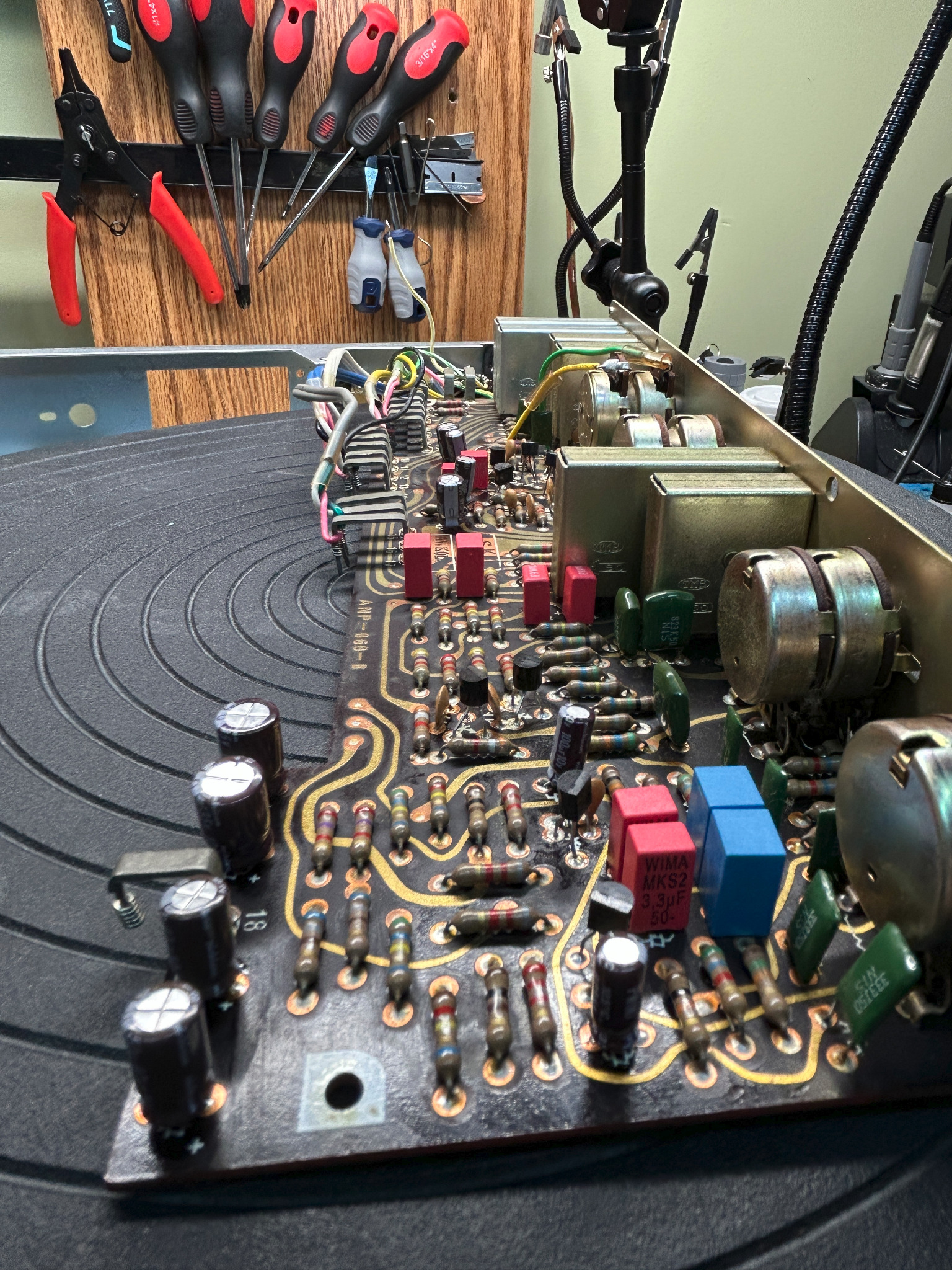
The difficult work was often buried below the visible chassis. Boards were opened up, stressed parts were removed and the affected circuits were rebuilt rather than worked around.
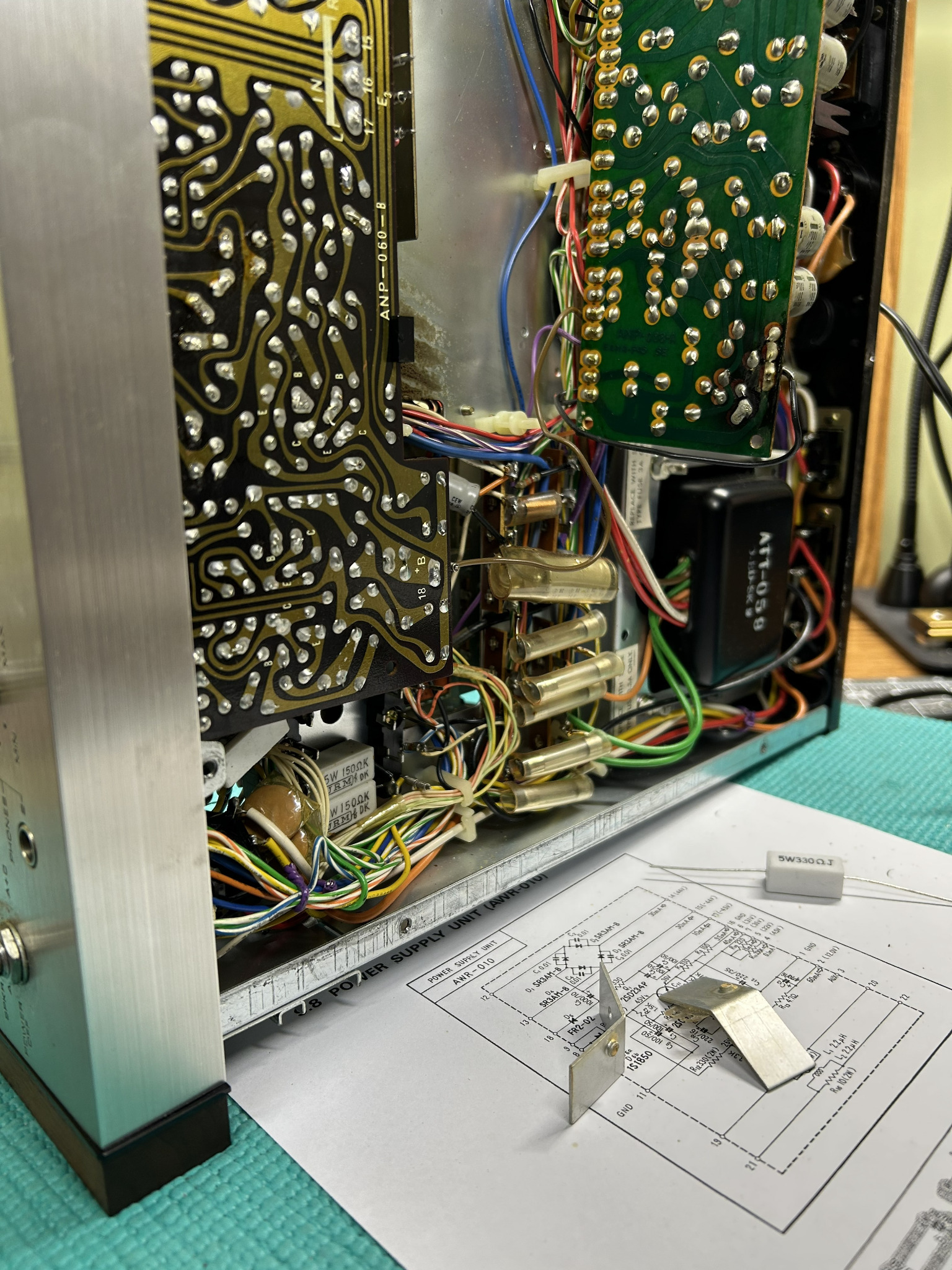
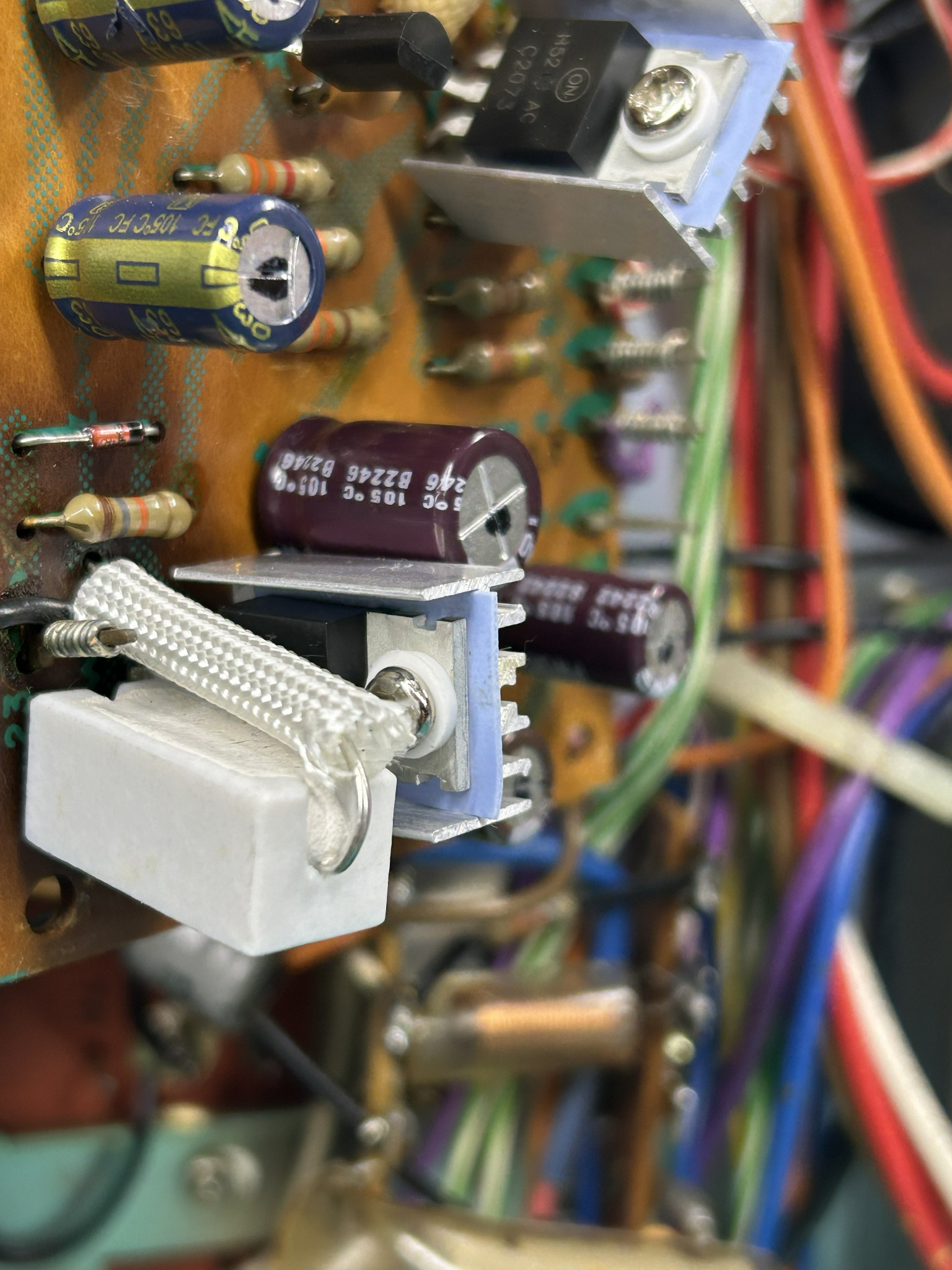
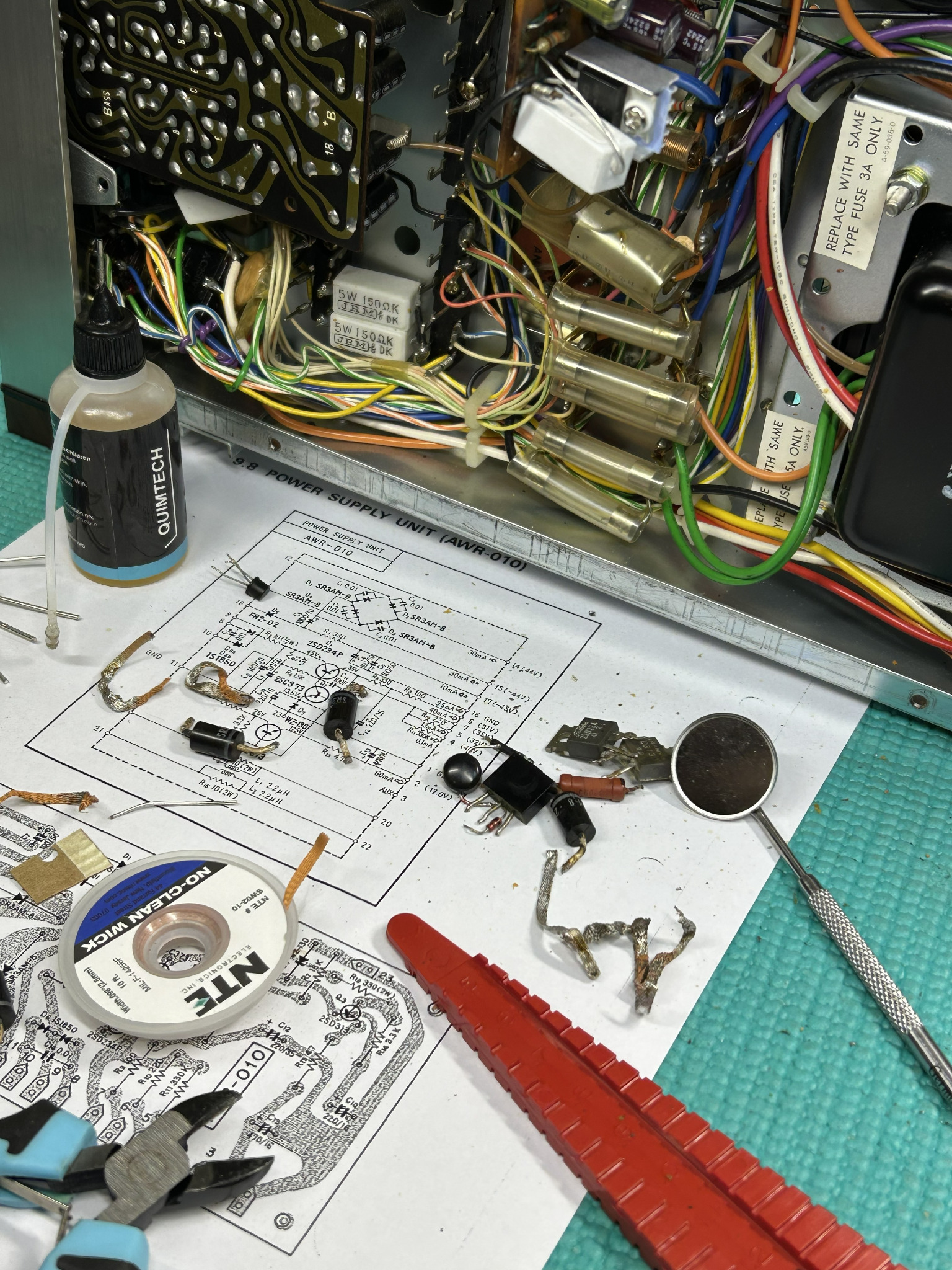
The power-supply area showed the combined effects of heat, age and prior service. Components operating near their original limits were replaced with appropriately rated modern parts, deteriorated adhesive and residue were removed where encountered, and the affected solder joints and wiring were inspected as the circuit was rebuilt.
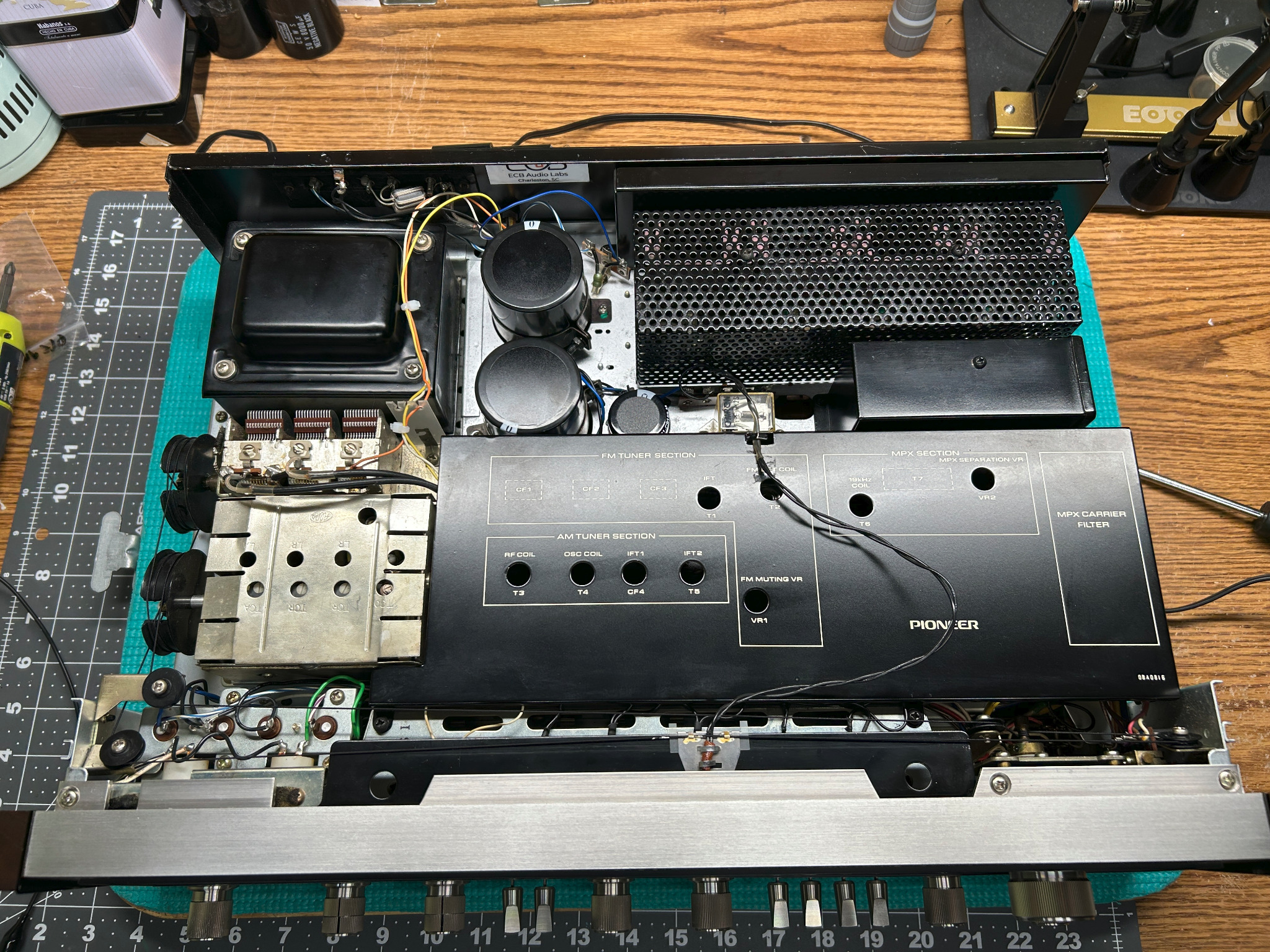
Access to the SX-828 required working through Pioneer's tightly packaged board layout. The restoration was performed board by board so that the power supply, tone and control stages, tuner circuitry and signal path could be serviced without sacrificing the receiver's original mechanical arrangement.
Output Stage & Protection
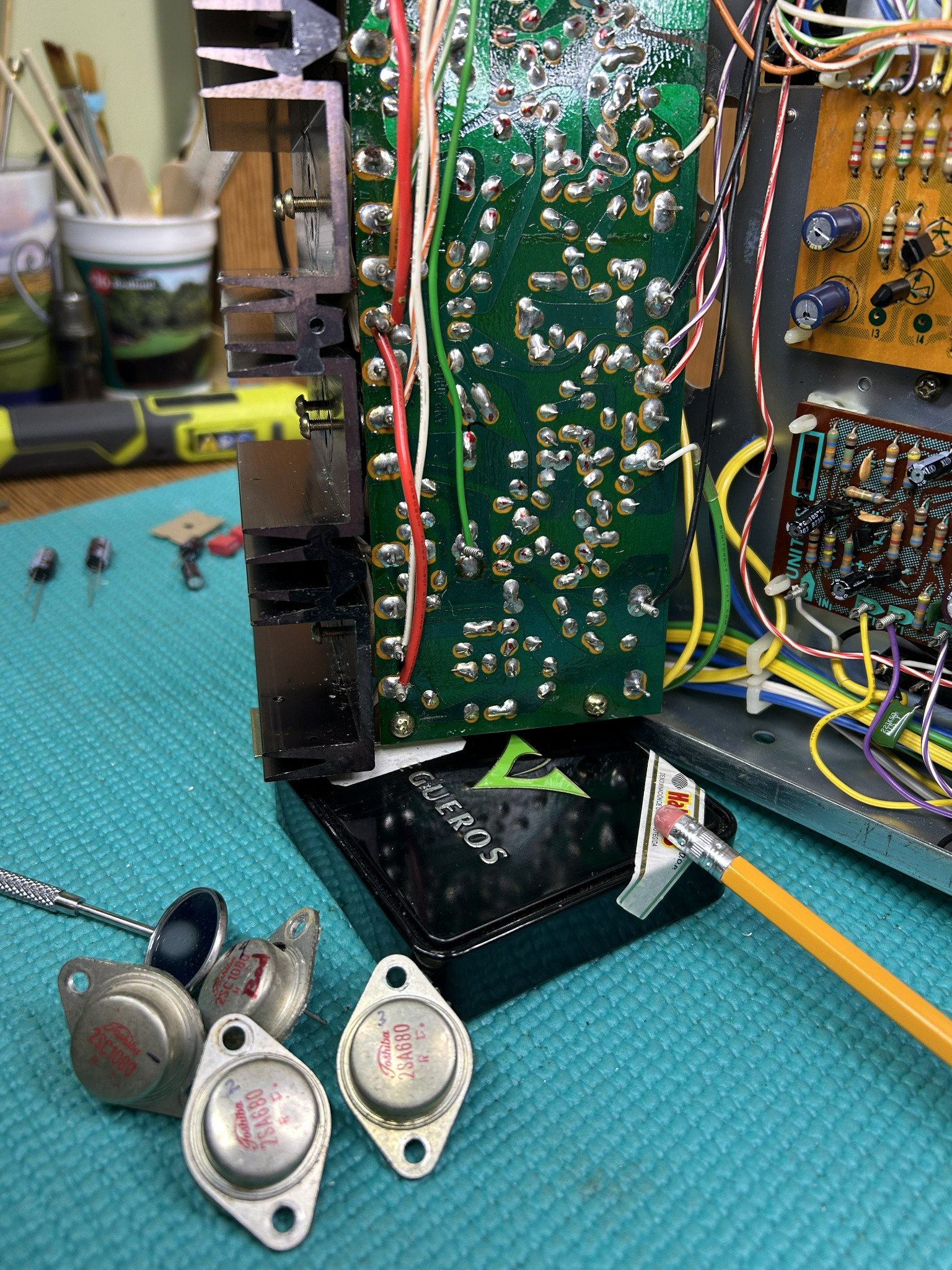
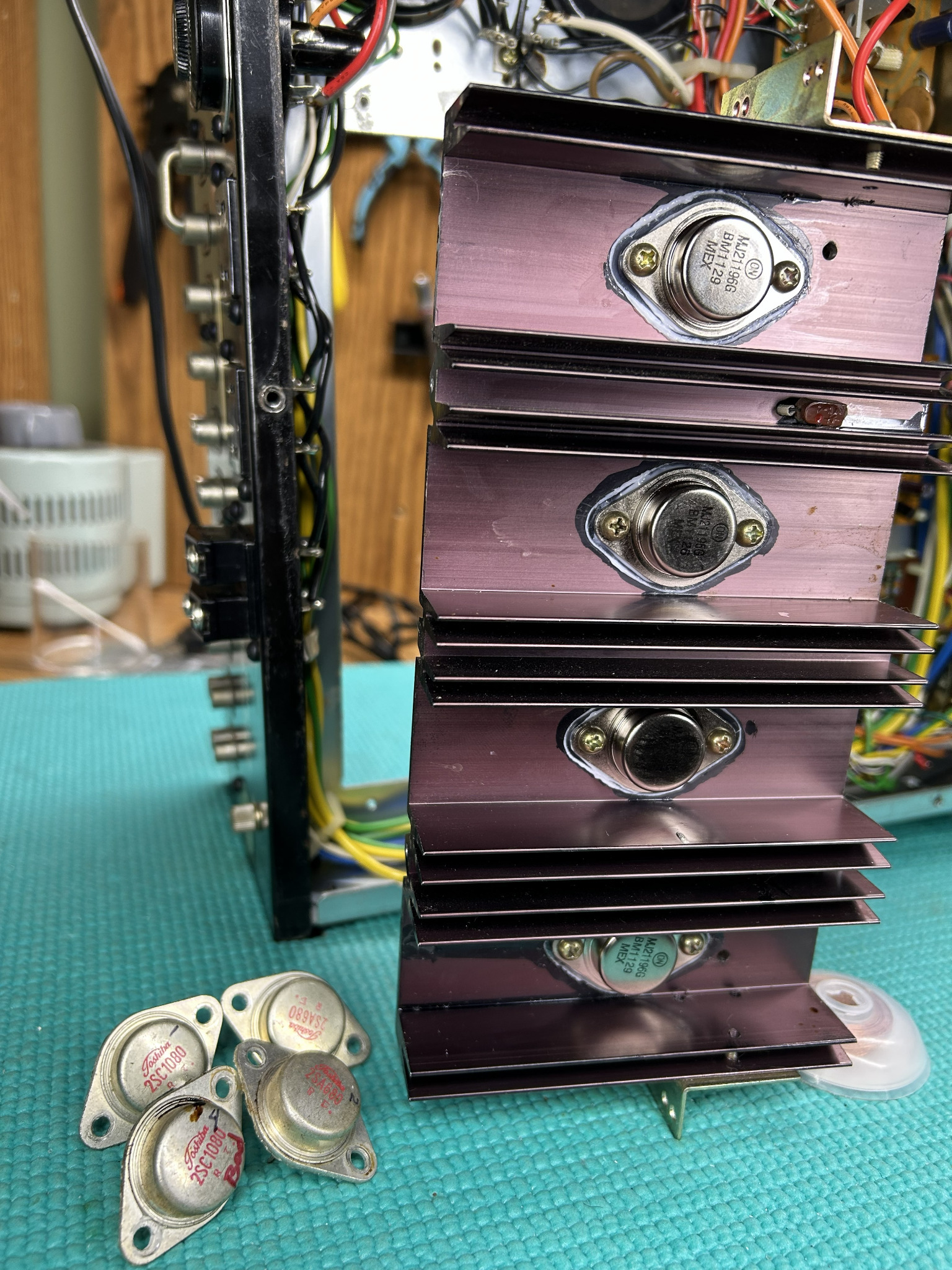
The receiver arrived with a failed right-channel output transistor. All four outputs were replaced as matched complementary pairs using OnSemi MJ21195G and MJ21196G devices, with new mica insulators and fresh thermal compound. The original 0.5-ohm emitter resistors were replaced as a set because of age and heat discoloration.
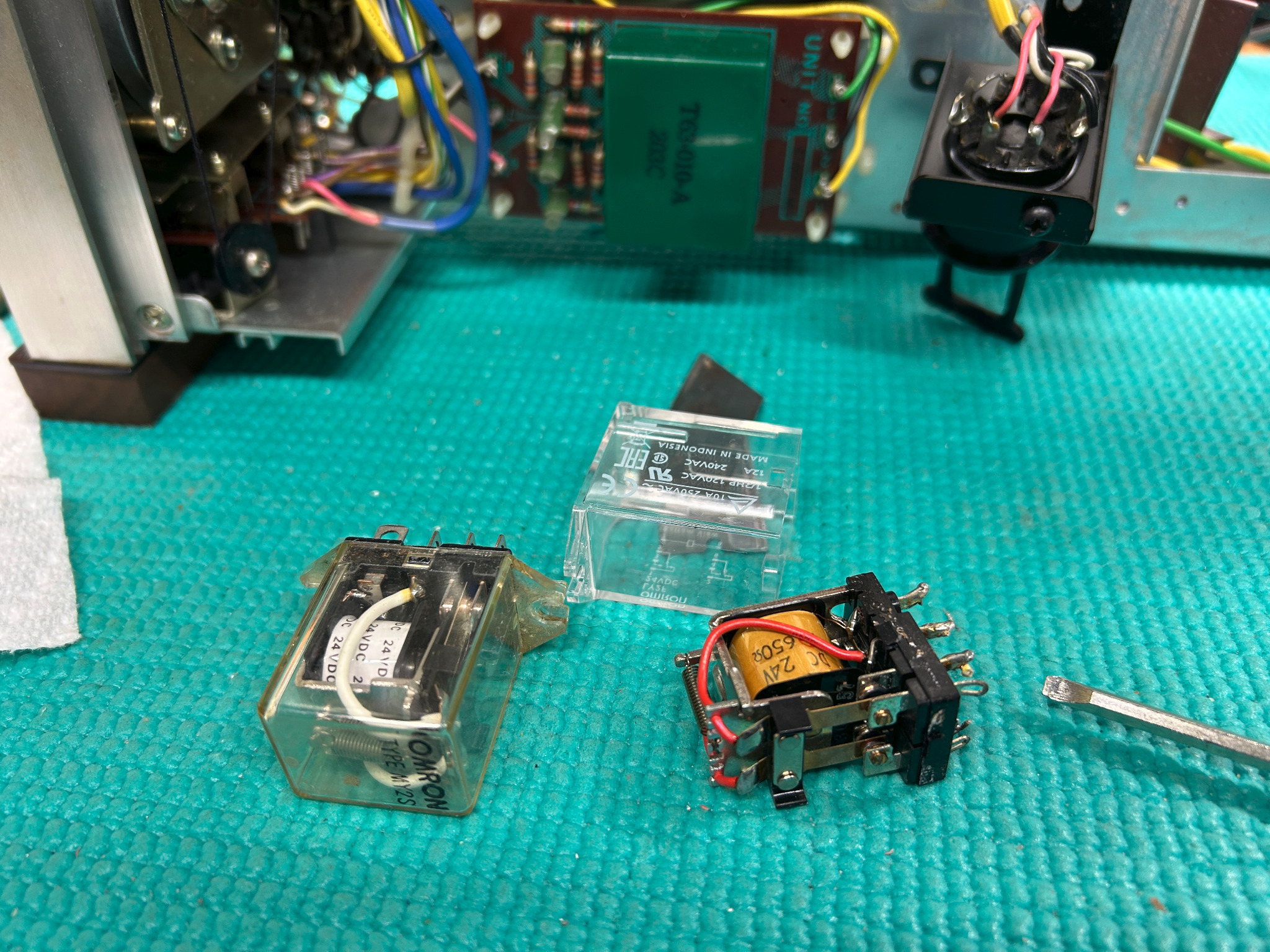
The protection relay was also renewed. The modern relay mechanism was installed while retaining the original plastic housing so that the assembly fit the Pioneer chassis correctly. Corrosive factory adhesive was removed, selected high-stress solder joints were reflowed with 63/37 tin-lead solder, and damaged circuitry was repaired where required.
Tested, not assumed.
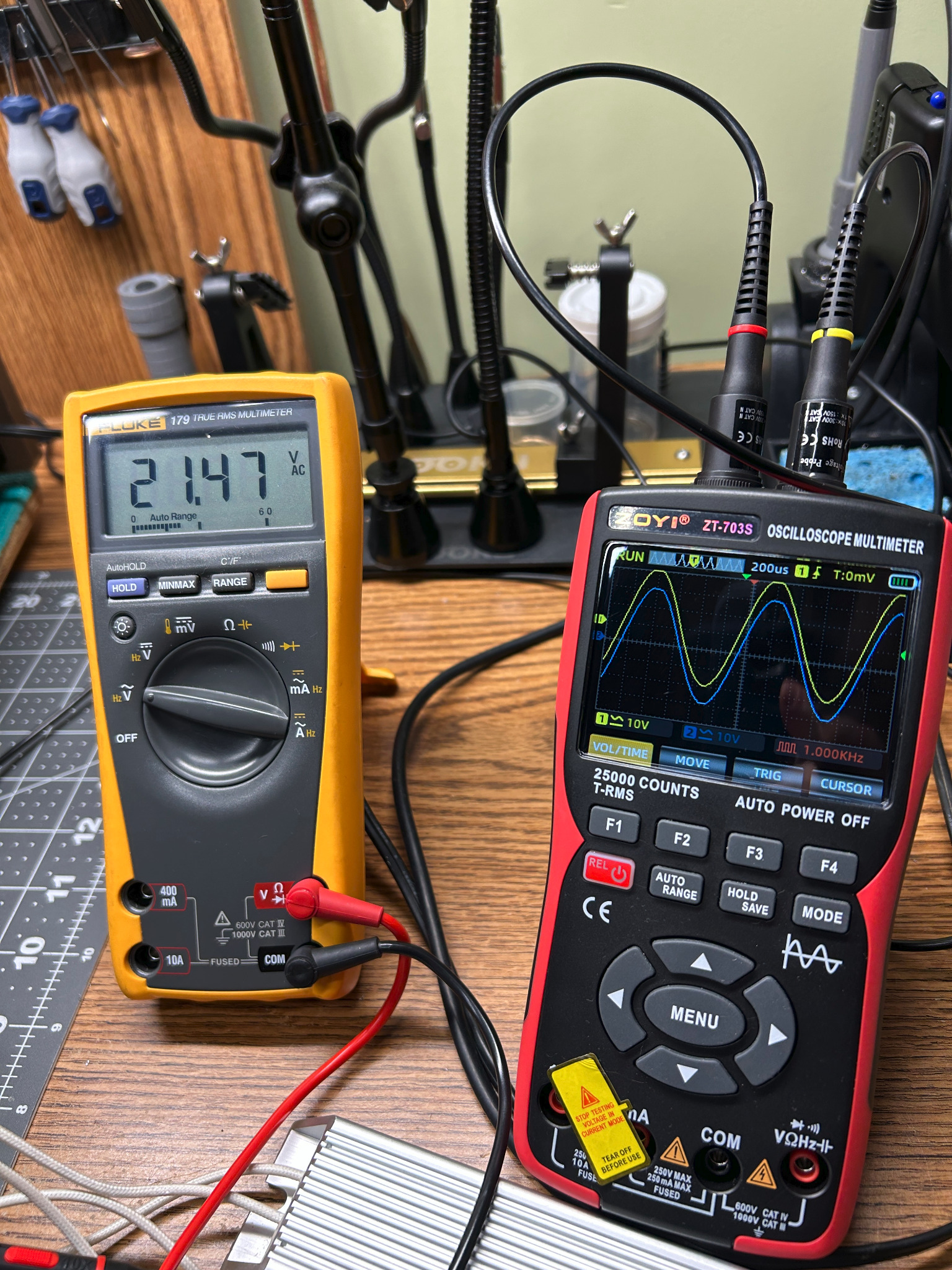
After restoration, the SX-828 was evaluated by oscilloscope with 1 kHz and 10 kHz sine- and square-wave testing, full-power clipping symmetry and stability checks. It then completed a minimum eight-hour thermal stress test into an 8-ohm dummy load at 50% rated power.
DC offset measured 1 mV in both channels. Bias stabilized at 20.2 mV left and 20.3 mV right, measured across both 0.5-ohm emitter resistors in each channel. Rated at 54 watts per channel, the restored receiver produced 57 watts left and 57 watts right at 1 kHz into 8 ohms before visible waveform clipping.
Mechanical & Cosmetic Restoration
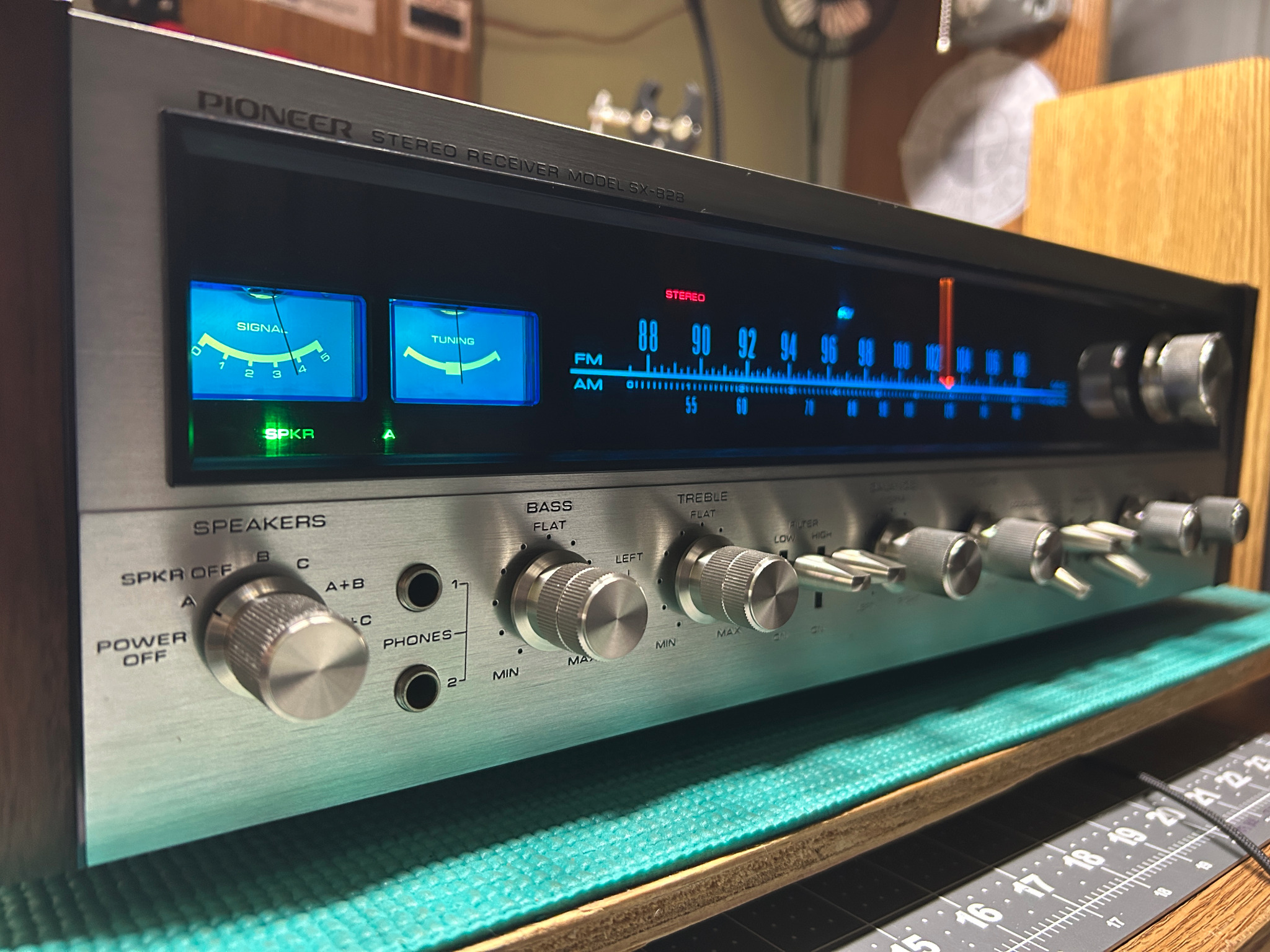
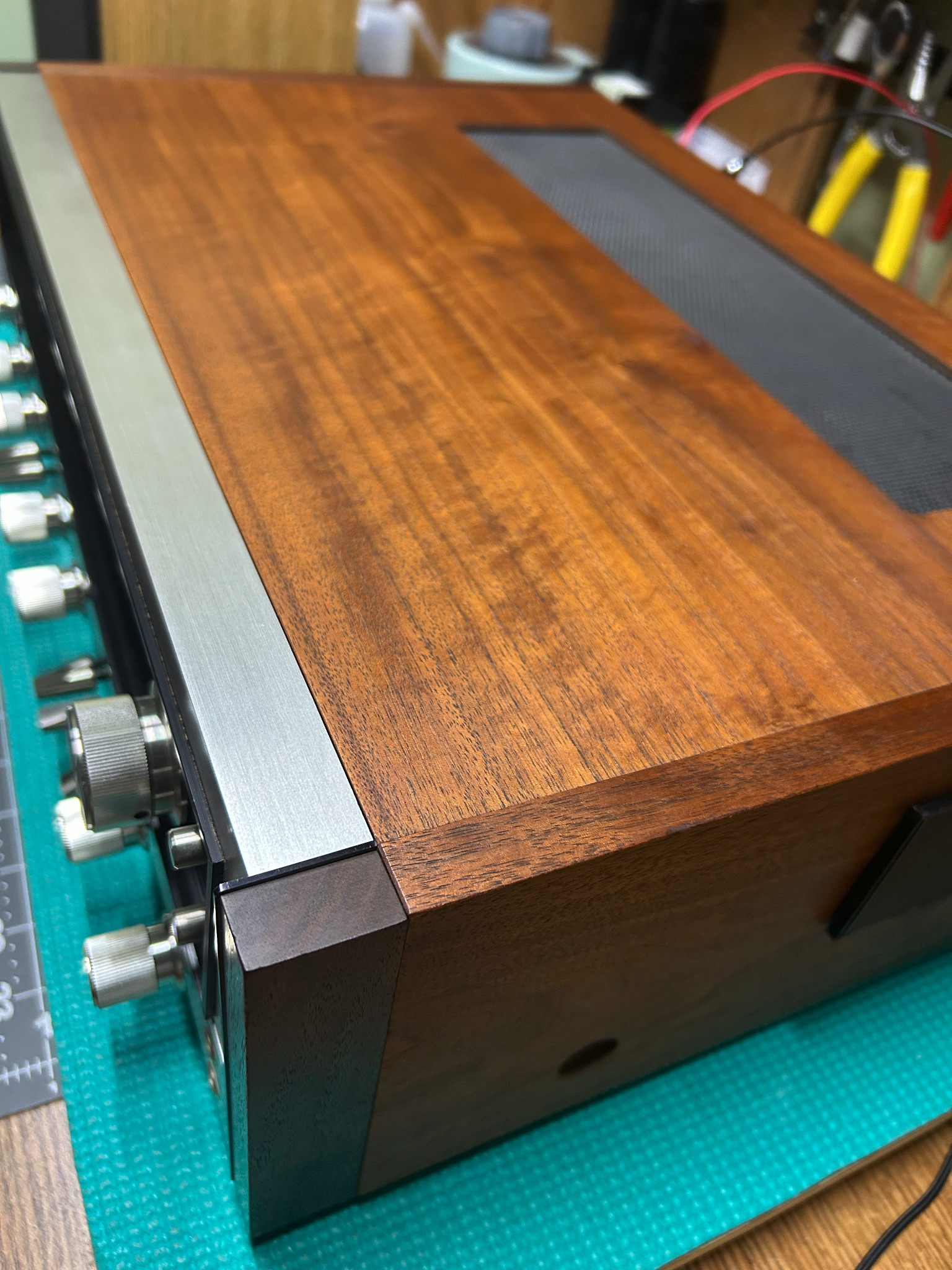
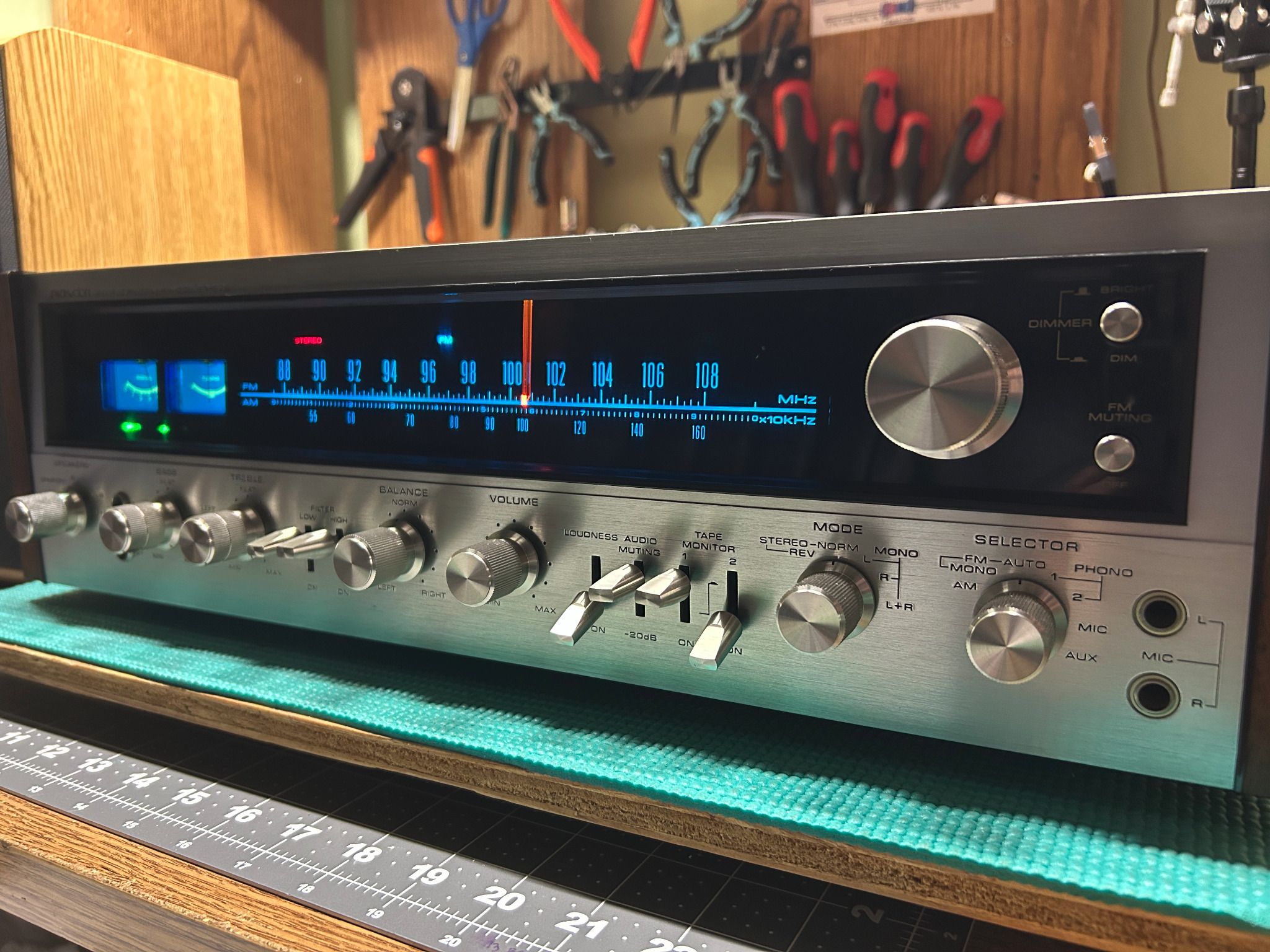
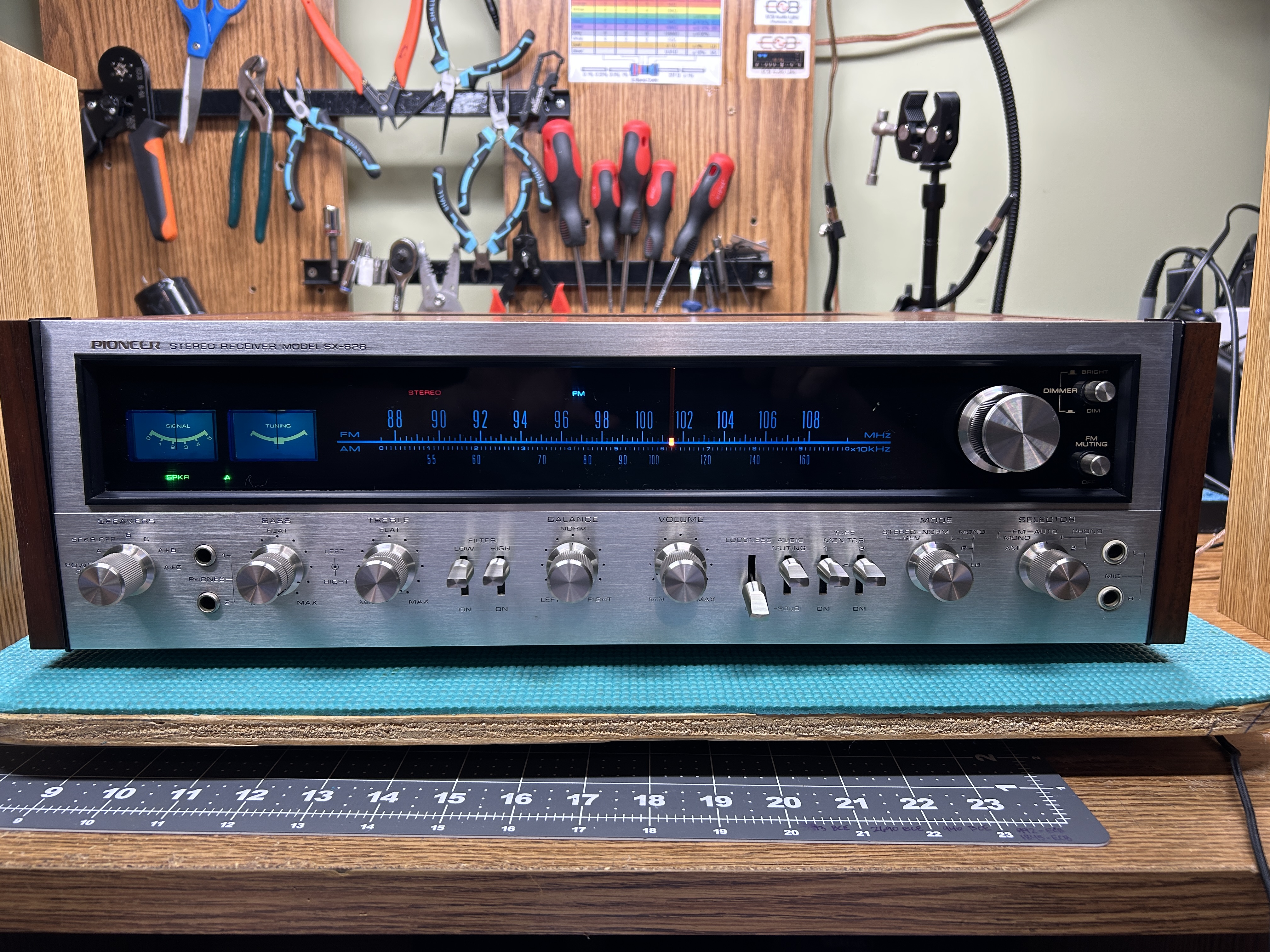
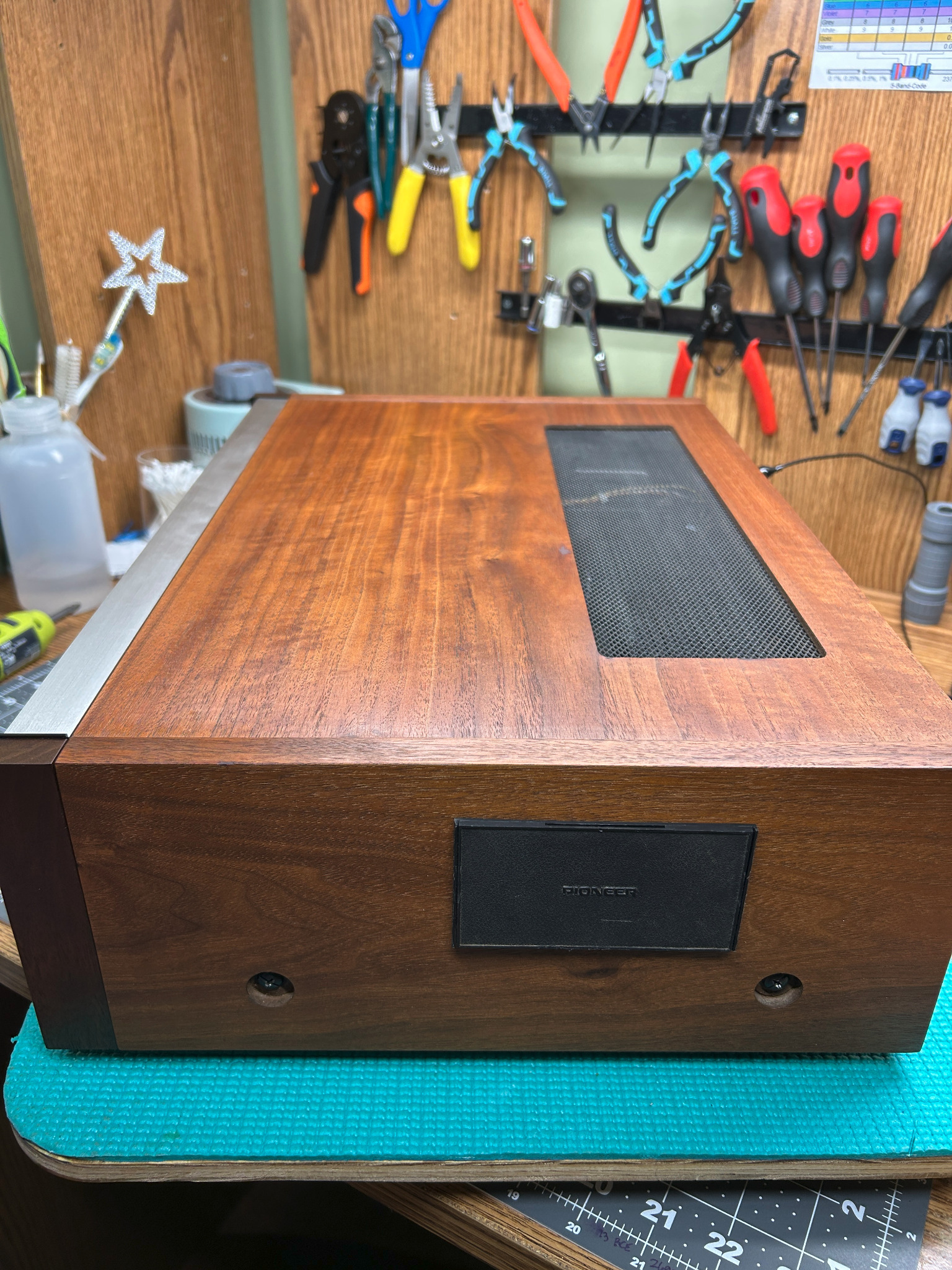
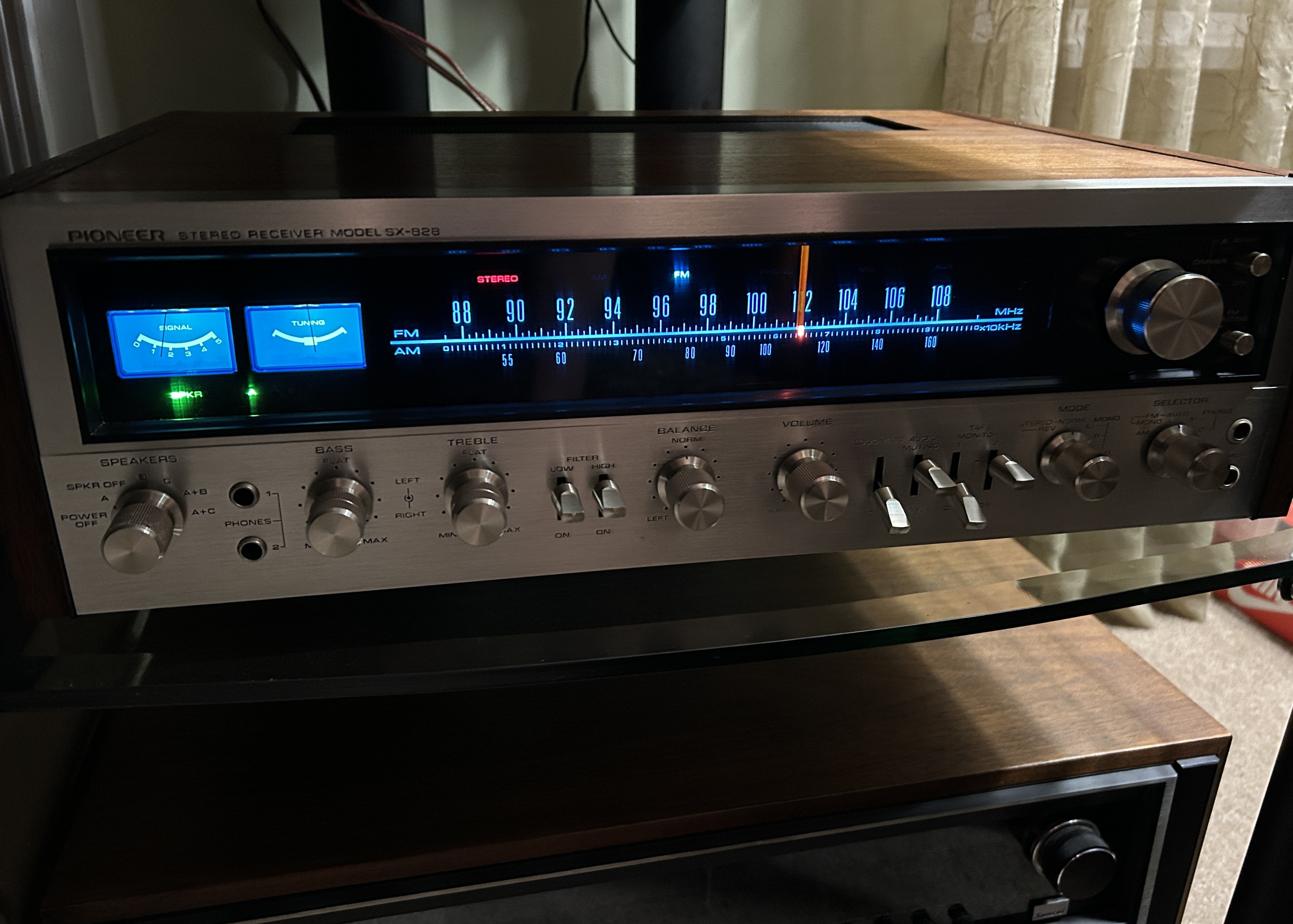
Every switch and potentiometer was deep-cleaned and lubricated. The engraved faceplate was removed, cleaned and polished, the knobs were detailed individually, tuner cord pulleys were lubricated and the lower chassis was cleaned. The real-walnut cabinet was repaired, sanded, stained and refinished rather than replaced.
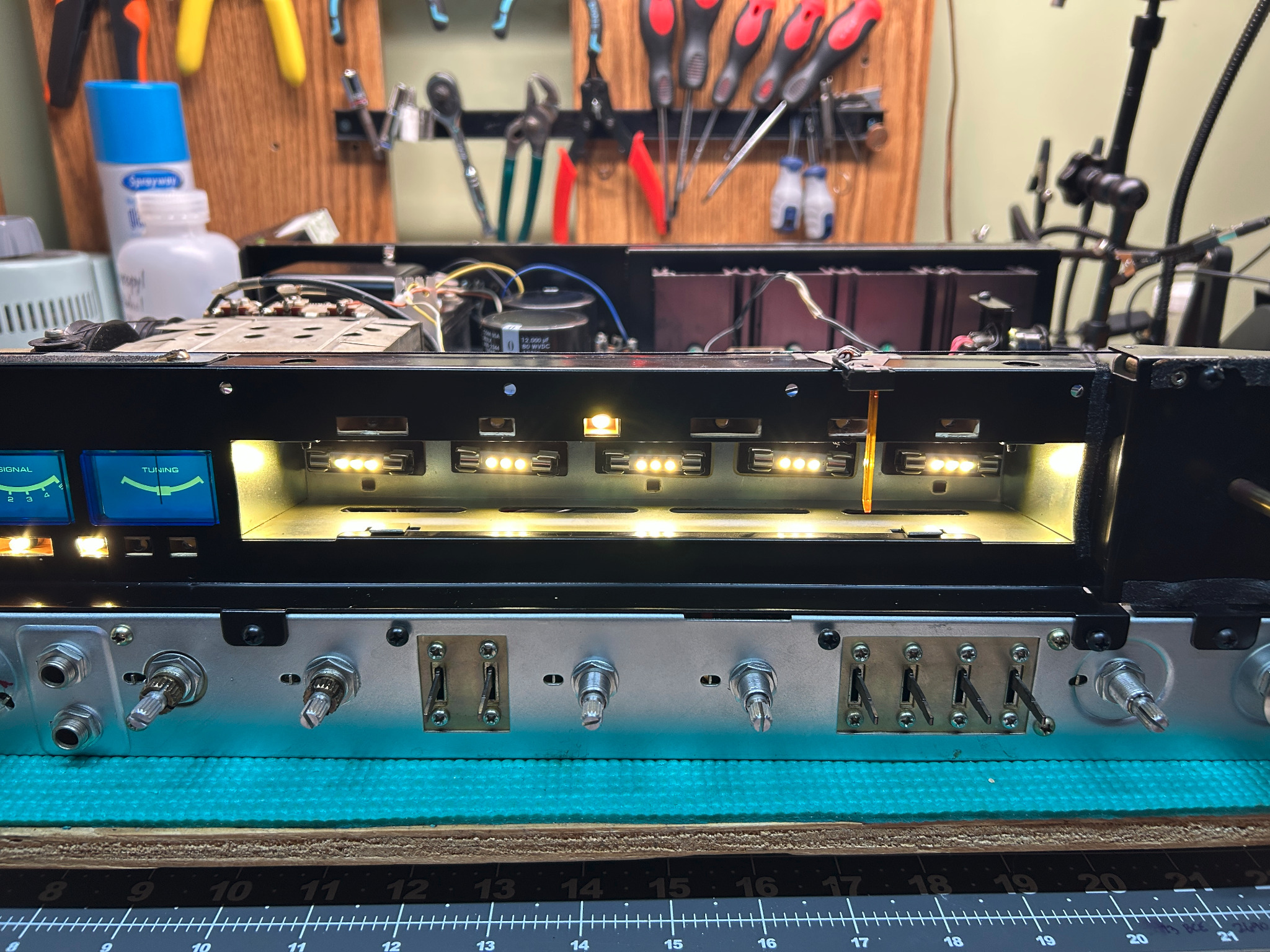
The dial and meter illumination was converted to warm-white LEDs. The dial pointer retained the incandescent lighting because the visual appearance was better with the factory-style lamp. The line-voltage selector, which had been set to 110 volts, was returned to 120 volts for present-day U.S. operation.
Provenance That Survived
The receiver's surviving packing and service history are part of the restoration record, not separate from it.
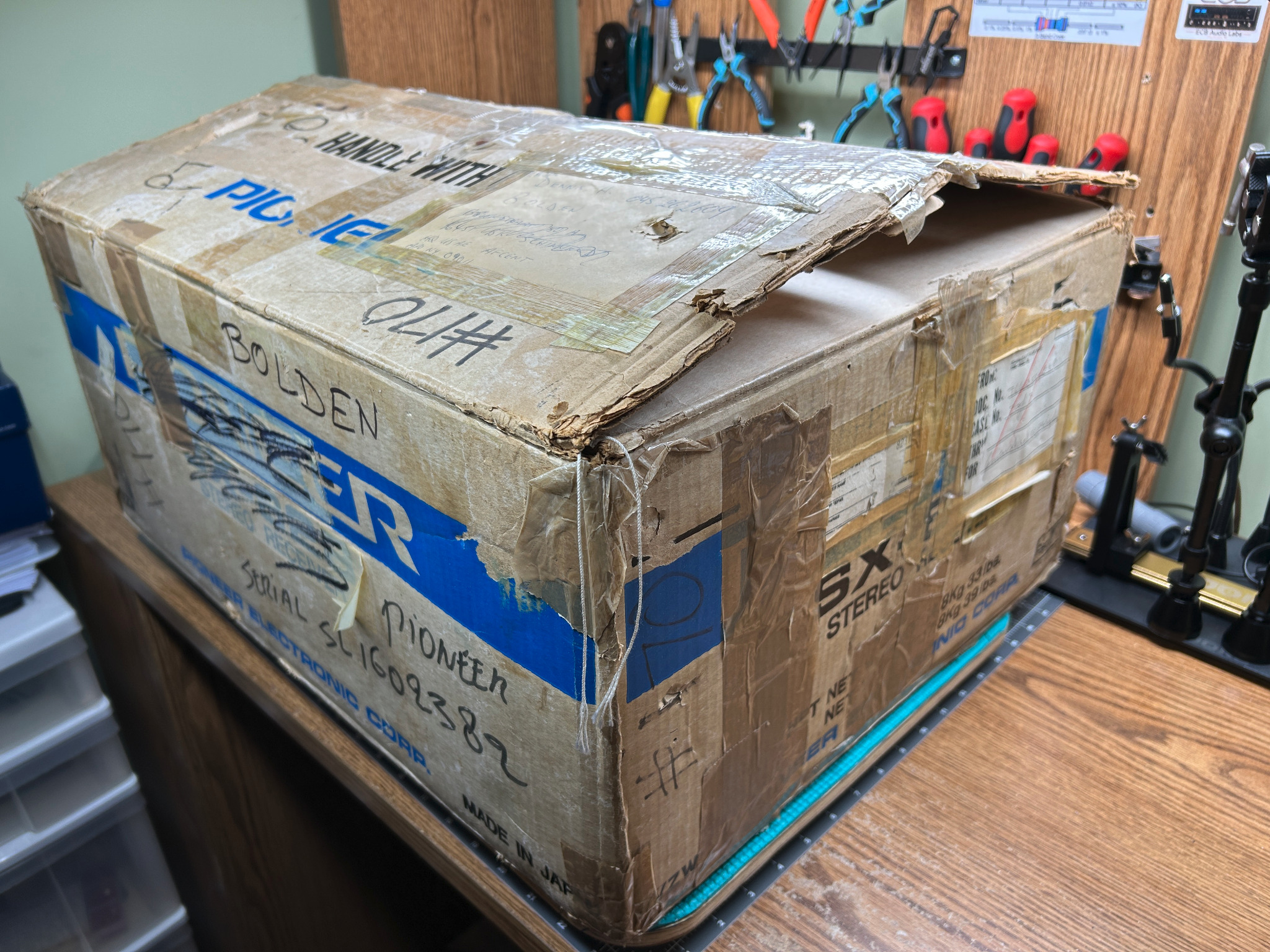
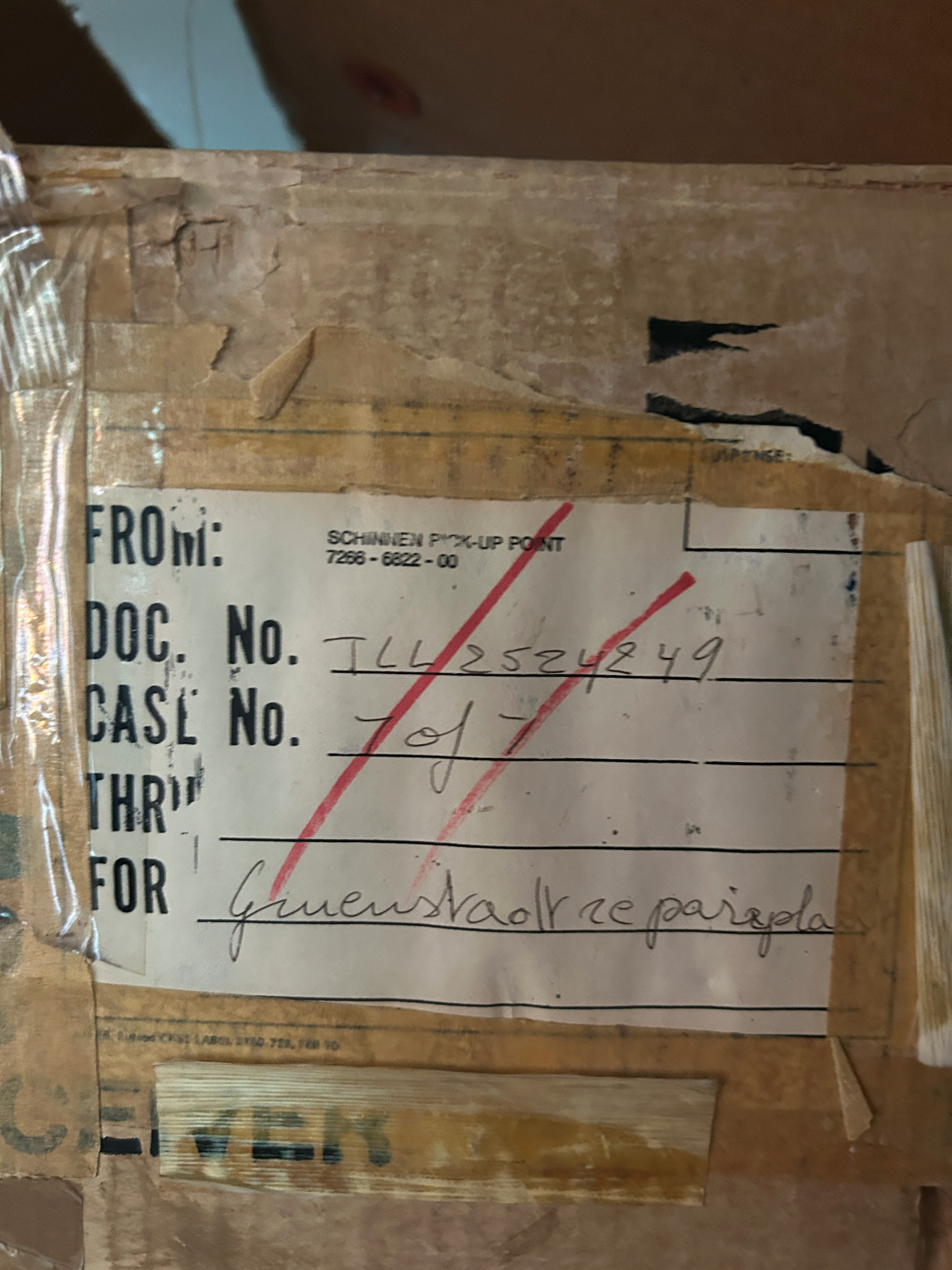
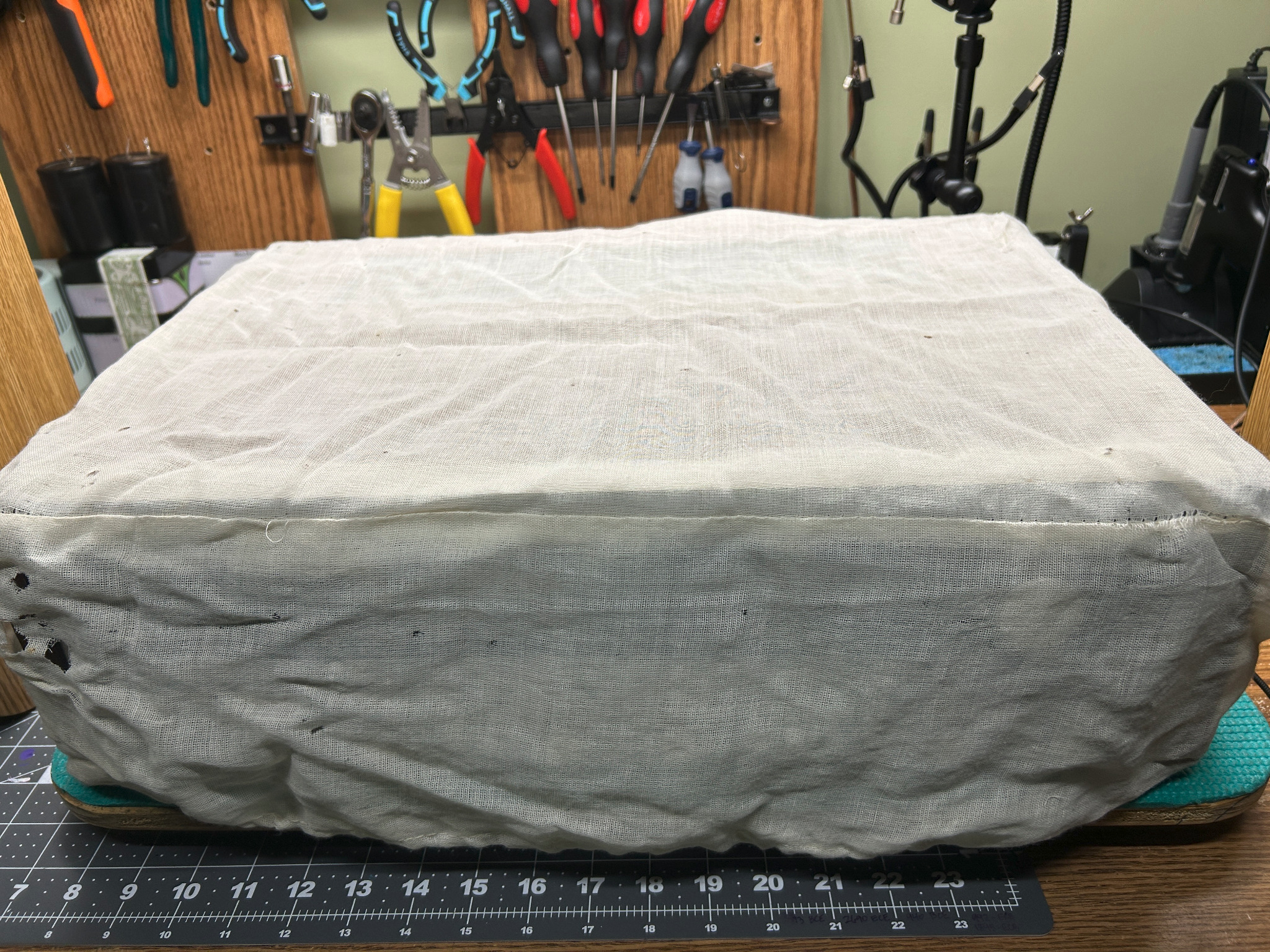
The original Pioneer carton remains with the receiver, together with factory foam inserts, internal cardboard packing and the original cloth shroud. Period markings on the carton identify Major Dennis H. Holden, HQ USAF AFCENT, APO New York 09011, and include European shipping and routing marks from the receiver's earlier life.
The rear panel retains a period Condes Stereo Service label from Manhattan, Kansas. These details were intentionally preserved. They document a receiver that traveled, was serviced, was kept, and ultimately survived long enough to be restored more than half a century after it was built.
The work stays with the receiver.
The original replaced components were retained as the SX-828's “Bag of Bones.” Together with the Certificate of Restoration, serial-number record, bench data and photographic archive, they document exactly what was changed while preserving the history of what came out.
View the Certificate →Another lifetime for a 1972 Pioneer.
Serial SL1602382 retains the evidence of where it has been while the circuitry underneath has been rebuilt for where it goes next — electrically stable, mechanically sorted, thoroughly documented and ready to play music again.