
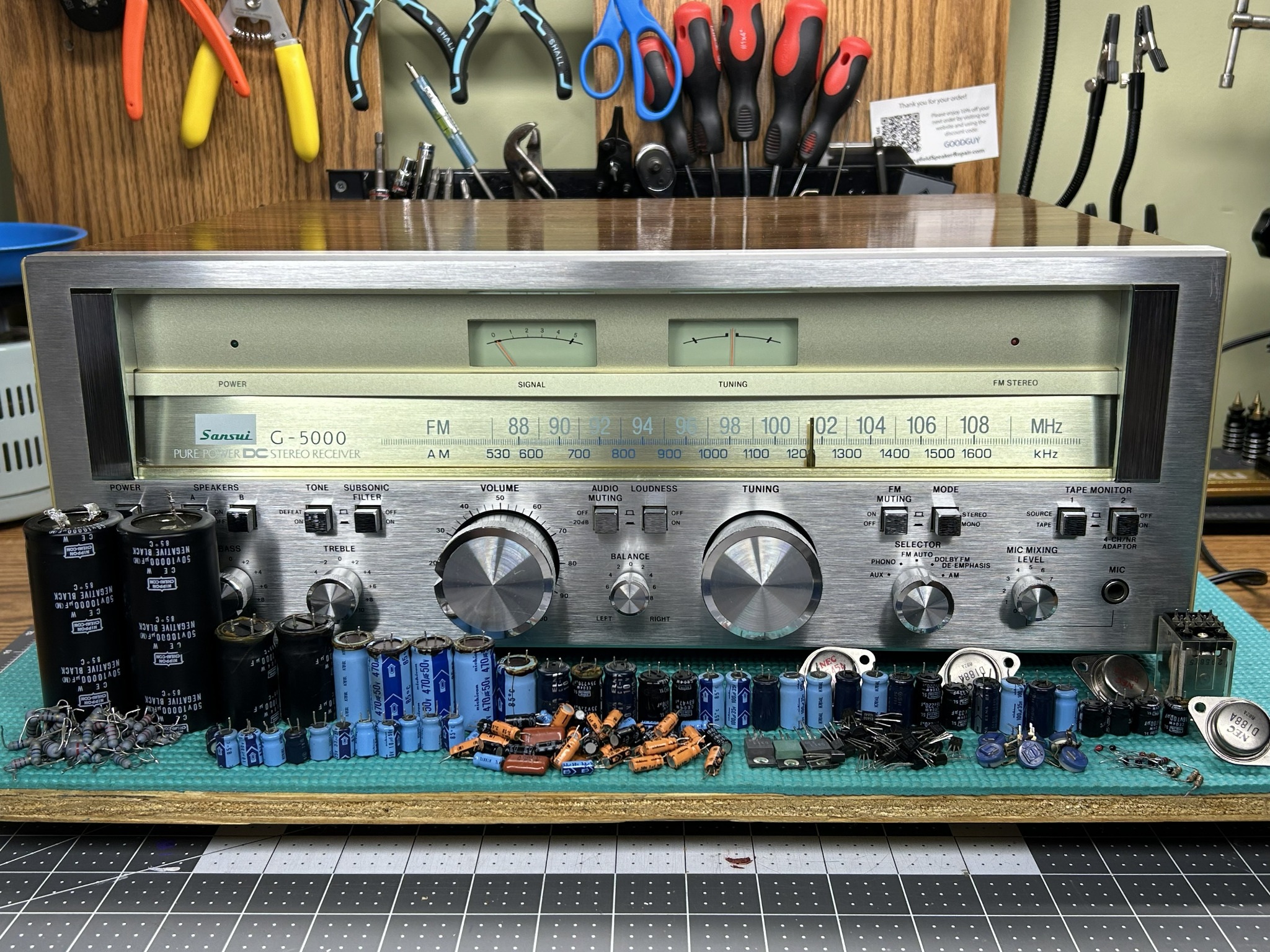
Found in Charleston, SC.
This Sansui G-5000 was found via Facebook MP in March, 2025. It left production line 82 in July 1978, the 1,380th receiver off that line. Decades later, it arrived at the ECB bench for a restoration that reached far beyond a conventional recap.
The work addressed the receiver as a complete system: aging electrolytics, known failure-prone semiconductors, fusible and N.I.R. resistors, factory adhesive damage, the protection relay, output devices, precision adjustments, grounding, lighting and the mechanical controls. The goal was simple - preserve the Sansui while rebuilding the weak points that time had exposed.
More than a recap.
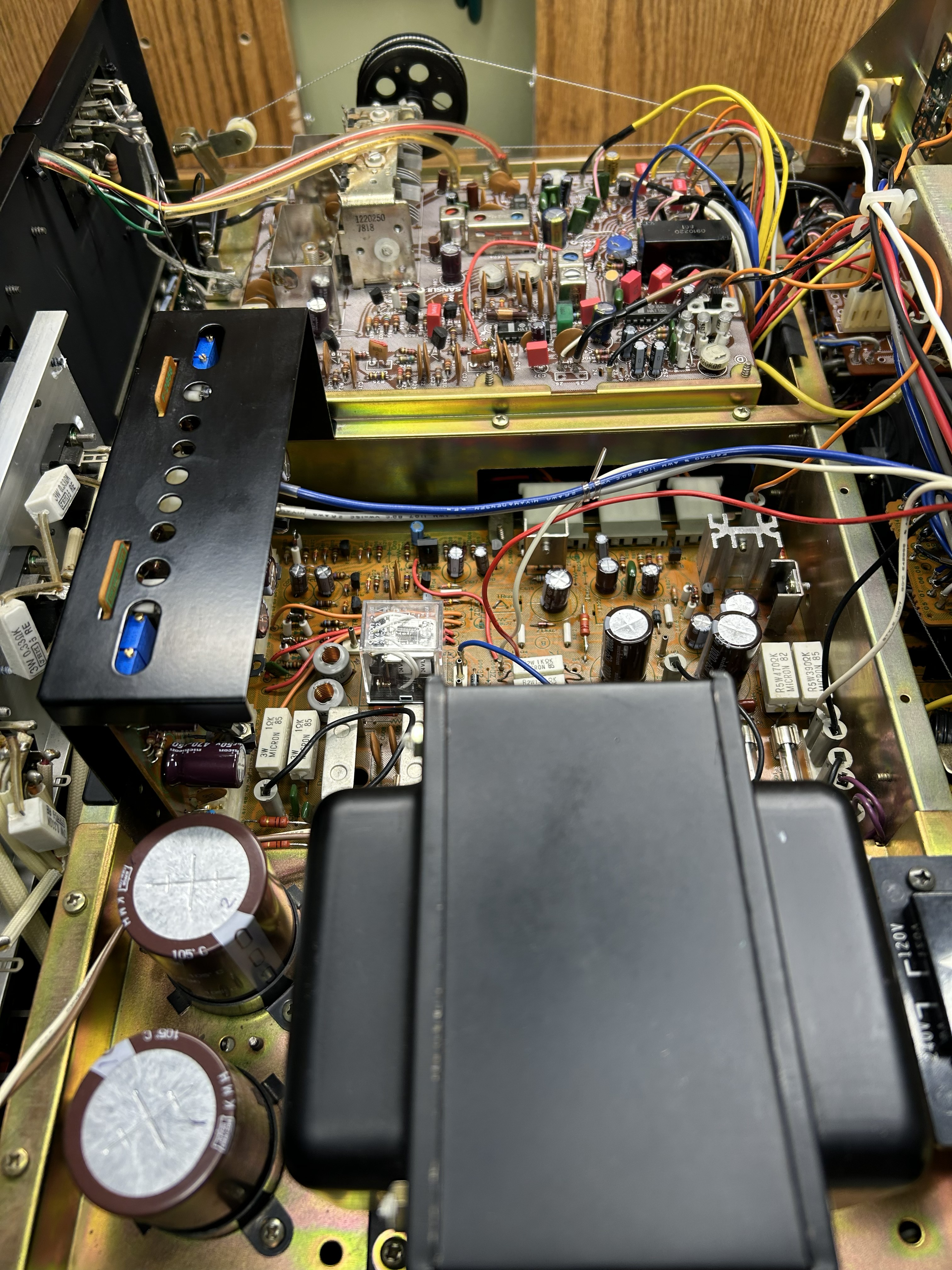
Eighty-five electrolytic capacitors were replaced, along with both main filter capacitors. But capacitors were only the beginning.
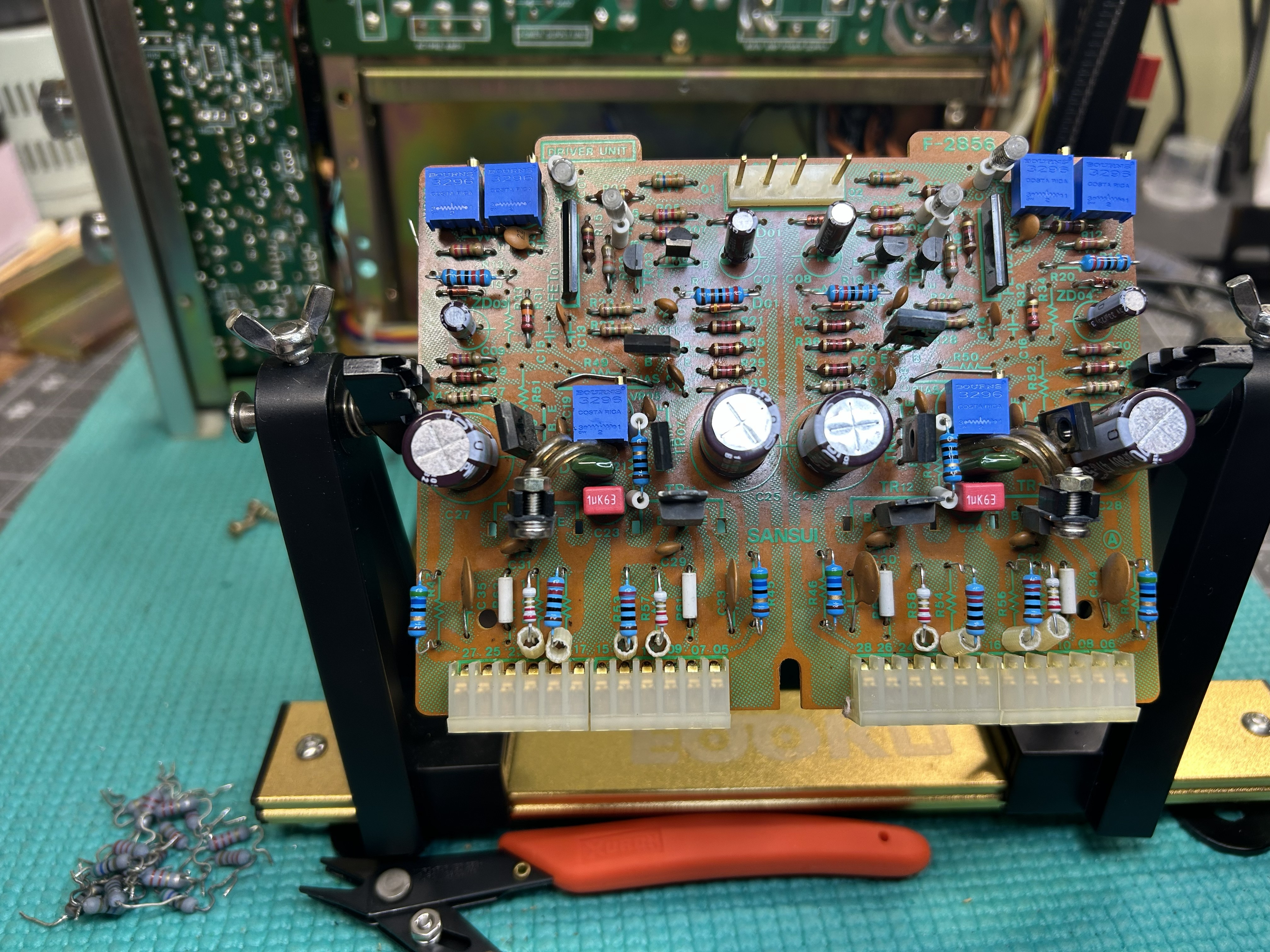
Forty small-signal, driver and output transistors were renewed, including hand-matched differential pairs and gain-matched OnSemi MJ21195G/MJ21196G outputs. Seven failure-prone VD1212 diodes, the protection relay and thirty-one fusible/N.I.R. resistors were replaced. Six Bourns multi-turn trimmers brought precision back to critical adjustments.
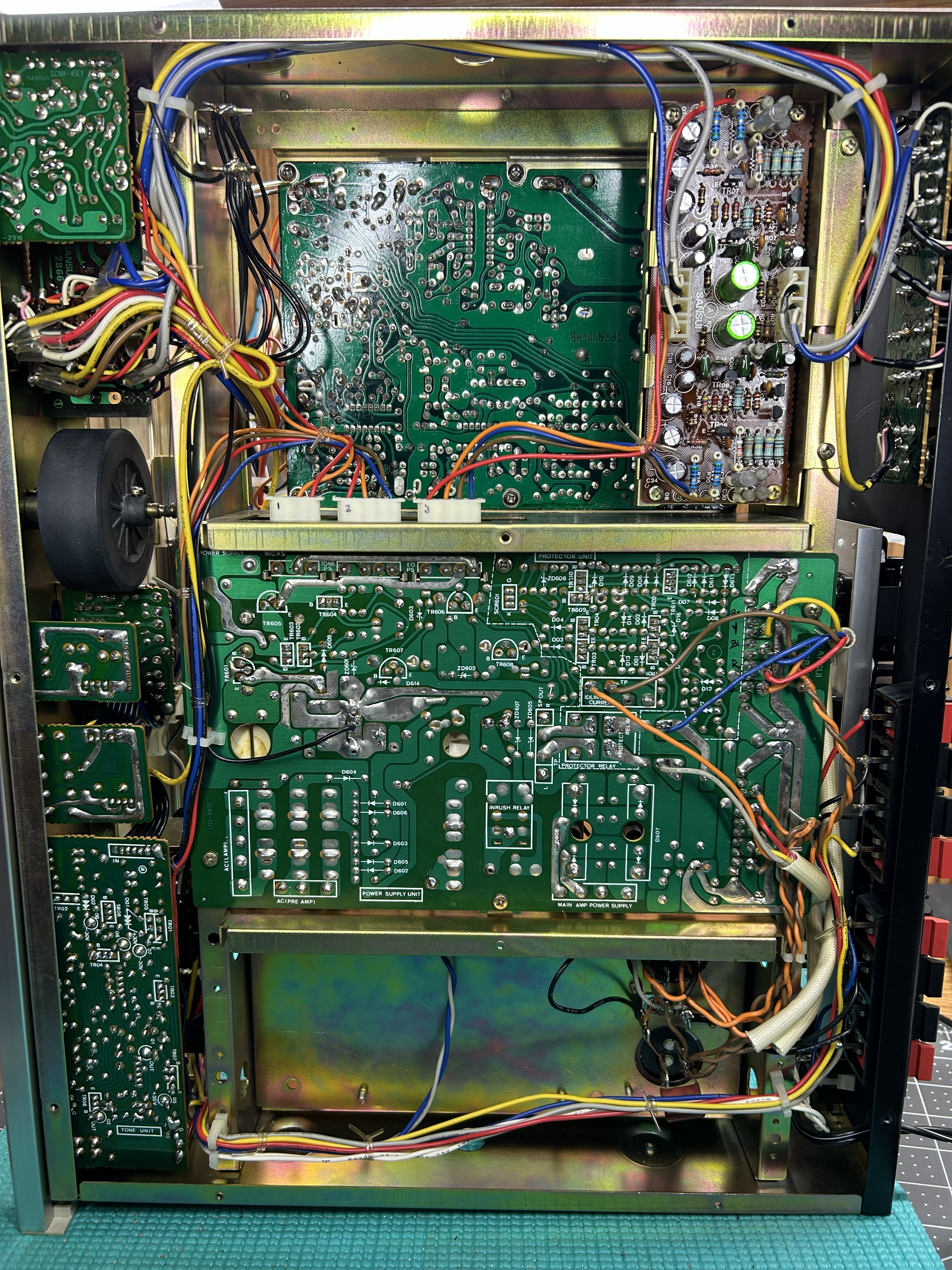
Corrosive factory adhesive was physically and chemically removed. Components damaged by the glue were replaced, stressed PCB areas were reflowed, and grounding points were re-soldered before final calibration.
Inside the G-5000
This was a component-level restoration aimed at long-term stability while retaining the original Sansui circuit design and character.
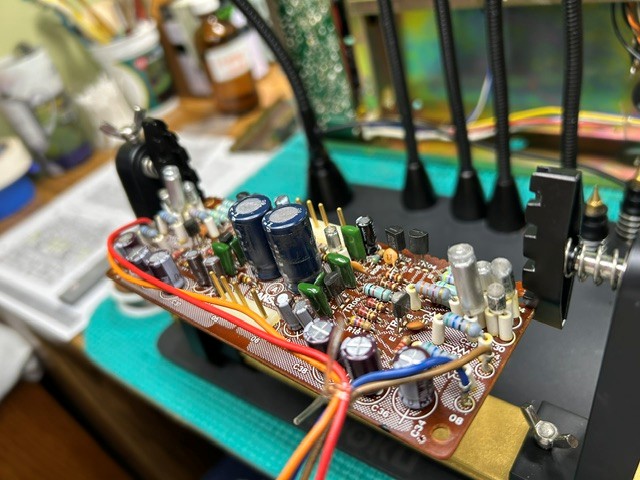
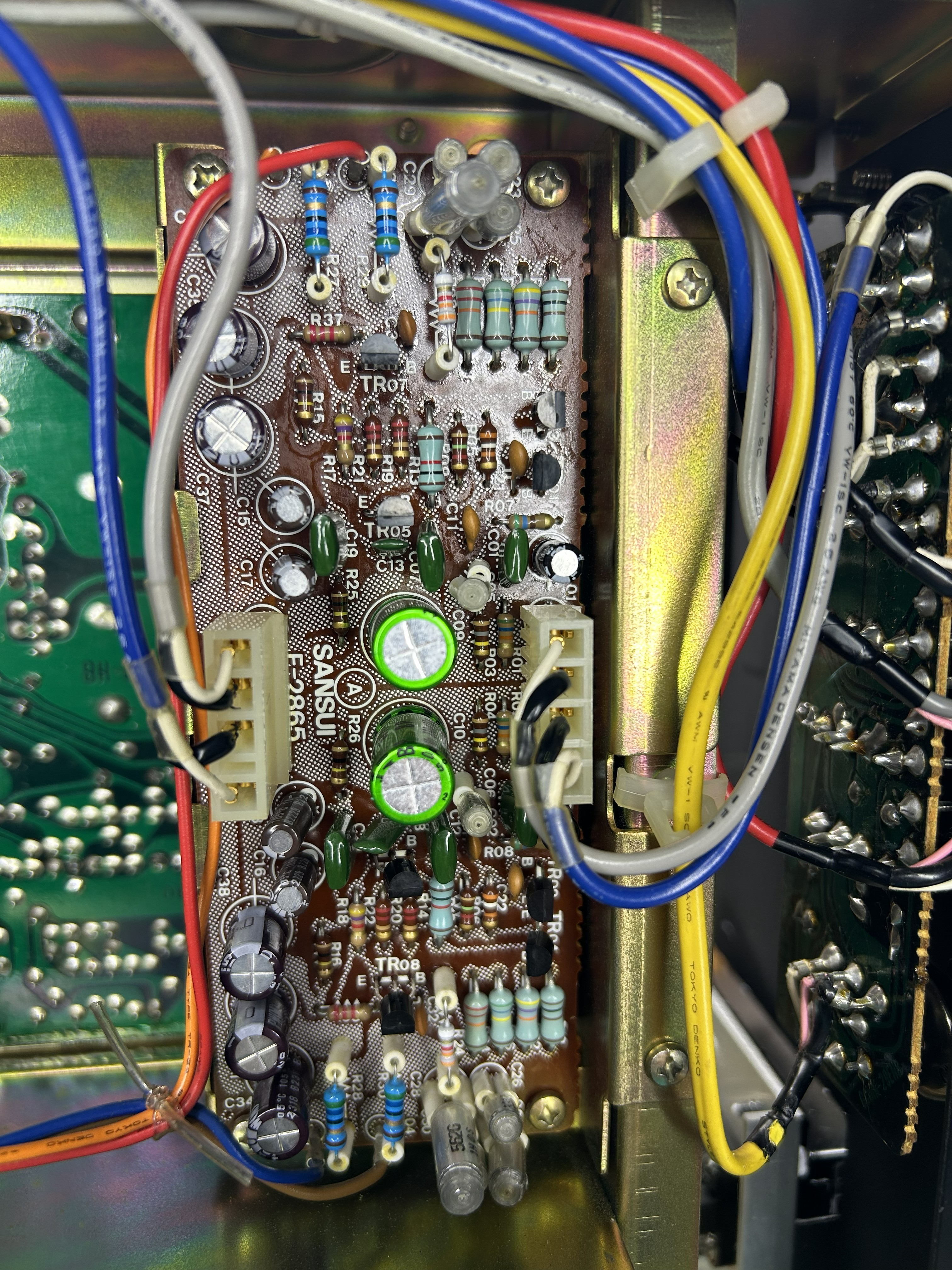
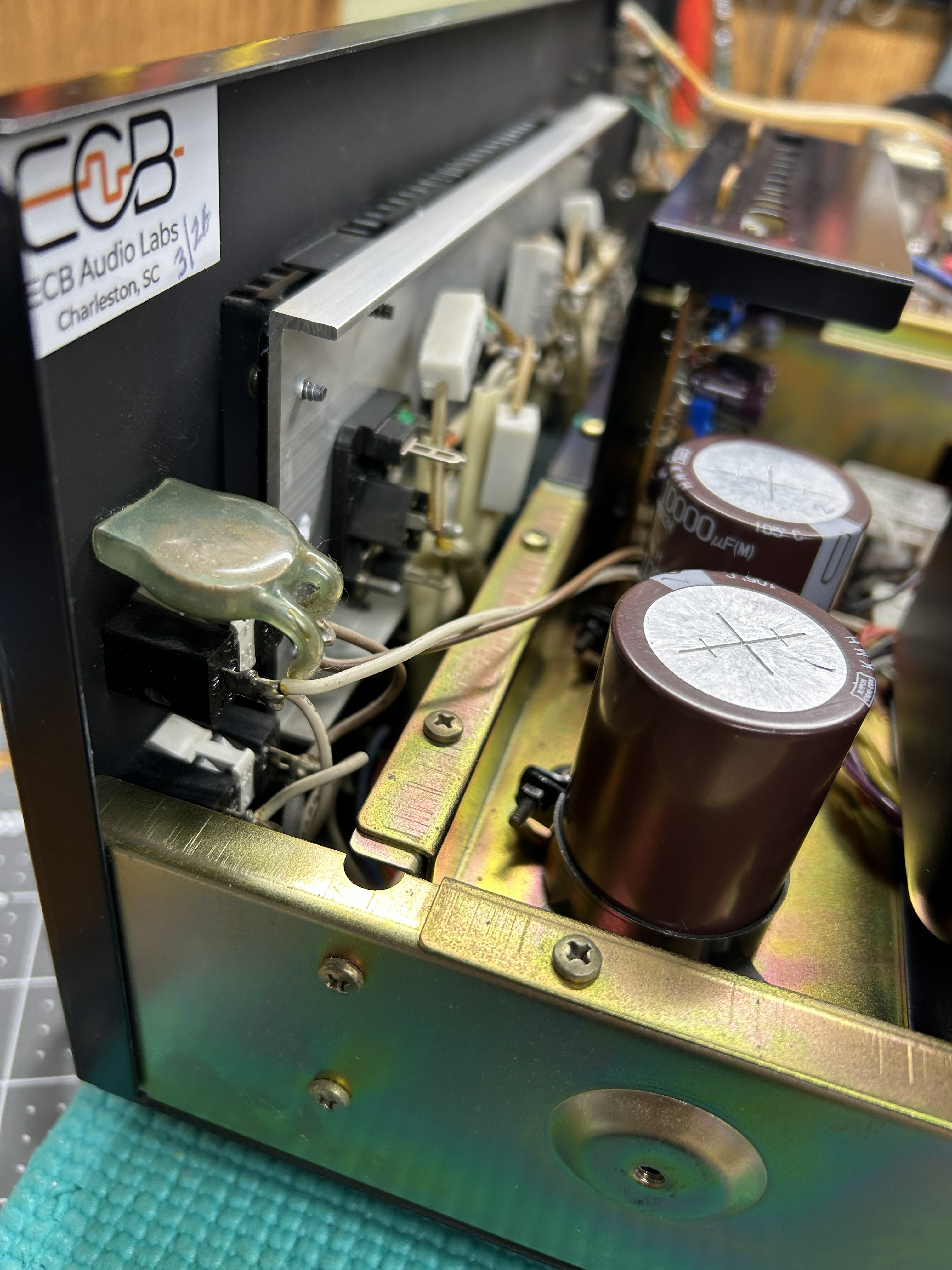
Modern Nichicon, Panasonic and WIMA parts were used throughout the electrolytic recap, with WIMA film capacitors used at 1 µF and below where specified in the restoration. Voltage ratings were increased where appropriate, and both main filter capacitors were renewed with Nichicon parts.
The output stage received gain-matched OnSemi MJ21195G and MJ21196G transistors with new mica insulators and fresh thermal compound. Known noisy or failure-prone small-signal and driver transistors were replaced with modern low-noise equivalents, and the front-end differential pairs were hand-matched for hFE.
Correcting the Weak Points
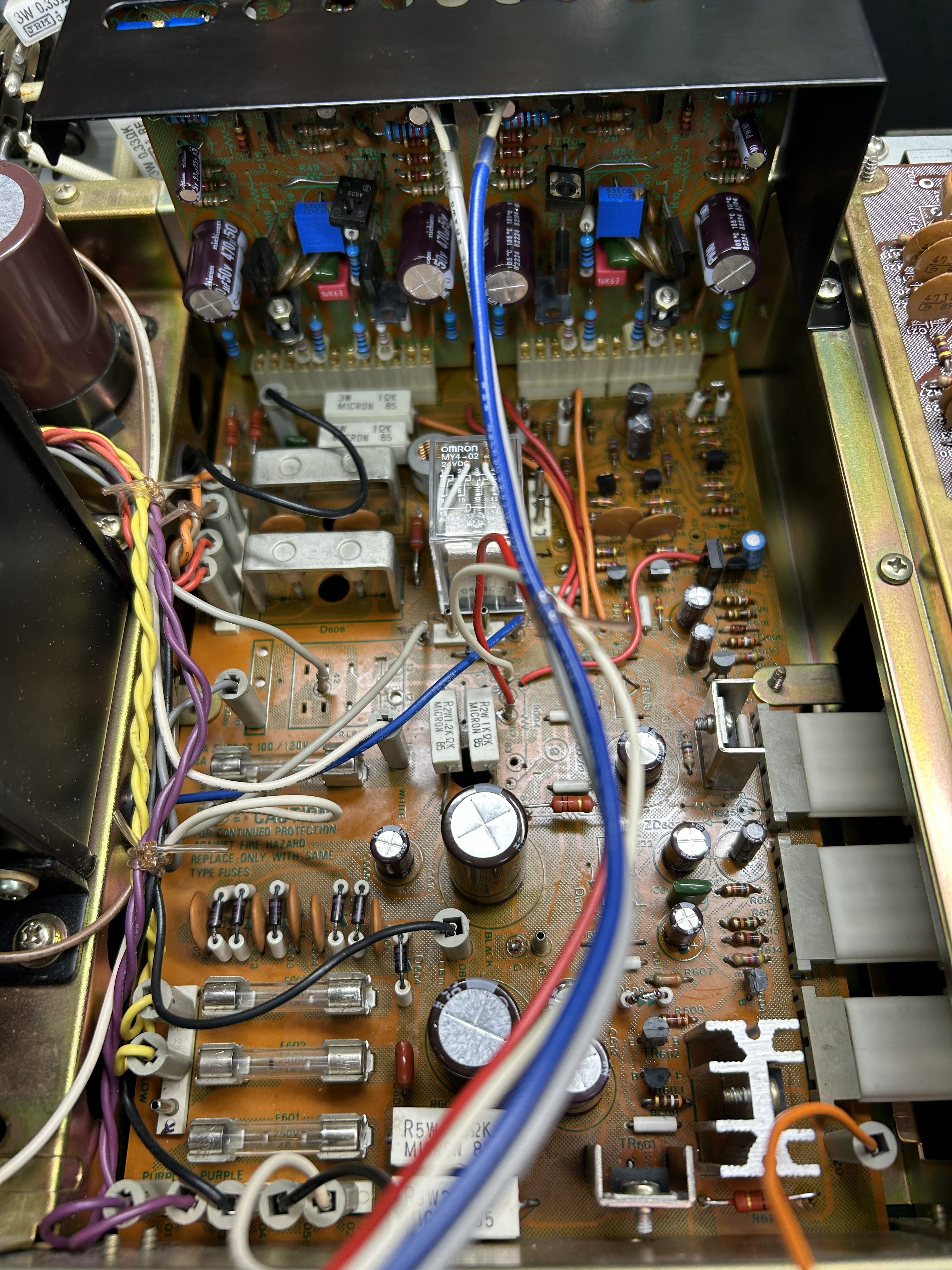
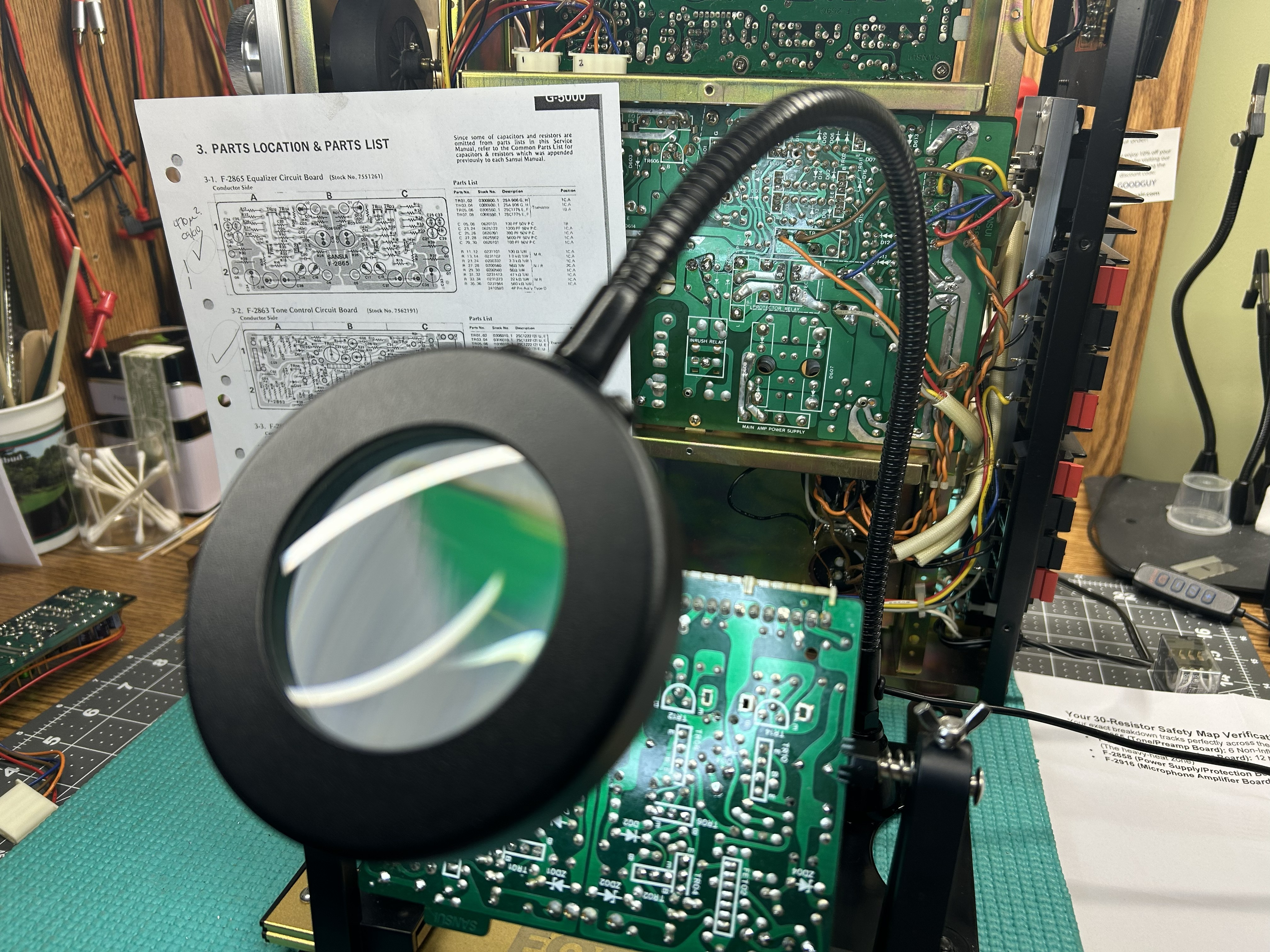
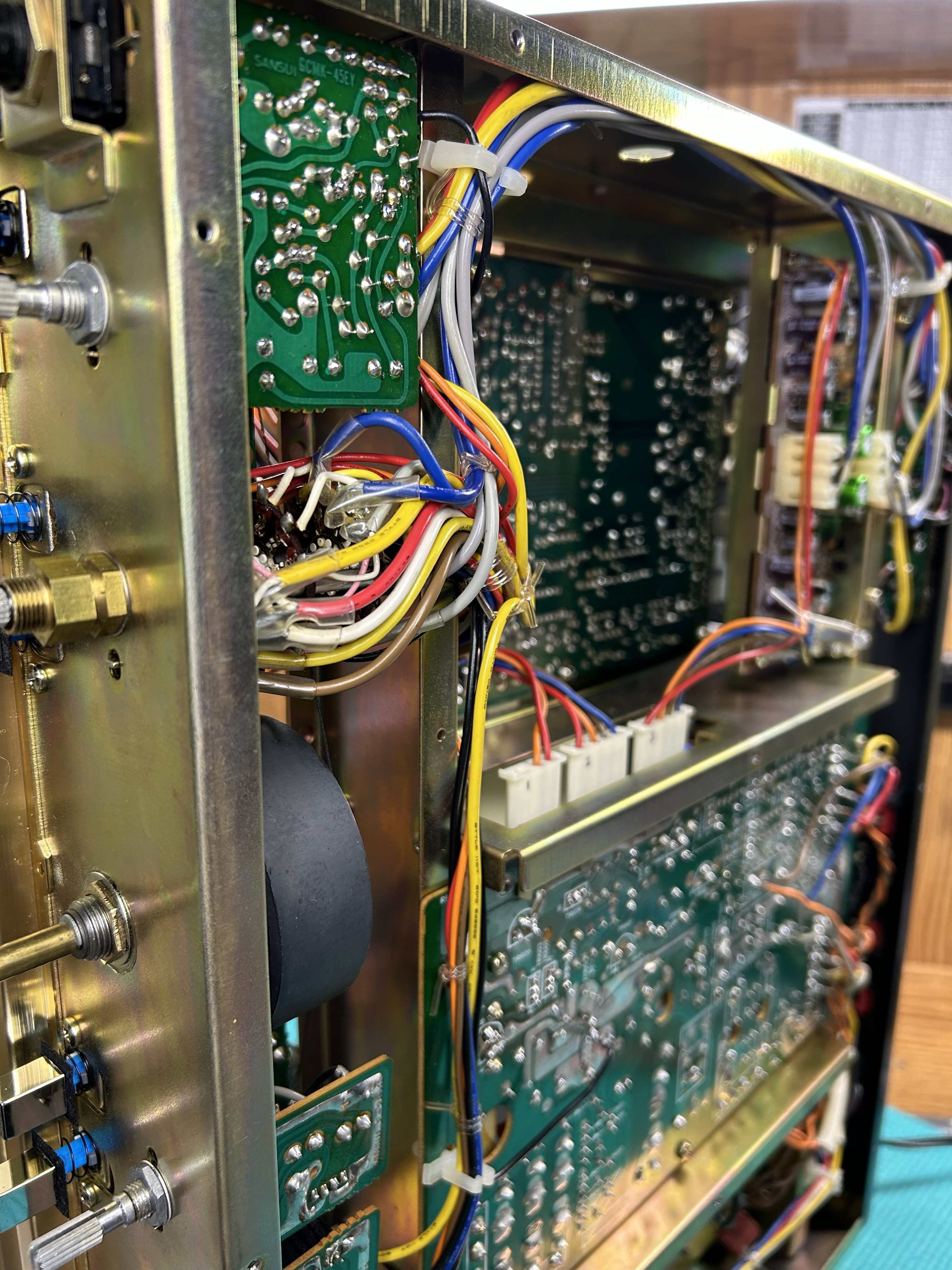
Age-related problems were addressed rather than worked around. Corrosive factory glue had attacked components in the receiver; it was removed and five glue-damaged resistors were replaced. High-stress PCB traces were reflowed with 63/37 tin-lead solder and damaged traces were repaired where required.
All fusible and N.I.R. resistors identified in the restoration were replaced with flameproof metal-film parts. The original protection relay was replaced, six multi-turn Bourns trimmers were installed, chassis and board grounding points were re-soldered, and both signal meters were verified for correct operation.
Tested, not assumed.
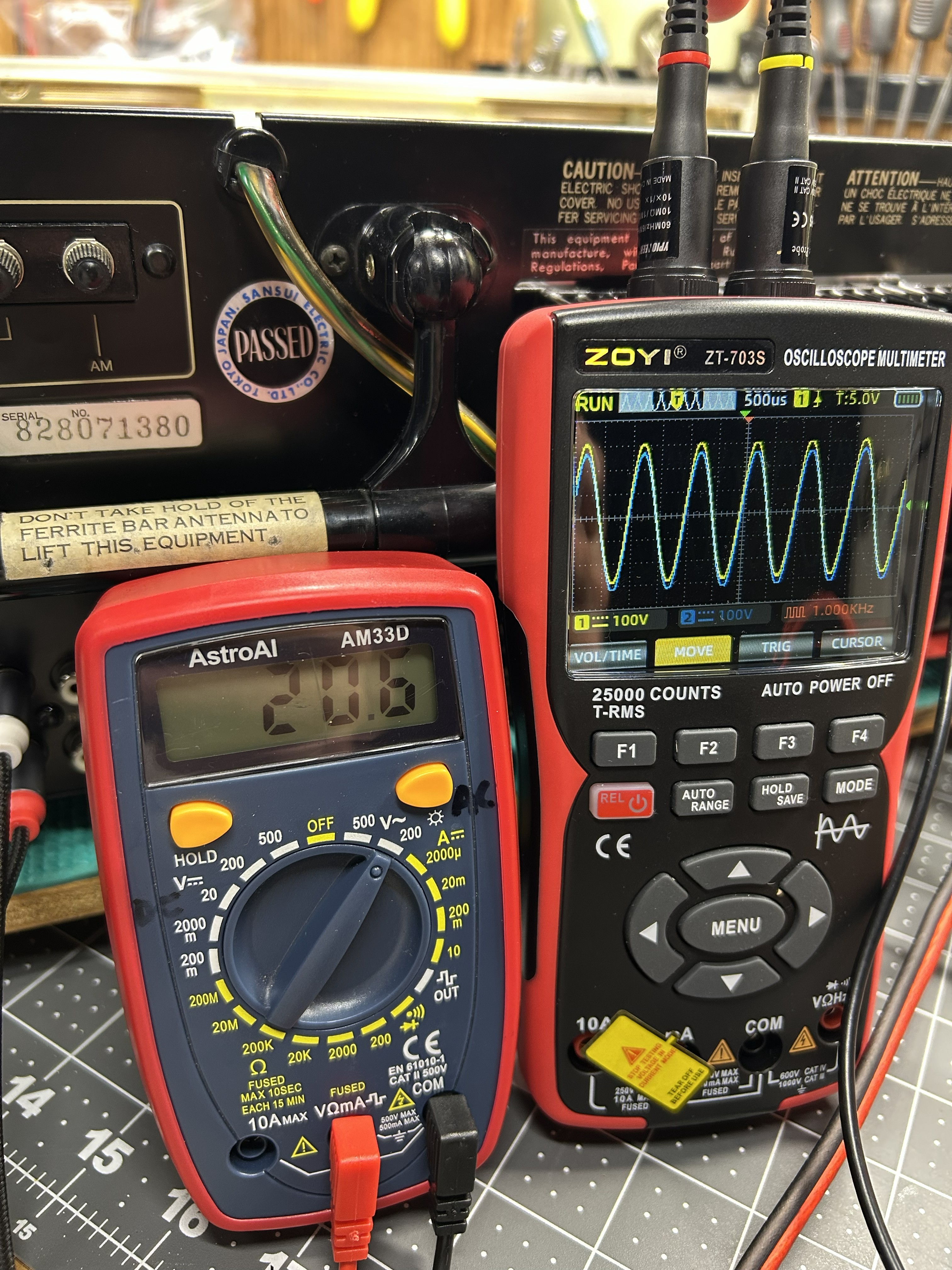
After restoration, the G-5000 was evaluated by oscilloscope with 1 kHz and 10 kHz sine- and square-wave testing, full-power clipping symmetry and stability checks. It then completed a minimum eight-hour thermal stress test into an 8-ohm dummy load at 50% rated power.
DC offset measured 1 mV in both channels. Bias was adjusted to the factory specification of 4.5 mV per channel. Rated at 45 watts per channel, the restored receiver produced 50 watts left and 50 watts right under controlled load.
Mechanical & Cosmetic Restoration
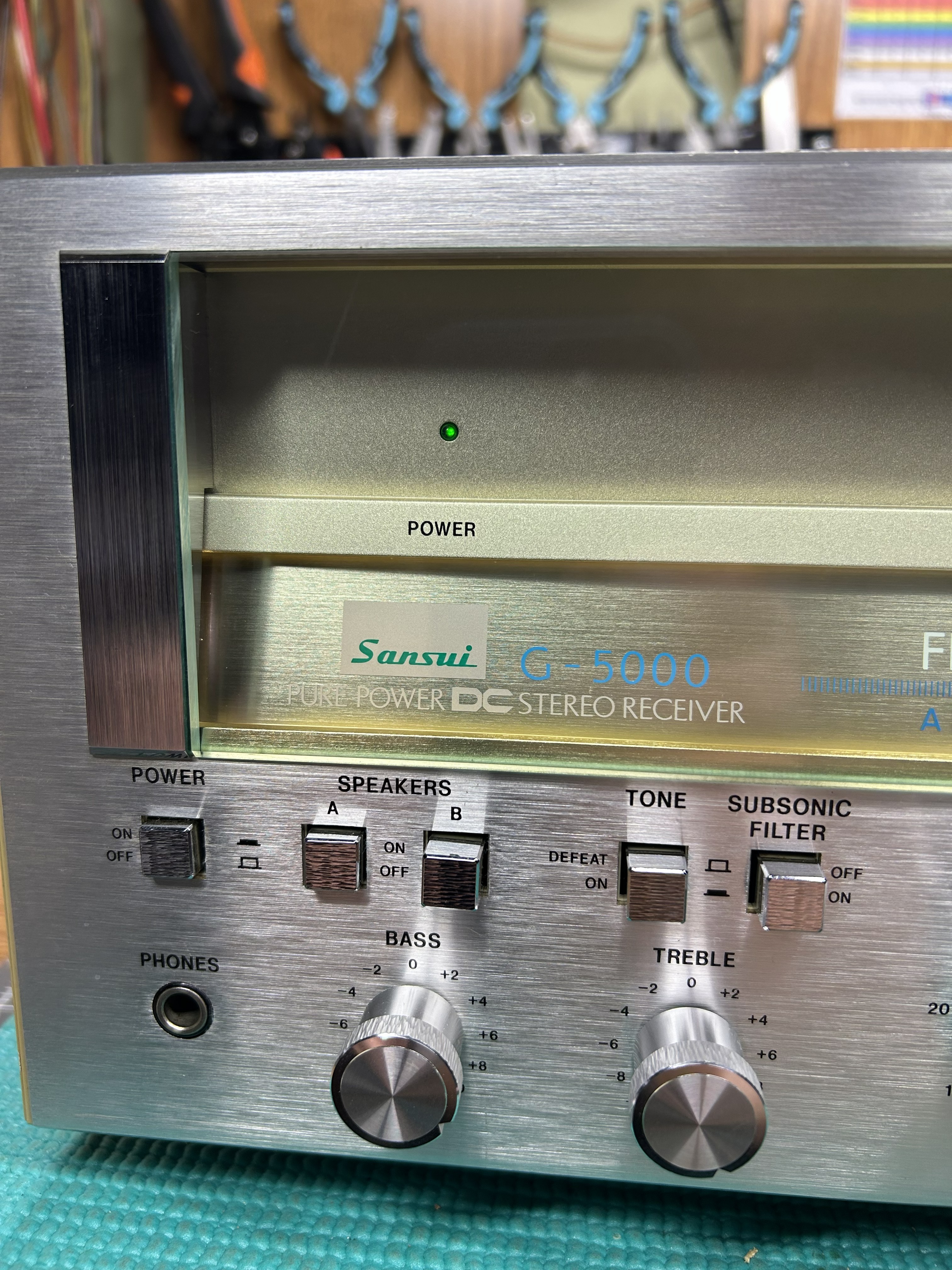
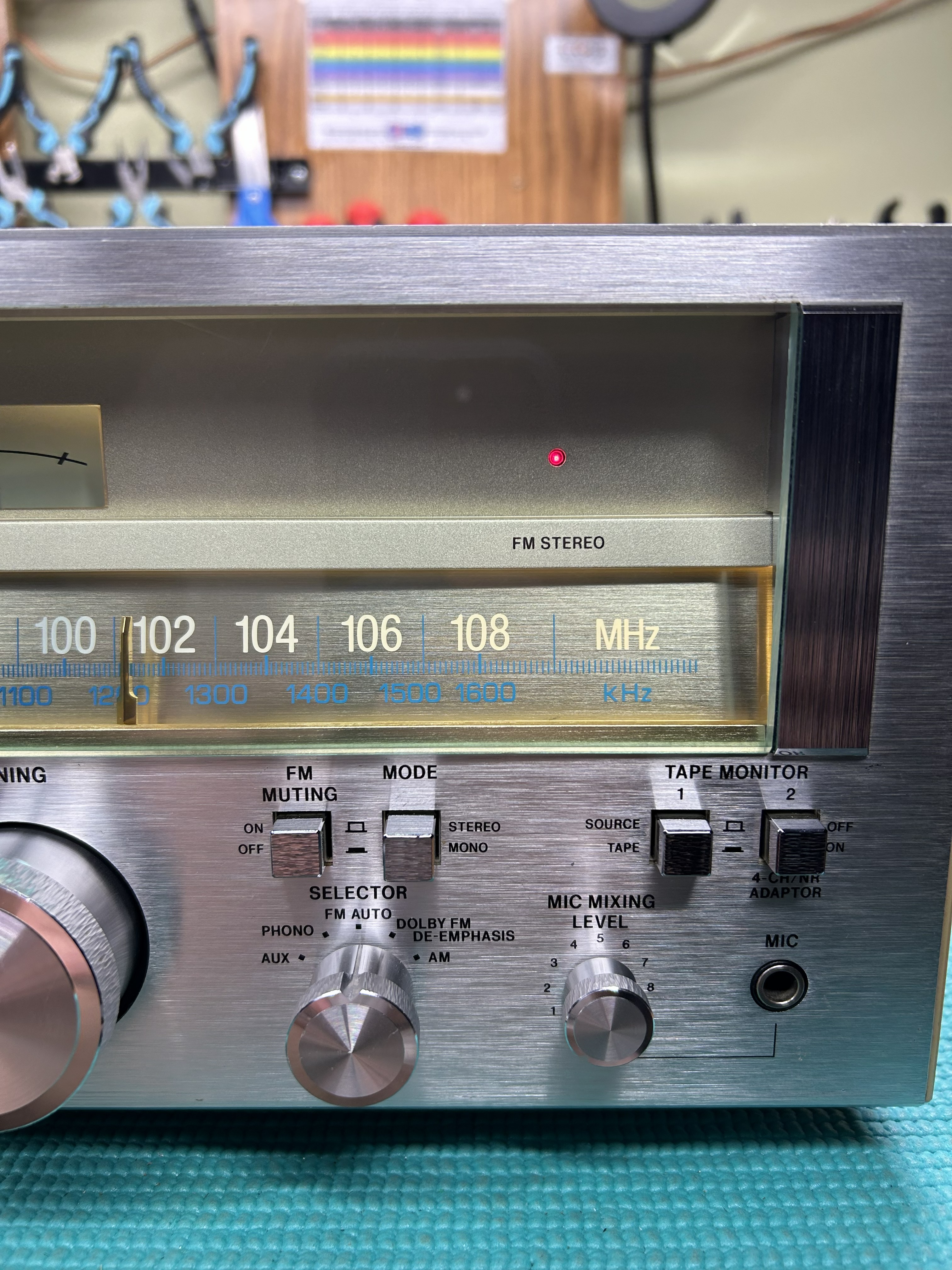
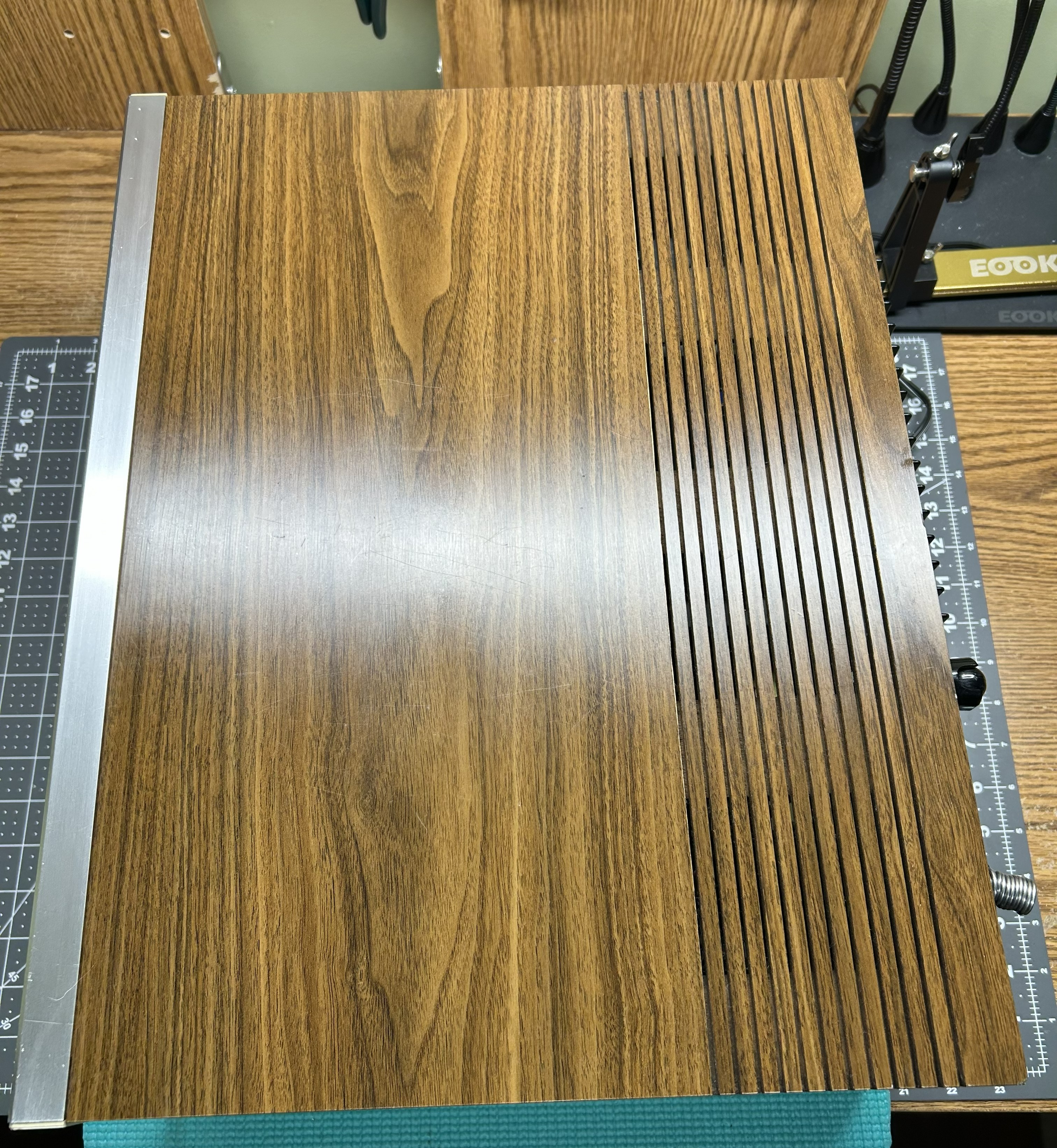
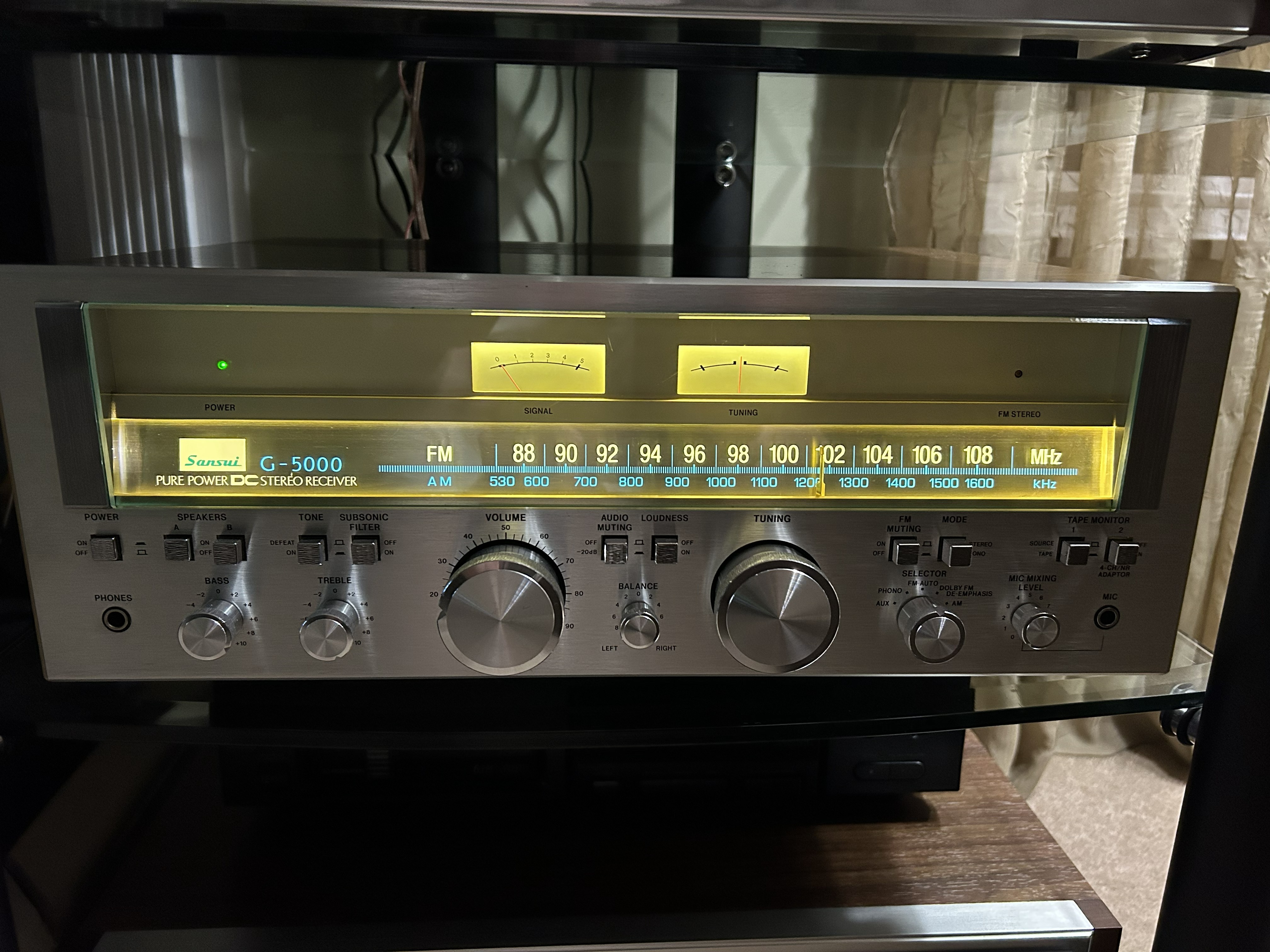
Every switch and potentiometer was deep-cleaned and lubricated. The faceplate was removed and polished, the knobs were individually cleaned, the cabinet was cleaned and polished, tuner pulleys were lubricated and the lower chassis was cleaned.
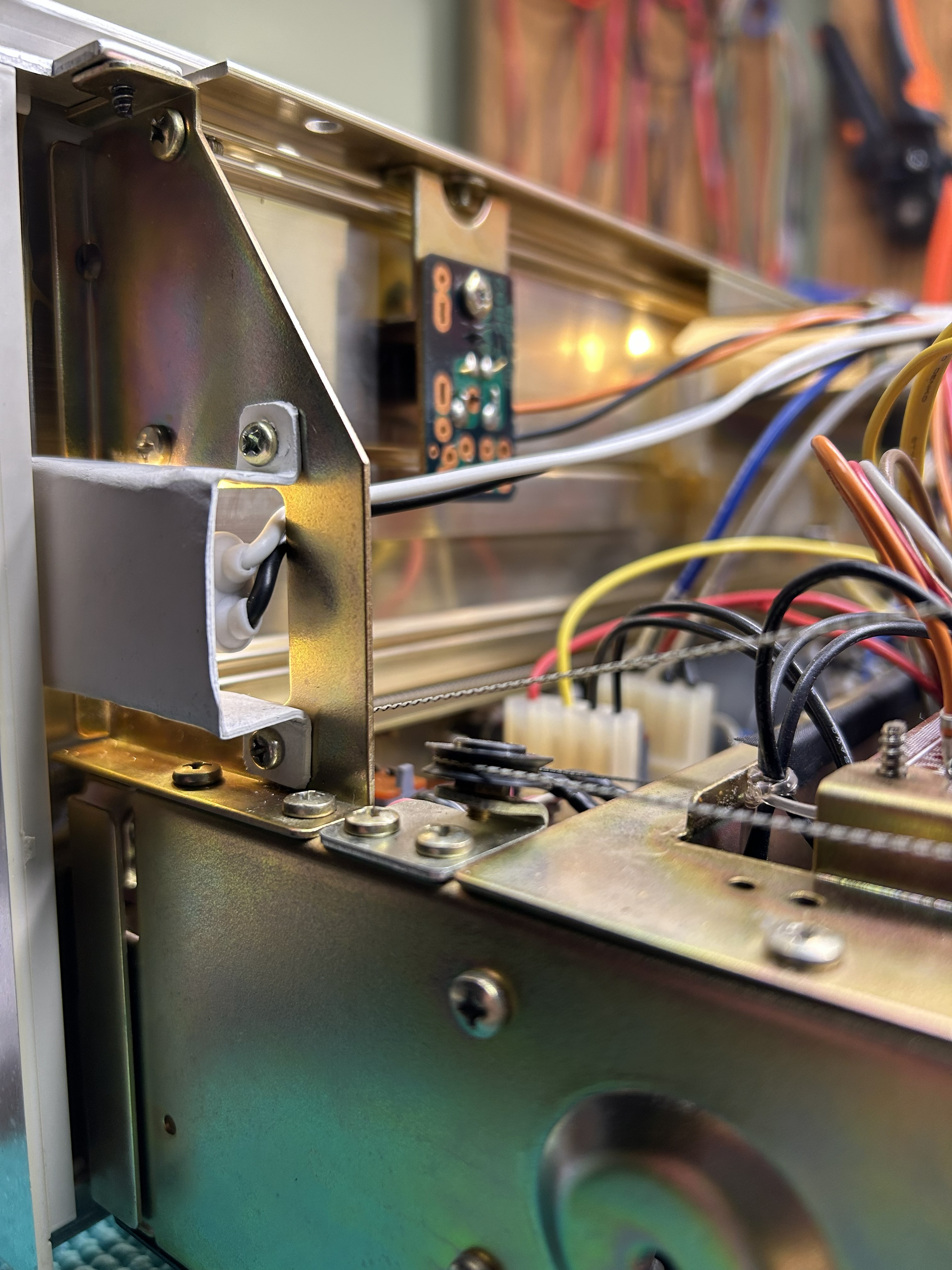
The original G-5000 illuminated the dial from the left side only. A matching lamp assembly was added to the right side for balanced illumination, followed by a warm-white LED conversion of the dial and meter lighting. Key adjustment and inspection points were finished with tamper-evident lacquer seals.
Front to Back
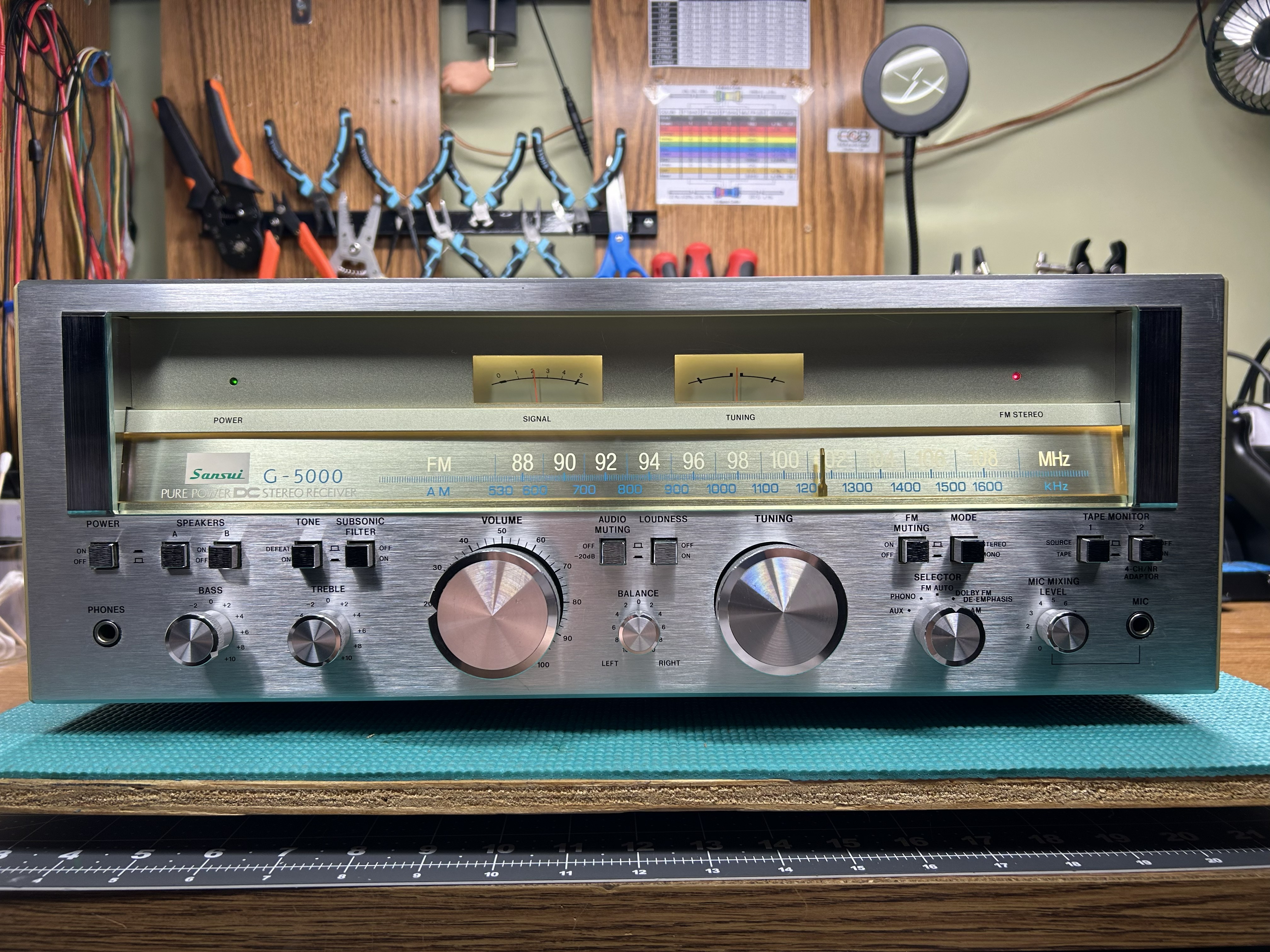
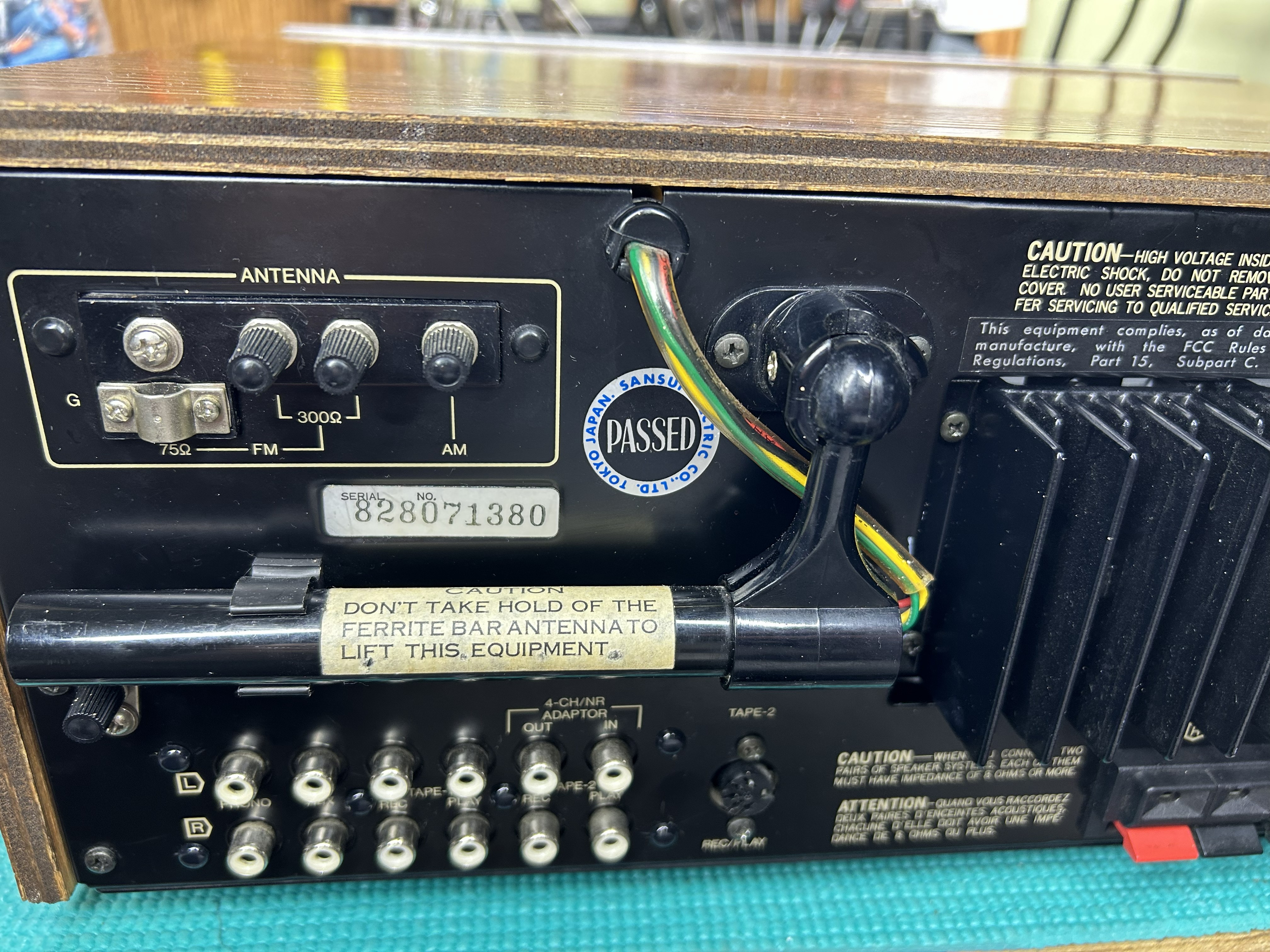
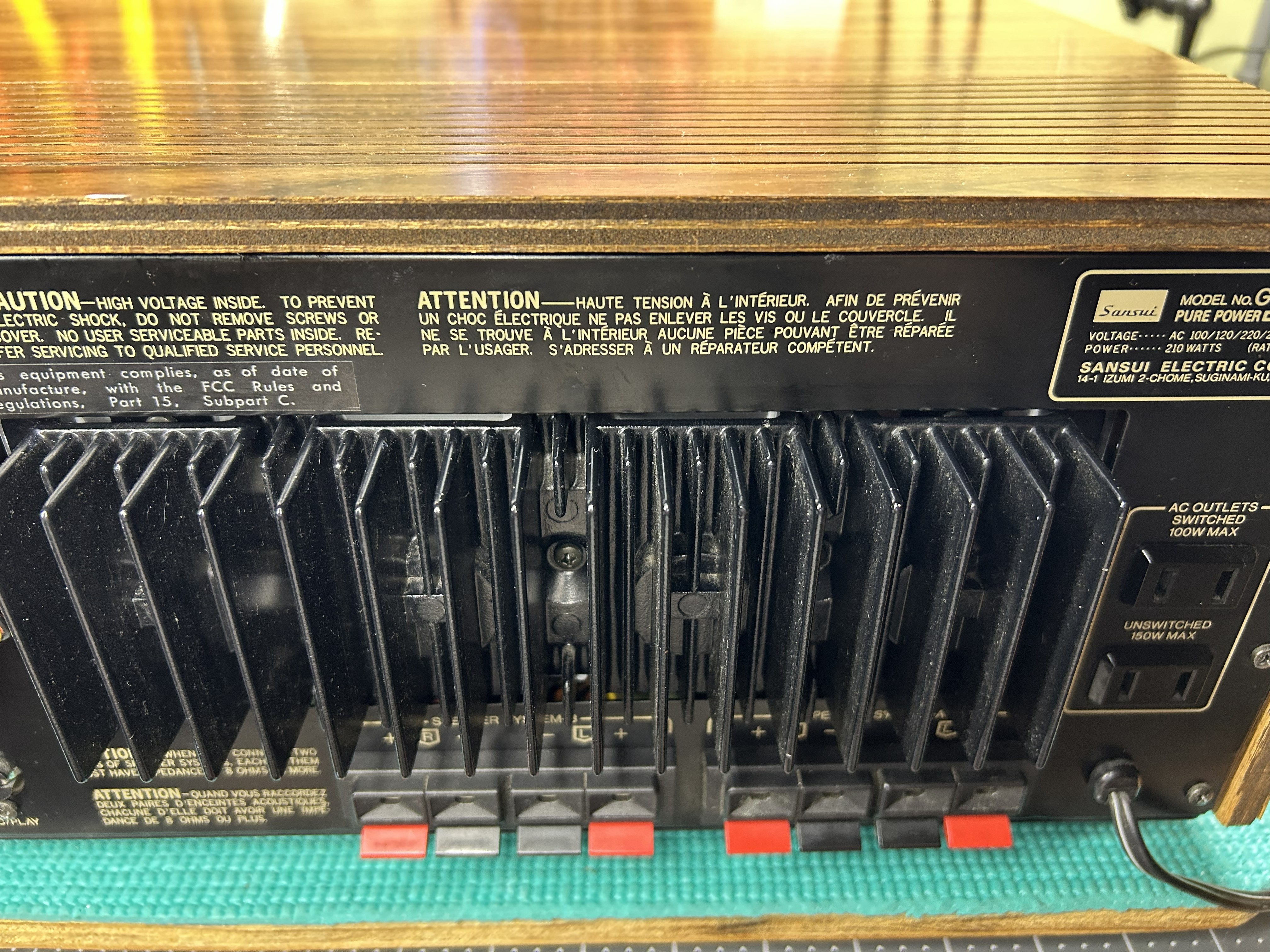
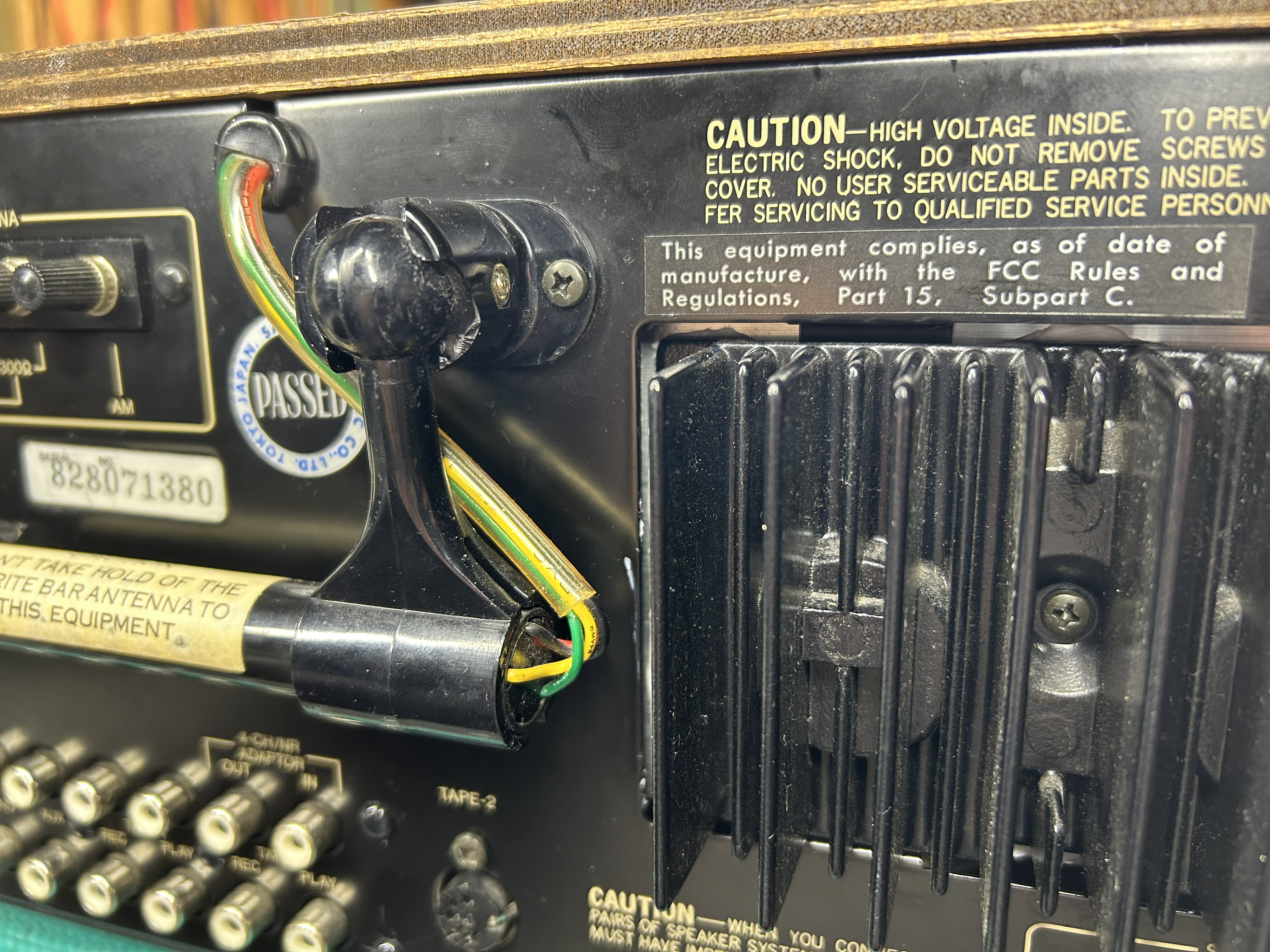
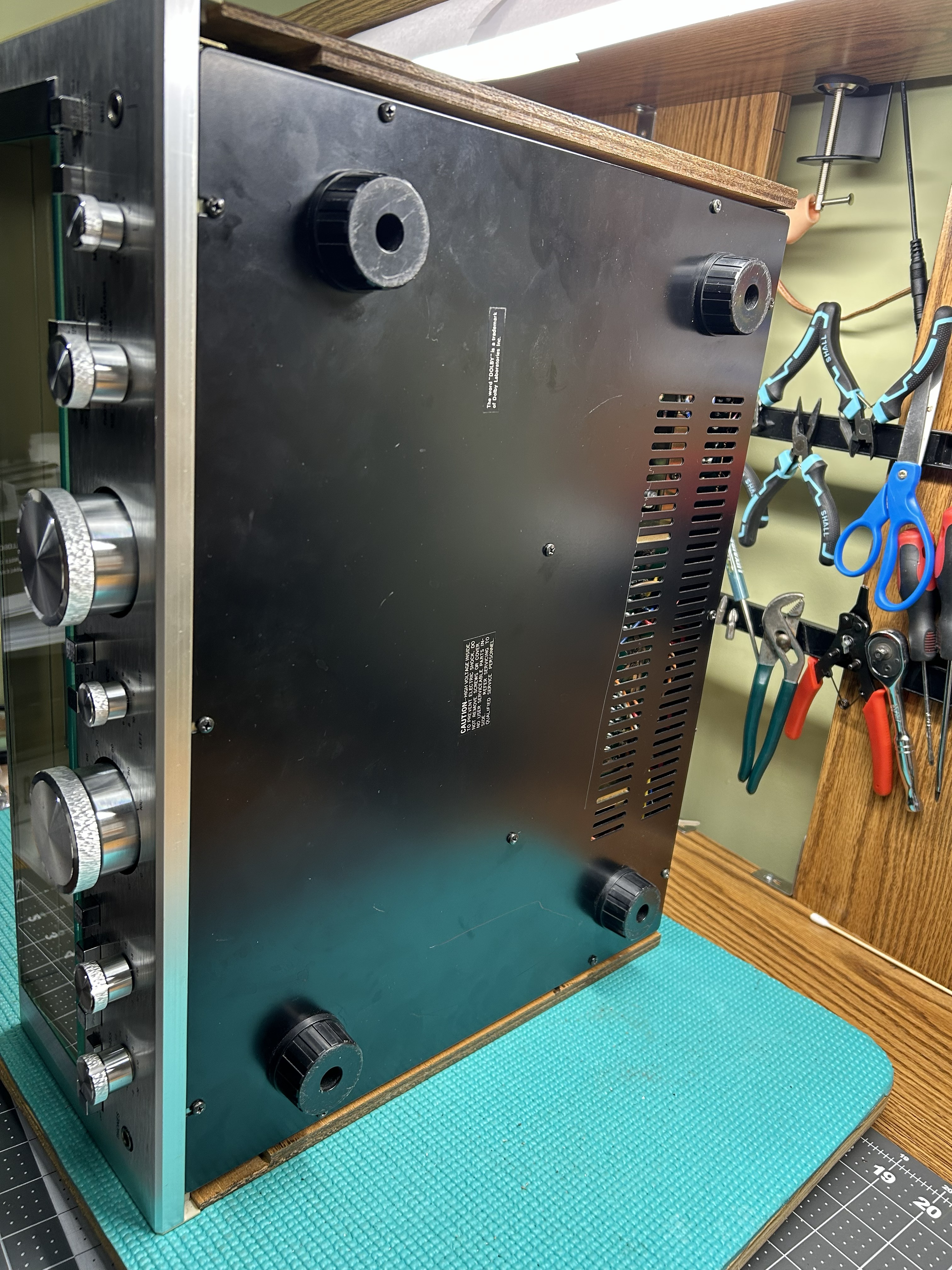
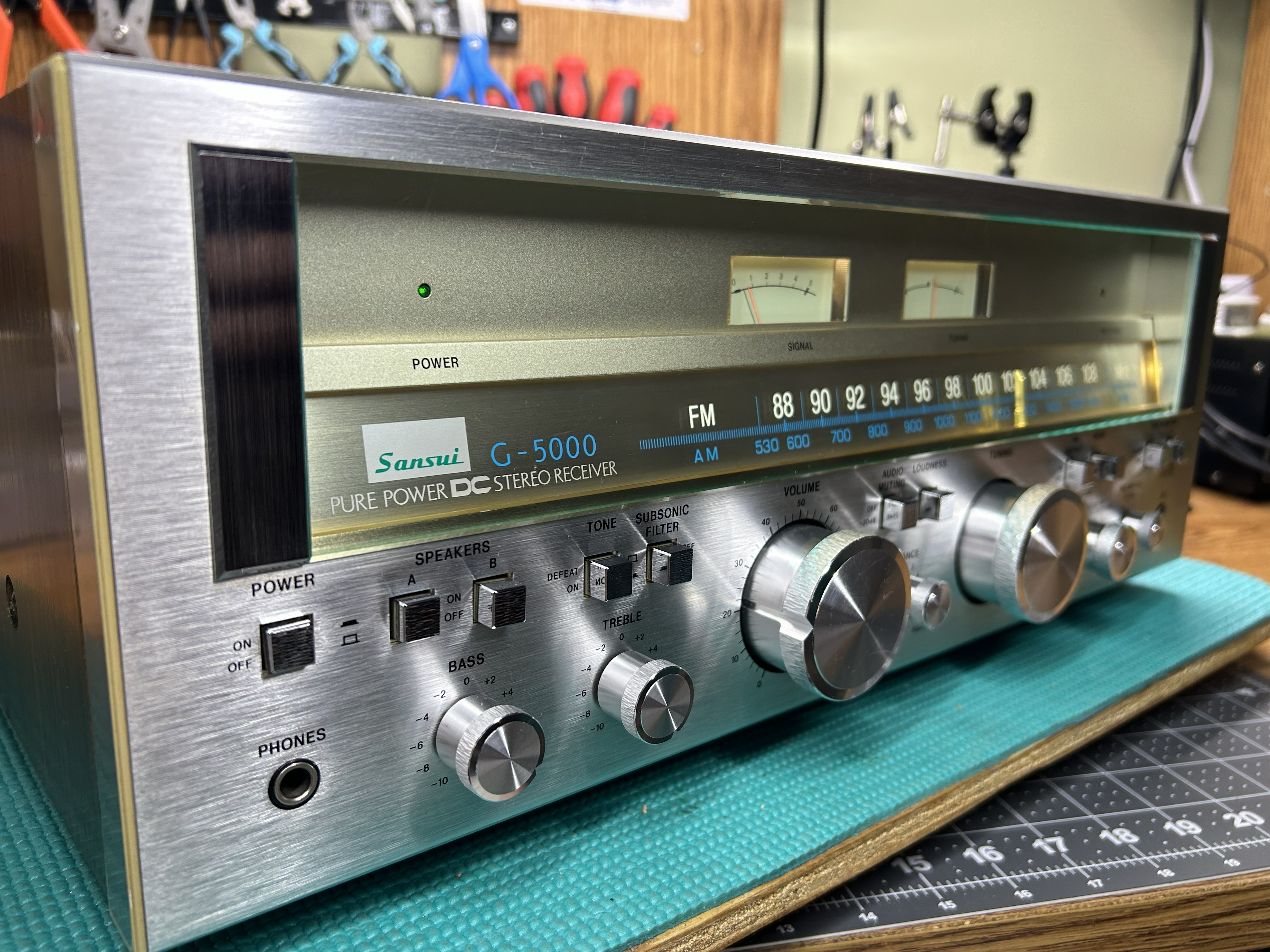
The work stays with the receiver.
The restoration was documented with its Certificate of Restoration and Bag of Bones - the original replaced components retained with the unit, excluding the old output transistors and three replaced bulbs. The certificate records the serial number, restoration scope and final bench data for this specific G-5000.
View the Certificate →Another lifetime for a classic Sansui.
From the matched output stage to the last cleaned control, this G-5000 was restored as a complete receiver - electrically stable, mechanically sorted, carefully documented and ready to play music again.